Where and How to Buy Bus Tickets in Thailand for a Smooth Journey
 Article written and verified by a Southeast Asia travel expert, with in-depth knowledge of local transportation and French-speaking travelers' habits · Updated in 2026
To buy bus tickets in Thailand reliably, securely, and at the best price, several options are available, adapted to your travel preferences and situation. Whether you are a French tourist or a backpacker, organizing your local travel is essential to fully enjoy your stay, without anxiety or fear of scams.
The main purchase channels include reliable online platforms like 12Go Asia, local bus terminals, or travel agencies. Each presents advantages and disadvantages in terms of price, flexibility, and security. For long journeys or peak periods (holidays, high season), it is strongly advised to book in advance (2-3 days minimum) to guarantee your seat and avoid inconvenience.
- Online purchase: 24/7 convenience, overview of options, secure advance booking, ideal for long journeys.
- At the station purchase: Flexibility for immediate departures, potentially cheaper for short trips, direct contact.
- Travel agencies: Practical for packages and no language barrier, but often more expensive.
What are the different channels to buy your bus tickets in Thailand?
Knowing where to buy your bus tickets in Thailand is the first step to a serene journey. Three main options are available, each with its specificities. Understanding these choices will allow you to decide what best suits your itinerary and budget. Whether you are looking for comfort, economy, or spontaneity, there is a suitable method.
1. Buying bus tickets online: the modern and reassuring solution
Online booking has become the preferred method for many travelers due to its convenience and transparency. You can compare prices, schedules, and bus types from anywhere, even before arriving in the country. This is ideal for those who like to plan and secure their seats, especially for long journeys or peak periods.
2. Direct purchase at the bus station: the local and flexible option
Bus terminals are nerve centers for land transport in Thailand. Buying your ticket directly on site gives you valuable flexibility for spontaneous departures or short trips. It is also an opportunity to immerse yourself a little more in the local culture, despite the potential language barrier.
3. Travel agencies and “street agencies”: the all-inclusive service (with caution)
Present in all tourist areas, travel agencies and “street agencies” (small street agencies) often offer packages including transport. This option can be convenient if you are looking for an all-inclusive service or if you have language difficulties, but it is generally more expensive and requires some vigilance to avoid extra costs and missteps.
Advantages and disadvantages of each purchase method for your bus tickets in Thailand
Each method for buying bus tickets in Thailand has its own strengths and weaknesses. The choice will depend on your priorities: budget, peace of mind, flexibility, or ease.
| Purchase Method | Advantages | Disadvantages | Indicative Price (Bangkok-Chiang Mai) |
|---|---|---|---|
| Online (e.g., 12Go Asia) | 24/7 booking, overview of options, seat selection, written confirmations, easy comparison, secure payments. | Service fees (minimal, about 1-2 €), requires internet connection, card payment. | 600-900 THB (approx. 15-23 €) |
| At the bus terminal | Flexibility for immediate departures, potentially cheaper, cash payment, no service fees. | Potential language barrier, less choice or clear information, no guaranteed booking, queues, requires travel to the station. | 550-850 THB (approx. 14-22 €) |
| Local travel agencies | Personalized service, connection management, no language barrier, local advice (to be verified). | Higher commission fees (10-30% more), less transparency on bus companies, risk of scams or overcharging. | 750-1000 THB (approx. 19-26 €) |
For more information on different transport options in Thailand, you can consult the official website of the Tourism Authority of Thailand (TAT), transport section.
What reliable online platforms are there for booking bus tickets in Thailand and how to use them?
Online purchase is a simple and secure solution for booking bus tickets in Thailand, reducing anxiety related to the unknown. Several platforms have established themselves as references for French-speaking travelers. Here's how to use them effectively:
12Go Asia: the essential reference
12Go Asia (https://12go.asia/fr) is the most popular and reliable platform for buying bus, train, ferry, and even plane tickets in Southeast Asia. Its interface is clear, in French, and offers a wide choice of companies (e.g., Sombat Tour, Nakhonchai Air) and schedules. You receive a confirmation by email and an e-ticket to present (screenshot or download recommended). Payment is secured by credit card. Allow a margin of 1 to 2 € for service fees.
BusOnlineTicket: a serious alternative
BusOnlineTicket (https://www.busonlineticket.co.th/thailand) also covers many destinations in Thailand and neighboring countries. It's a good alternative if you don't find what you're looking for on 12Go Asia or to compare prices. Prices and options are often similar, and booking is just as simple and secure.
Local company apps (Greenbus, Sombat Tour)
For certain specific routes, particularly in the north (Chiang Mai, Chiang Rai) with Greenbus, or for main routes with Sombat Tour, Thai companies offer their own mobile applications or websites. They may offer slightly lower fares or exclusive schedules. This is a more advanced option if you already have some understanding of local transport and are comfortable with interfaces often in English or Thai.
When using these platforms, be sure to check reviews from other travelers (on forums like Lonely Planet or Routard) and always confirm your travel details before finalizing the purchase.
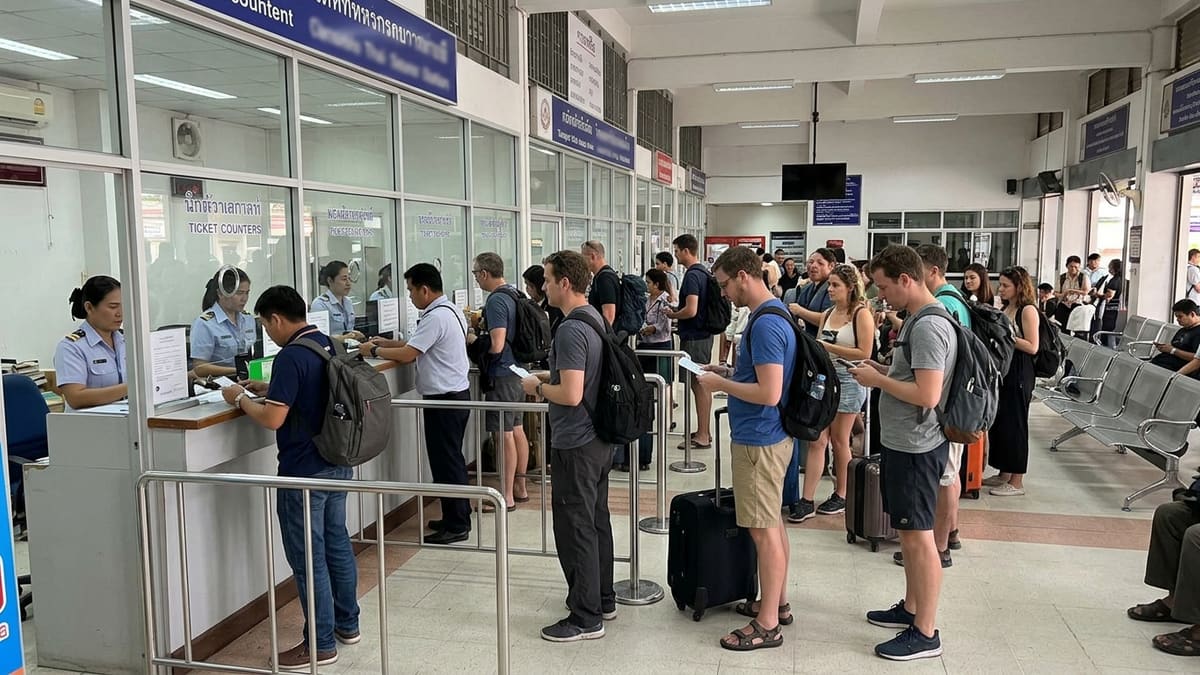
How to buy tickets directly at the bus terminal in Thailand: procedures and language tips
Buying a ticket directly at the bus terminal in Thailand is an authentic experience that can also be economical, especially for short trips. However, it requires a bit more organization and clear communication. Here are the steps and some useful phrases to overcome the language barrier and avoid misunderstandings:
Locate the correct counter
Large stations (like Mo Chit in Bangkok) have several counters, often grouped by company or destination. Look for signs in English. If it's not clear, show the name of your destination written in Thai (prepare it in advance on your phone) and ask: « Rod bus pai [your destination]? » (Bus to [your destination]?).
Communicate your request
Use simple words, point on a map or phone screen. « Pai [destination] » (Go to [destination]), « Wan-nai? » (What day?), « Ki-mong? » (What time?), « Ki-tua? » (How many tickets?), « Tao-rai? » (How much?). Don't hesitate to use your fingers to indicate the number of tickets or the time.
Check and pay in cash
Before paying, make sure the information on the ticket (destination, date, time, price) matches your request. Do not leave until you are sure. Pay in cash (Thai Bahts), as card payments are rare or non-existent at most bus station counters.
Good linguistic preparation with a few simple Thai phrases will save you a lot of hassle and show your respect for the local culture. « Sawatdee krap/ka » (Hello), « Kob Khun krap/ka » (Thank you) and « Chai » (Yes) / « Mai » (No) are also very useful and appreciated.
When is it recommended to book tickets in advance and when can you buy on the spot?
The question of when to buy bus tickets in Thailand, in advance or on the spot, is crucial for good travel organization and to avoid the stress of unforeseen events. The answer depends on several factors.
Advance booking: peace of mind (highly recommended)
- Long journeys and popular destinations: For routes like Bangkok-Chiang Mai (approx. 10h), Bangkok-Phuket (approx. 12h), or Bangkok-Koh Lanta (bus-ferry combined), it is highly recommended to book your tickets at least 2 to 3 days in advance, especially if you are aiming for a specific bus type (VIP) or a precise schedule.
- Peak periods: During Thai holidays (Songkran in April, Loy Krathong in November, Western New Year) or the high tourist season (December-February), seats sell out very quickly. Booking a week in advance, or even more, is not too much.
- VIP or sleeper buses: These superior comfort options are limited and very popular with locals and tourists. To benefit from them, book as soon as your itinerary is fixed, via an online platform like 12Go Asia.
- Bus + ferry combinations: If your journey includes a ferry connection to an island (e.g., Koh Samui, Koh Phangan, Koh Lipe), advance booking is almost mandatory to ensure the connection and avoid getting stranded.
On-site purchase: flexibility (with caution)
- Short and regional journeys: For trips of a few hours between less touristy cities (e.g., Sukhothai-Phitsanulok), purchasing on the same day or the day before at the bus station is often sufficient, as demand is lower.
- Frequent departures: Some local lines have buses every 30 minutes or every hour. In these cases, on-site purchase generally does not pose a problem; you will not wait long for the next departure.
- Tight budget and spontaneity: Sometimes, tickets purchased directly at the station can be slightly cheaper (without service fees) than online, which is an advantage if you are not time-constrained and are flexible on the schedule.
When in doubt, online booking via a platform like 12Go Asia remains the safest and most reassuring option for most French-speaking travelers. Information on bus frequencies and companies is often available on recognized travel forums (e.g., Routard), where other travelers share their updated experiences.
What are the essential elements to check on a bus ticket before purchase or departure?
Once your bus ticket is purchased in Thailand, a quick but thorough check is essential to avoid any unforeseen events and travel serenely. Do not assume that everything is correct: a small check will save you major inconveniences. Make sure the following information is correct and clearly legible:
- Bus company: Check that it is indeed the company you paid for (e.g., Sombat Tour, Nakhonchai Air), especially if you booked through a travel agency that might substitute less reputable companies.
- Final destination: Make sure the destination is spelled correctly and exactly matches your desired arrival location. City names can be similar.
- Date and time of departure: A common oversight! Confirm the exact day, month, and time. Thailand uses the 24-hour format. A 00:30 departure is well after midnight, the next day.
- Seat number: If a specific seat is assigned (often the case for VIP and 1st class buses), check the number. Some local buses do not have assigned numbers; it is then « first come, first served. »
- Bus/platform number (quay): Bus terminals can be large. The quay number (chan-chala in Thai) or bus number will tell you where to wait. Do not rely solely on verbal indications.
- Precise departure point: For some cities like Bangkok, there are several bus terminals (e.g., Mo Chit for the North, Southern Bus Terminal for the South, Ekkamai for the East). Confirm which one is yours so you don't go to the wrong station.
A systematic check of these points on your bus ticket in Thailand guarantees a stress-free departure and a safe arrival at your destination. In case of doubt, do not hesitate to ask the ticket agent or company for clarification.
Are there common scams or pitfalls to avoid when buying bus tickets in Thailand?
Traveling in Thailand is a wonderful experience, but it is important to be vigilant to avoid common scams related to bus ticket purchases and ensure the safety of your journey. The goal is to secure your trip and budget by being well-informed.
Unofficial or unscrupulous street agencies
Beware of small agencies that offer excessively low prices, do not clearly display information, or are too pushy. Some may sell tickets for buses of lower quality than promised, or “packages” that include overcharged taxis and interminable transfers. Prioritize agencies with a physical presence, good online reviews, and clear display of prices and conditions. Scams involving fake counters near stations are also common.
Bus or station change en route (or upon arrival)
For some tourist routes (especially to islands or the Lao border), you may be asked to change buses in the middle of the night, without clear explanation, leaving you with another company or a less comfortable bus. Similarly, some buses will drop you off at a secondary station or a point far from the city center to force you to take an overcharged taxi. Make sure your ticket is for a direct journey to your final destination (and its main station) if that's what you paid for.
Unexpected and overcharged "extras"
Some agencies or drivers may omit to mention additional fees for luggage (beyond a certain limit), port taxes (for bus-ferry combinations) or transfers to your hotel that are not actually included or are overcharged. Always ask for an "all-inclusive" price and demand written proof.
Not comparing prices and letting yourself be rushed
Whether online or on-site, always take 5 minutes to compare prices from different companies or agencies. Differences of 50 to 200 THB (1.30 to 5 €) are common for the same journey. Never let yourself be rushed by a pushy salesperson; take your time to think and check. A price that seems too good to be true often is.
Leaving valuables unsupervised in the bus
During stops (meals, restrooms), never leave your valuables (passport, wallet, smartphone, camera) unsupervised in the bus. Take them with you, even for a short break. Pickpocketing is rare but can happen, especially on night buses where thefts from backpacks in the hold have been reported. Always keep your precious items with you in the cabin or in a secure small bag.
By being informed and following these safety tips, you will significantly reduce the risk of unpleasant surprises and travel with confidence during your bus trip in Thailand.
What are the different types of buses available in Thailand and how to choose the right one?
Understanding the different types of buses available is essential for buying bus tickets in Thailand that meet your expectations in terms of comfort, travel time, and budget. There are mainly three categories, with variations:
1. Second Class Bus: the economic option
- Characteristics: These are the most basic and cheapest buses. They stop frequently, picking up passengers along the way. They often have no air conditioning or limited air conditioning, and can be crowded. They are not always equipped with on-board toilets.
- Ideal for: Short trips (less than 3-4 hours), very tight budgets, or for a local immersion. Comfort is basic.
- Example price: A 100 km journey (e.g., Hua Hin to Phetchaburi) can cost around 70-150 THB (approx. 2-4 €).
2. First Class Bus: the good compromise
- Characteristics: More comfortable than 2nd class, they are air-conditioned, with reclining seats. They make fewer stops and sometimes include a bottle of water and a small snack. Toilets are generally available on board.
- Ideal for: Medium-distance journeys (4-6 hours) or for a good balance between comfort and price. This is the most common option for inter-city travel.
- Example price: A 100 km journey can cost around 150-250 THB (approx. 4-6.5 €).
3. VIP Bus or Sleeper Bus: optimal comfort for long journeys
- Characteristics: The ultimate in comfort for long journeys, especially at night. Wide, very reclining seats (often 160°), or even real bunk beds (for sleeper buses). Powerful air conditioning, blankets, meals and drinks included, sometimes even individual screens. They make very few stops and are highly appreciated for night travel as they save time and a hotel night.
- Ideal for: Long journeys (over 6 hours), night travel, or for those who prioritize comfort at all costs and want to arrive rested.
- Example price: A 100 km journey can cost around 250-400 THB (approx. 6.5-10 €), but long-distance journeys (e.g., Bangkok-Chiang Mai) are more between 600-900 THB (15-23 €) for a 24-seat VIP.
Choosing the right type of bus will have a significant impact on your travel experience. For more details on transport options and the specificities of each type, consult our dedicated page on different types of buses in Thailand.
🏆 Specialist's Verdict: Our Recommendations for Stress-Free Travel
Ready to organize your travels in Thailand?
Now that you know where and how to buy bus tickets in Thailand reliably and stress-free, you are better equipped to plan your travels with confidence. Whether you choose the ease of online platforms or the authenticity of bus terminals, good preparation is the key to a successful trip. Don't forget to consult our complete guide to bus travel in Thailand for tips on budget, comfort, and safety on board.
Questions fréquentes
Do I need to print my online purchased ticket?
No, generally an e-ticket on your smartphone is sufficient. However, it is always recommended to have a screenshot or download it for offline access, in case internet connection fails at the station. Some companies may require a printout, but this is increasingly rare.
Can I pay in euros to buy a bus ticket in Thailand?
No, in Thailand, all local payments (at the station, street agencies) are made exclusively in Thai Bahts (THB). Online platforms (like 12Go Asia) accept international credit card payments, which will be converted to euros by your bank with possible conversion fees.
Are buses air-conditioned in Thailand?
Most 1st class buses and all VIP/sleeper buses are air-conditioned, often very strongly! Bring a light jacket. 2nd class buses may not be air-conditioned or have inefficient air conditioning. Check the bus type carefully before buying your ticket if air conditioning is an important comfort criterion for you.
How long before departure should I arrive at the bus station?
It is advisable to arrive at least 30 minutes before departure for long journeys and major stations (to find your platform and drop off luggage), and 15-20 minutes for short journeys or smaller stations. This allows you time to manage any unforeseen circumstances.
Can I transport bulky luggage on Thai buses?
Yes, Thai buses generally have space in the hold for large backpacks or suitcases. For local buses, luggage can be placed on the roof or at the back. Be careful, valuables must be kept with you. For VIP buses, there is often a weight limit (around 20 kg) and a small surcharge may be requested for excess luggage, but this is rare.