Solo Female Travel in Thailand: Safety Precautions for Women
 Article written and verified by a writer specializing in solo travel and women's safety, who has traveled to Thailand herself and has in-depth knowledge of specific risks for female travelers · Updated in 2026
Considering traveling solo in Thailand is an exciting adventure, but it's perfectly normal to wonder about the safety precautions to take. Thailand is generally a safe and welcoming country, but meticulous preparation and an awareness of specific risks for solo female travelers are essential for a peaceful stay. Here's what you need to know:
- Real dangers vs. myths: Understand what constitutes a real threat (thefts, scams) and what is exaggerated fear.
- Concrete precautions: Adopt simple, effective measures, from vigilance in the evening to transport choices, to minimize risks.
- Managing delicate situations: Learn how to react to harassment or persistence, and what emergency recourse is available.
This detailed guide, based on testimonials, official advice, and lived experiences, will give you the keys to anticipate unforeseen events, thwart tourist scams, and fully enjoy Thailand independently. Most female travelers experience an incident-free stay by adopting a proactive and informed attitude.
1. What are the real dangers in Thailand for a woman traveling alone and are they exaggerated?
Concerns about the safety of a woman traveling alone in Thailand are often a mix of real facts and amplified perceptions. Major dangers are generally not serious physical assaults, but rather pickpocketing, well-oiled scams, and, in rare cases, harassment or attempts to exploit tourist vulnerability.
Snatch-and-grab thefts, particularly by scooter or motorbike riders, are a reality in highly touristy areas like Bangkok, Phuket, or Pattaya. For example, the Tourist Police in Chiang Mai report an average of 15 to 20 cases of handbag thefts per month mainly targeting tourists, with an increase during high season. Scams, often related to taxis, tuk-tuks, travel agencies, or the purchase of gemstones, are more frequent and rarely result in violence, but rather significant financial loss, ranging from a few hundred to several thousand baht, and great frustration. According to the Tourist Police Bureau of Thailand, less than 5% of recorded tourist complaints concern serious physical assaults, while over 50% are related to commercial disputes or scams.
Sexual harassment is rarer than in the West, but verbal persistence, inappropriate stares, or touching can occur, especially in bars or intense nightlife areas. It is crucial to note that Thailand, like any country, has its risky areas, but rumors of widespread assaults are often exaggerated. Thailand remains a safe destination for over 95% of solo female travelers according to feedback from platforms like Solo Female Travelers or Girls Love Travel, provided local customs are respected and common sense is used. The French Ministry for Europe and Foreign Affairs classifies Thailand as “normal vigilance” over most of its territory, except for certain border areas (Source: France Diplomatie).
2. What concrete precautions should you take before and during your trip to minimize risks?
The key to a serene trip as a solo woman in Thailand lies in prevention and autonomy. Here are concrete actions to implement to enhance your Thailand safety precautions solo female travel:
Before departure: Administrative and material preparation
Scan and save your essential documents (passport, visa, flight tickets, insurance, international driving permit) to the cloud (Google Drive, Dropbox) and send copies to a trusted person. Subscribe to comprehensive travel insurance including repatriation and medical coverage, with a minimum coverage of €50,000 (average cost: €30 to €60 per month). Prepare a small first-aid kit with basic medications, bandages, and disinfectant. Consult your doctor for recommended vaccinations (Hepatitis A, Typhoid, Tetanus-Polio, and possibly Japanese encephalitis depending on the duration and rural areas).
On-site: Organizing finances and valuables
Never keep all your money and bank cards in one place. Distribute them between a discreet pouch under your clothes, a lockable backpack, and a small amount in your pocket for daily expenses. Use ATMs located in safe places (banks, shopping centers). The cost of a withdrawal is approximately 220 baht (about €5.7) per transaction, so plan to withdraw large sums to minimize fees. Leave unnecessary or sentimental valuables at the hotel or in a safe.
General behavior: Discernment and discretion
Avoid flaunting ostentatious signs of wealth (expensive jewelry, luxury watches, high-end electronic devices). Do not walk alone at night in poorly lit or isolated areas, especially beaches. Trust your instinct: if a situation or person seems suspicious, move away immediately. Interact with locals with respect and a smile, but know how to say “no” firmly and politely if you feel bothered. Consume alcohol in moderation to keep a clear head and your vigilance intact.
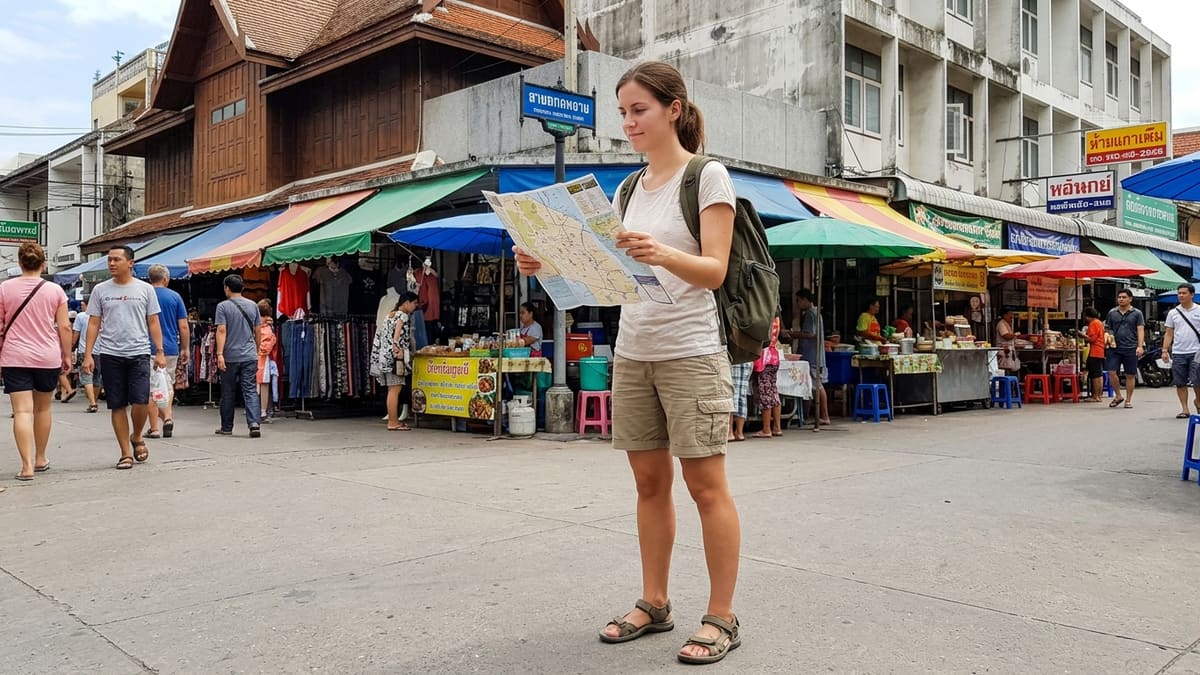
3. How to handle delicate or uncomfortable situations (harassment, persistence)?
When faced with an uncomfortable situation or harassment in Thailand, a few simple reactions can make a difference for a solo woman, without necessarily leading to a direct confrontation, which is often poorly perceived in local culture:
- Do not panic: Stay calm. An excessive reaction can attract more attention or be misinterpreted.
- Clear and non-aggressive response: A firm “no” in Thai (“mâi ao” - ไม่เอา, literally “I don’t take it”) or in English is often sufficient. Avoid nervous smiles or laughter, which can be misinterpreted as an invitation or a sign of complacency.
- Ignore and leave: If the persistence continues, ignore the person and leave the area quickly and with determination. Head towards a busy place, a shop, or ask for help from hotel or restaurant staff or other tourists.
- Seek help from third parties: If you feel threatened or if the situation escalates, do not hesitate to ask for help from Thais you feel are reliable. Most are very helpful and will not hesitate to intervene in case of clear need, or to guide you to a safe place.
- Know a few useful phrases: Learning phrases like “Help me” (“Chûay dûay” - ช่วยด้วย) or “Leave me alone” (“Plòi chăn” - ปล่อยฉัน) can be a valuable asset in an emergency.
In Thai culture, “kreng jai” (respect for others and avoiding causing inconvenience) and “face” (honor) are very important. Direct confrontation or losing your temper can sometimes worsen the situation. Prioritize a calm but resolute approach. For the most serious cases, do not hesitate to contact the tourist police (see section 4).
4. What are the emergency numbers and possible recourse in case of serious problems on site?
Knowing essential contacts is one of the fundamental precautions for solo travel in Thailand. In case of serious problems, here are the resources to mobilize:
| Emergency Service | Number | Notes and Recommendations |
|---|---|---|
| Tourist Police | 1155 | English-speaking service, specialized in tourist assistance 24/7. Ideal for thefts, scams, disputes, or if you feel in danger. They can help you file a report for insurance. |
| General Police | 191 | For serious emergencies requiring immediate intervention (physical assault, accident with injuries, etc.). Communication in English can sometimes be more difficult. |
| Ambulance / Medical Emergency | 1669 | National medical emergency service. If needed, also contact your repatriation insurance which can direct you to quality private hospitals. |
| French Embassy in Thailand | +66 (0)2 657 5100 (switchboard)
+66 (0)81 994 4901 (24/7 consular emergency) |
For serious situations (loss or theft of passport, arrest, assault, death), they can provide consular support and refer you to professionals (lawyers, doctors). Address: 35 Charoenkrung Soi 36, Bangkok 10500. |
Before leaving, register for the Ariane program of the French Ministry for Europe and Foreign Affairs (Source: France Diplomatie). This allows the Embassy to contact you in case of a crisis and locate you. Always keep a copy of your passport (physical and digital) separate from the original document.
5. Are there any areas or behaviors to absolutely avoid for your safety?
Certain areas and attitudes increase risks, especially for a woman traveling alone in Thailand. Avoiding them is an essential precaution for your safety:
- Southern Provinces (Yala, Pattani, Narathiwat) and Border Areas: The far southern provinces, near Malaysia, are subject to separatist unrest and are strongly advised against by the French Ministry of Foreign Affairs. Also avoid border areas with Myanmar and Laos which can be unstable or prone to trafficking.
- Over-drinking in tourist areas: Bangkok (especially Khao San Road), Pattaya, Phuket (Patong) are known for their intense nightlife. Excessive consumption of alcohol or illicit substances can make you vulnerable to theft, assault, or even health problems. Always keep an eye on your drink and never leave it unattended, even for a short moment.
- Drugs: Thai law is extremely strict regarding drugs; even cannabis possession remains risky despite legalization for very specific medical and recreational purposes. Penalties can go up to life imprisonment, or even the death penalty for traffickers. Avoid all contact with drugs, even “soft” ones.
- Jet ski or motorbike scam: Unscrupulous renters may accuse you of pre-existing damages and demand exorbitant sums (up to 100,000 baht, or about €2,600). Before renting, take detailed photos or videos of the vehicle from all angles and never leave your passport as collateral. A copy is sufficient.
- Criticizing the monarchy or religion: Respect for the King and the royal family is sacred in Thailand. Lèse-majesté laws are very severe, and a simple derogatory remark can lead to heavy prison sentences. Be respectful of institutions, national symbols, and religious customs.
6. How to travel at night, use transport, and go out alone in the evening with peace of mind?
Transport and nightlife are times when a woman traveling alone in Thailand must be extra vigilant. Adopting good practices ensures better Thailand safety precautions solo female travel:
- Night travel (trains and buses): Prefer reputable bus and train companies with good online reviews. For night trains, book a first-class ticket if possible to have a private and lockable berth. VIP buses are also a good option, but keep your valuables within reach or in a small bag with you. Bus travel in Thailand is an excellent economical and relatively safe option if you choose known companies like GreenBus or Nakhonchai Air.
- Taxis and Tuk-tuks: Imperatively use ride-hailing apps like Grab (very common), Bolt or Indrive. They geolocate your trip, display the price in advance, and allow driver identification, thus significantly reducing the risks of scams, diversions, or excessive fares. If you take a street taxi (in Bangkok), make sure the driver turns on the meter from the start (the base fare is 35 baht, less than €1) and always have small change.
- Going out alone at night: Inform someone (relative, friend, hostel/hotel staff) where you are going and your expected return time. Prioritize lively and well-lit bars and restaurants. Avoid isolated places, dark shortcuts, or invitations from unknown people to accompany you to less frequented areas. Never leave your drink unattended, and trust your instinct.
- Local public transport: Songthaews (shared taxis) and mototaxis are common. Always negotiate the price before getting on for mototaxis (often fixed rates for short distances), and for songthaews, make sure you know your route and direction.
Ride-hailing apps are your best ally for the safety of a solo woman in Thailand, offering traceability and an extra layer of security with often verified drivers and customer support. For long journeys, always opt for official and well-rated options.
7. The most common tourist traps and scams and how to avoid them?
Scams are a major source of stress for tourists. Knowing the most common ones is a powerful weapon for safety in Thailand and for preserving your budget:
- The “Grand Palace is closed” or “special temple” scam: A person (often very friendly) will approach you near a popular attraction (Grand Palace, Wat Arun) telling you it is exceptionally closed for a ceremony, a lunch break, or a public holiday. They will then offer to take you to see a “secret temple,” a “unique reclining Buddha,” or a “jewelry store” where prices are unbeatable. This is a diversion to direct you to a complicit business, a fake temple, or simply waste your time. Countermeasure: Always check opening hours on the official website of the attraction or directly at the entrance. Politely ignore anyone approaching you this way.
- Overtaxed Tuk-tuk or commission scam: A tuk-tuk offers you a ridiculously low price (e.g., 20 baht) for a long ride. In return, they will take you to shops (tailors, jewelers, souvenir shops) where they will receive a commission just for your presence. The ride can take hours and put pressure on you to buy. Countermeasure: Always negotiate the final price before getting in and categorically refuse any detour to shops. Use ride-hailing apps for tuk-tuk rides if available (e.g., Grab Tuk-tuk).
- Gemstone scam: Individuals (sometimes posing as academics or officials) convince you to buy supposedly precious stones to resell them in Europe at a high price. These are worthless imitations. Countermeasure: Never buy jewelry or stones from strangers on the street or in unofficial shops. If you wish to buy stones, go to reputable and recognized jewelry stores.
- Money exchange scam: Some exchange offices offer attractive rates but hide exorbitant fees or manipulate bills during the transaction. Countermeasure: Prefer banks or official exchange offices (like SuperRich or major bank branches) and always count the money in front of the cashier before leaving. Compare displayed rates.
- Abusive bar prices (ladyboys/go-go bars): In certain bars, especially in Patong (Phuket) or Pattaya, exorbitant prices can be charged for drinks if you are accompanied by a “ladyboy” or in a go-go bar, sometimes up to 1,000 baht (€26) for a simple beer. Countermeasure: Always check the clearly displayed price menu before ordering. If in doubt, ask for the price before consuming. If you feel trapped, pay only the normal price and, if the situation escalates, contact the Tourist Police (1155).
The golden rule is: if an offer seems too good to be true, it's probably a scam. Be skeptical of overly generous offers or overly persistent people, and trust your instincts. A quick internet search for local scams before going to an area can also be very helpful.
8. How does local culture impact the safety of female travelers?
Thai culture, with its specific codes of conduct, plays an important role in the safety of women traveling alone. Understanding these nuances helps avoid misunderstandings, integrate harmoniously, and ultimately reduce risks:
- Respect is paramount (Kreng Jai): The concept of Kreng Jai (เกรงใจ) refers to mutual respect and the desire to avoid inconveniencing or confronting others. Thais generally avoid direct confrontation and prioritize harmony. Respectful, calm, and smiling behavior will always be better perceived than a strong or aggressive reaction, even in case of disagreement. This does not mean you should accept all undesirable behavior, but rather adopt a composed approach.
- Dress code and modesty: Although Thailand is accustomed to tourists, respectful attire is appreciated and expected, especially in temples and sacred sites (shoulders and knees covered are mandatory). In everyday life, outside beaches and resorts, modest clothing (not too short, low-cut, or tight) will minimize unwanted attention and show your respect for local culture. Modesty is a sign of good upbringing.
- Role of women in society: Thai society is traditionally patriarchal, even if women hold an important place in the economy and family. A solo woman may sometimes be perceived as more vulnerable or available by certain ill-intentioned individuals, especially at night. Hence the importance of adopting an assertive, confident, and unequivocal attitude.
- Public displays of affection: Public displays of affection (passionate hugs, holding hands between heterosexual couples) are rare among Thais and are generally considered inappropriate. Avoid overly demonstrative behavior, which could attract unwanted attention or interpretations.
- The smile (Yim): The Thai smile (Yim - ยิ้ม) is omnipresent and can express many emotions: joy, embarrassment, politeness, or even disagreement. A smile therefore does not always mean agreement; it can also be a polite way to handle an uncomfortable situation or refuse something without “losing face.” Learn to decode these nuances and use the smile with discernment.
By adopting these cultural principles, you integrate better, show respect for your hosts, and reduce the risks of negative interactions or misunderstandings. Mutual respect is the basis of a positive and secure travel experience. To deepen your understanding of local travel, particularly by train, explore our guide on the best bus routes in Thailand which often integrates bus and train options.
Questions fréquentes
Is Thailand dangerous for a woman traveling alone?
No, Thailand is not considered inherently dangerous for a woman traveling alone. It is even known as one of the safest countries in Southeast Asia. The main risks are pickpocketing, minor tourist scams, and, more rarely, harassment. By taking basic precautions (vigilance, discretion, being informed), the majority of female travelers have a serene and incident-free experience. The French Ministry for Europe and Foreign Affairs classifies Thailand as “normal vigilance” over most of its territory.
What are the most common scams to avoid in Thailand?
The most common scams include the “Grand Palace closed” scam (where you are redirected to fake temples or shops), overcharged tuk-tuks or those that take you to shops against your will, the jet-ski/motorbike scam (accusation of pre-existing damages), and fake gemstones. The best defense is skepticism: if an offer seems too good to be true or if someone is too insistent, politely decline and always verify information with reliable sources or online.
Should I register with the French Embassy before I leave?
Yes, it is highly recommended to register on the Ariane portal of the French Ministry for Europe and Foreign Affairs (France Diplomatie) before your departure. This allows the French Embassy in Thailand to contact you in case of a crisis (natural disaster, political unrest) and to locate you to provide assistance if necessary. It's a simple step that significantly enhances your safety.
How to travel safely at night in Thailand?
For your night travels, prioritize ride-hailing apps like Grab, Bolt, or Indrive, which offer traceability and transparent pricing. If you take a street taxi, make sure the driver turns on the meter. Avoid walking alone on poorly lit or isolated streets. For long night journeys (bus, train), choose reputable companies and, if possible, first-class compartments with a lock for added security.
What attire should I adopt to avoid attracting attention in Thailand?
Adopt modest and respectful attire, especially outside resort areas. Cover your shoulders and knees when visiting temples or religious sites (it is often mandatory). In cities and villages, loose and decent clothing (light pants, long skirts, t-shirts) will minimize unwanted attention and show your respect for local culture. Modesty is a form of risk prevention.
What are the essential emergency numbers in Thailand?
The essential emergency numbers in Thailand are: Tourist Police (English-speaking) at 1155 for thefts, scams, or disputes; General Police at 191 for serious emergencies; Ambulance/Medical Emergency at 1669. In case of a major consular problem (passport loss, assault), contact the French Embassy in Thailand at +66 (0)2 657 5100 (switchboard) or +66 (0)81 994 4901 (24/7 consular emergency).