Thailand Travel Insurance: Essential or Superfluous Luxury? A Deep Dive
 Article written and verified by an expert in travel insurance and international risk prevention · Updated in 2026
To know whether to get Thailand travel insurance and why you should get one, it's crucial to understand the financial and health risks. Indeed, medical costs can quickly reach several tens of thousands of euros, and credit card guarantees are often insufficient. The search intent behind “Thailand travel insurance why get one” indicates that you are looking for concrete protection against the unknown.
- Medical expenses in Thailand are very high, especially in private international clinics (for example, up to €10,000 for a simple appendicitis).
- Medical repatriation can cost between €20,000 and €50,000, entirely at your expense without insurance.
- Scooter accidents are a major cause of tourist hospitalization and can lead to colossal expenses.
- The guarantees of your Visa Premier or Mastercard Gold have limits and exclusions (e.g., duration, risky activities, license) often too restrictive for Southeast Asia.
Good dedicated travel insurance provides you with comprehensive coverage for health expenses, repatriation, cancellation, and civil liability, allowing you to travel with peace of mind in the face of unforeseen events, without fearing financial “trouble” in case of a hard hit.
Why is travel insurance particularly important for Thailand?
Thailand, a popular destination for its idyllic beaches and vibrant culture, hides a lesser-known downside: a complex healthcare system and exorbitant medical costs for foreigners, especially in quality private establishments. This is the main reason why Thailand travel insurance is not a luxury, but an absolute necessity for any traveler.
The Thai healthcare system is dual: public hospitals, more financially accessible but often saturated and with a language barrier, and private hospitals and clinics with international standards, equipped with cutting-edge technology, but with prices comparable, or even superior, to those in Western countries. Without insurance, the bill quickly adds up:
- A simple consultation with a specialist in a private clinic generally costs between €50 and €100.
- An emergency room visit can climb to €200-€500, not to mention additional examinations.
- Hospitalization for a tropical infection like severe dengue, or serious food poisoning, can cost several thousand euros per day (for example, €2,000/day for dengue requiring intensive care).
- An appendectomy is billed between €5,000 and €10,000 in a private clinic in Bangkok or Chiang Mai.
- Medical repatriation is the most critical expense. If your health condition requires a return to your home country (serious accident, serious illness), the costs of medical transport (commercial flight with escort, or air ambulance) amount to €20,000 to €50,000, or even more for the most complex cases from remote islands. These amounts are entirely at your expense without appropriate insurance.
Faced with these sums, social security only reimburses a tiny portion of health expenses incurred abroad. Moreover, private establishments in Thailand often require a significant advance payment, or proof of insurance with direct coverage, before providing care. Without this guarantee, you could be directed to public structures less suited to your needs, or have to wait to gather the necessary funds.
Official source: The Ministry for Europe and Foreign Affairs (France Diplomatie) strongly recommends taking out insurance covering medical and repatriation costs for Thailand.
What are the specific risks associated with a trip to Thailand?
Beyond the costs, Thailand presents specific health and safety risks that every traveler, even the most cautious, should be aware of. It is precisely for these situations that Thailand travel insurance makes perfect sense. For a novice and concerned traveler, understanding these risks is essential for a serene journey.
The most common and potentially costly scenarios include:
- Scooter/motorcycle accidents: This is, by far, the leading cause of serious accidents and hospitalization among tourists in Thailand. Local driving is chaotic, traffic laws are often ignored, and many tourists rent two-wheelers without a valid international license or sufficient experience. A simple skid can result in a fracture, burns, or a head injury. A scooter accident with a fractured femur or head trauma can require several weeks of hospitalization, a costly operation (between €5,000 and €15,000) and repatriation.
- Tropical diseases: Dengue and chikungunya (transmitted by mosquitoes, especially during the rainy season) are endemic. Severe dengue can require a week of hospitalization with intensive monitoring, incurring costs of several thousand euros. Other diseases like leptospirosis or certain bacterial infections are also possible.
- Food and water related incidents: Tourists are frequently victims of "traveler's diarrhea" or food poisoning. While most are benign, some require a medical consultation, medication, or even hospitalization in case of severe dehydration. A case of salmonellosis or hepatitis A, for example, can lead to significant expenses.
- Risky activities and water sports: Scuba diving, snorkeling, jungle treks, rafting, water sports, etc. These activities, while exciting, carry specific risks of accidents (barotrauma, drowning, falls, sprains). Many standard insurances or credit cards exclude these risks without a specific option. For example, a diving accident requiring a hyperbaric chamber can cost thousands of euros per session.
- Small incidents, big consequences: Passport or money theft, lost luggage, flight cancellation or delay, incident related to tourist scams... Without insurance, these hazards can turn a dream trip into a real financial and logistical nightmare, adding stress and unforeseen costs.
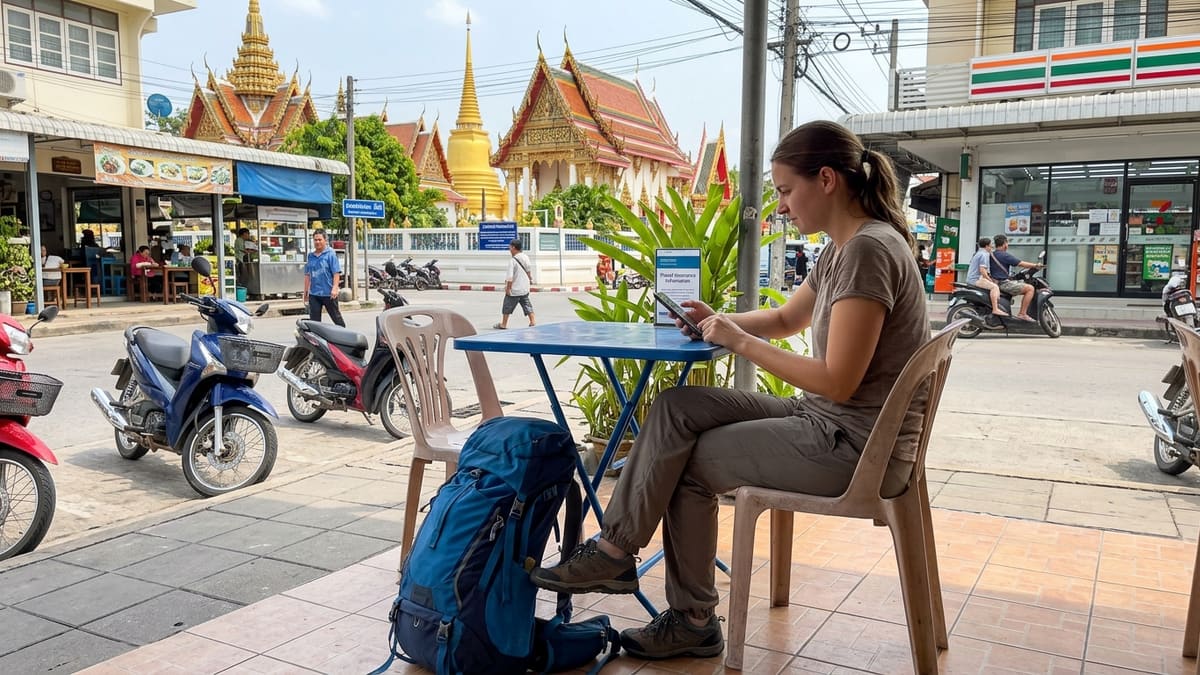
Are my credit card guarantees (Visa Premier, Mastercard Gold) sufficient for Thailand?
This is a legitimate and very common question for travelers, as premium credit cards like Visa Premier or Mastercard Gold are often presented as travel insurance solutions. While they do offer guarantees, it is imperative to understand that they are very often insufficient for a trip to Thailand, and especially for a stay longer than a few weeks.
Here are the main limitations to be aware of and to compare with dedicated insurance:
- Medical expense reimbursement limits: This is the most critical point. Credit cards offer limits generally ranging between €11,000 and €155,000 (depending on the bank and card type). In Thailand, where serious hospitalization can exceed €10,000 in a few days and repatriation €20,000, these limits can be quickly reached, or even largely exceeded. Dedicated travel insurance, on the other hand, offers much higher limits, from €300,000 to €1,000,000, which is much more adapted to the realities of international health costs.
- Maximum duration of stay covered: Credit card guarantees are almost always limited to stays of 90 consecutive days maximum. For a long trip to Thailand (round the world trip, working holiday visa, study semester), they become void after this period. Dedicated insurance can cover stays of up to 12 months or more.
- Specific exclusions: Credit cards have strict exclusions:
- Scooter accidents without a valid driving license (international license corresponding to the motorcycle category) are almost systematically excluded.
- Certain risky sports activities (scuba diving beyond a certain depth, high-altitude trekking, extreme sports) may be excluded or require very specific conditions.
- Pre-existing conditions are often poorly or not covered. - Deductibles and reimbursement methods: Significant deductibles may apply, reducing the final reimbursement. Moreover, credit cards mainly operate on the principle of reimbursement after advance payment, which means you will have to pay significant amounts on site and wait for your return to be reimbursed. Dedicated insurance often coordinates direct coverage with health facilities, saving you this advance payment.
- Assistance and repatriation: Repatriation is often covered by credit cards, but the conditions can be more restrictive (only upon decision of their medical service) and assistance less personalized than with a specialized insurer who has multilingual teams and an international network.
For a traveler preparing their stay in Thailand, it is therefore strongly recommended not to rely solely on their credit card and to supplement these guarantees with specific and comprehensive travel insurance. Even the highest-end cards do not always cover real needs abroad, especially in Southeast Asia.
| Guarantee | Premium Credit Card (e.g., Visa Premier) | Dedicated Travel Insurance (specialized) |
|---|---|---|
| Medical expenses / Hospitalization | €11,000 to €155,000 (depending on card and bank) | €300,000 to €1,000,000 (or more) |
| Medical repatriation | Yes, often upon decision of the assistance provider (indirect limits) | Yes, actual costs, 24/7 assistance (no limit) |
| Maximum duration of stay | 90 consecutive days max. | Up to 12 months and more (depending on contract, long stays, WHV) |
| Advance payment of medical expenses | Rarely, often reimbursement after advance payment by you | Yes, frequent direct coverage with hospitals |
| Civil Liability Abroad (RCVP) | Yes, often limited and with exclusions (e.g., driving) | Yes, high limits, covers a wider range of situations |
| Cancellation / Luggage guarantee | Often present, but with stricter limits and exclusions | Higher limits, more flexible and comprehensive conditions |
| Common exclusions | Scooter accidents without international motorcycle license, risky sports, undeclared pre-existing conditions. | Fewer exclusions if options purchased, broader coverage for international license and risky sports. |
What essential guarantees should you include in your Thailand travel insurance?
For a peaceful stay in Thailand, certain guarantees are not an option, but an absolute necessity. Here are the pillars of good Thailand travel insurance, those that will concretely protect you against the risks mentioned:
Medical and hospitalization expenses abroad
This is the most important guarantee. Ensure a very high ceiling, ideally at least €300,000, and advance payment or direct coverage. This will prevent you from having to pay astronomical sums yourself. Also check coverage for emergency dental expenses (fracture, toothache) and pharmacy costs.
Medical repatriation and assistance
This guarantee must cover the actual and unlimited costs of repatriation to your home country in case of serious illness, accident, or death. It often includes sending a doctor on site to organize repatriation, arranging the return of companions, and early return in case of a close relative's death. 24/7 assistance, with a service in English, is absolutely crucial for managing emergencies.
Private Life Civil Liability abroad (RCVP)
This covers material or bodily damage you might involuntarily cause to a third party during your stay. It is essential in case of a road accident, for example. Check the compensation limit carefully (often several million euros) and any exclusions (e.g., driving motorized vehicles). Your home insurance might cover it, but check territorial and limit restrictions.
Cancellation / Trip interruption guarantee
If you have already booked your flight tickets and accommodation, this guarantee protects you in case of forced cancellation for legitimate and unforeseeable reasons (serious illness, accident, death of a close relative, economic dismissal, etc.) before departure, or premature interruption of your trip once there. It allows you to recover part of the non-refundable expenses incurred (tickets, hotels).
Luggage and personal effects guarantee
In case of loss, theft, or damage to your luggage during transport or on site, this guarantee indemnifies you. Carefully check the compensation limits per item and in total, as well as exclusions (often very high-value items, cash).
For official information on travel to Thailand and precautions to take, consult the Travel Advisories of the Ministry for Europe and Foreign Affairs. You can also find additional information on social security abroad on Ameli.fr.
How to choose the right travel insurance based on the duration and type of your stay?
The choice of your Thailand travel insurance must be finely adapted to your traveler profile, the duration, and the exact nature of your stay. A backpacker planning 6 months of travel in Asia will not have the same requirements as a tourist on a 2-week vacation. Adapting your coverage is the key to not spending unnecessarily while being perfectly protected.
- For short vacations (less than 90 days):
- An occasional travel insurance (or "short-term") is generally sufficient. It covers a single trip for a determined period.
- Focus on medical expense and repatriation limits. Check that the sports activities you plan (diving, snorkeling, canyoning) are well included or require a specific extension.
- If you have already paid in advance (flight tickets, accommodation), cancellation insurance is strongly recommended.
- For long trips (more than 90 days, round the world, WHV):
- Credit card guarantees becoming inoperative after 90 days, an annual travel insurance or a specific contract for long stays (such as “Round the World,” “Working Holiday Visa,” or “WHV”) are absolutely mandatory.
- These contracts are designed to offer much more comprehensive coverage over extended durations (often 6 months to 1 year, renewable).
- They generally include options for extreme sports, very high medical expense and repatriation limits, as well as specific guarantees (early return, legal assistance).
- Some long-stay contracts even offer coverage options for young people or families, with adapted rates.
Also consider your travel style: are you more of a comfortable hotel type or a youth hostel type? Do you plan calm cultural activities or adventure and thrills? Every detail counts for tailor-made protection. For example, if you rent a scooter, make sure that two-wheeler driving is covered, subject to a valid license. If you are looking for feedback or discussions on Thailand itineraries, our Thailand travel forum is a valuable resource for exchanging with other travelers.
Pitfalls to avoid and fine print to check in a Thailand travel insurance contract
Reading the general conditions of an insurance contract is often tedious, but it is absolutely crucial for your Thailand travel insurance. Failing to do so risks discovering exclusions too late that will cost you dearly. Here are the points to examine with the greatest attention to avoid unpleasant surprises:
- Deductibles: A deductible is the portion of the costs that remains at your expense after the insurer's reimbursement. Choose a contract with a low or even zero deductible, especially for medical and repatriation costs. A deductible of 100 or 200 euros may seem negligible, but if you have several small consultations, it can quickly add up.
- Specific exclusions: This is where the most important clauses are hidden. Carefully check the list of situations not covered, particularly for:
- Risky sports: Scuba diving (beyond a certain depth), paragliding, canyoning, motocross, high-altitude trekking, etc. If you plan to practice these activities, make sure they are expressly included or take out a specific extension. Without this, an accident related to these practices will not be covered.
- Alcohol or drug consumption: Almost all contracts exclude incidents (accidents, illnesses) occurring under the influence of alcohol (above the legal limit) or narcotics. Be vigilant on this point, as the consequences can be dramatic.
- Pre-existing conditions: If you suffer from a chronic illness (diabetes, heart problems, asthma...), check how it is covered in case of a crisis or need for care on site. Often, only vital emergencies are covered, or a medical certificate is required before departure.
- Scooter driving without a valid license: This is a major pitfall in Thailand. To drive a scooter over 50cc and be covered by your insurance in case of an accident, you must imperatively possess an international driving permit that mentions category A (motorcycle), in addition to your national license. Without a valid and adapted international permit, most insurance companies will refuse to cover you in case of an accident, even if you have taken out excellent coverage. Always be in compliance!
- Coverage limits: Do not just know that a guarantee exists. Carefully compare the maximum reimbursement amounts for each guarantee (medical, repatriation, luggage, civil liability). A limit of €30,000 for medical expenses is often insufficient in Asia; aim for a minimum of €300,000. For repatriation, prefer “actual costs.”
- 24/7 Assistance: Make sure you have an emergency number easily reachable from Thailand, and that the assistance service is available in English to facilitate communication in case of stress.
- Coverage countries: If your trip includes other Southeast Asian countries (such as Laos, Cambodia, Vietnam), check that these destinations are included in your geographical coverage area.
What actually happens if I don't have insurance and I have a health problem or an accident in Thailand?
The absence of travel insurance for Thailand can turn a dream into a financial and personal nightmare. For a novice traveler who is a bit skeptical about the necessity of this expense, it is crucial to visualize the concrete and often dramatic consequences of not having coverage. Here are a few scenarios experienced by tourists:
- A scooter accident: a fractured leg
Imagine you rent a scooter in Phuket. Despite your caution, an unforeseen event causes you to fall, resulting in an open leg fracture. You are rushed to the nearest private international hospital. The emergency consultation, X-rays, cast application, and initial medications amount to €2,500. If an operation is necessary, the bill can exceed €7,000, not counting post-operative care, rehabilitation, and possible repatriation. Without insurance, you will have to pay all these costs on site, in cash or by card, before you can even be properly treated. Your family may need to send funds urgently. - Severe food poisoning: two days of hospitalization
After a meal at a night market in Chiang Mai, you develop severe food poisoning with dehydration and uncontrollable vomiting. You are admitted to a private clinic. Two days of hospitalization, intravenous infusions, tests (blood, stool analysis), and antibiotics cost around €3,000. Again, you will have to advance these costs, a considerable sum for a problem that could have been covered. - Emergency repatriation: a stroke during the trip
During an excursion, you suffer a stroke (CVA). Thai doctors, after stabilizing your condition, decide that you must be repatriated to your home country for specialized neurological follow-up. The cost of such transport, which may include a commercial flight with medical escort (doctor and nurse) or a dedicated air ambulance, is generally between €20,000 and €50,000, or even more for the most complex and urgent cases. Without specific insurance covering the actual costs of repatriation, it is up to you or your family to find this colossal sum urgently. The embassy, while it can provide advice, is not intended to pay these costs.
These situations, far from rare, can quickly turn a vacation budget into colossal debt and generate immense stress for you and your loved ones. In addition to the financial aspect, the absence of insurance means you will have to manage all logistics yourself in a country where you master neither the language nor the administrative system. The cost of good insurance, often less than €100 for a two-week stay, or a few hundred euros for a long trip, is a minimal investment compared to the financial and personal risks incurred. It is the guarantee of invaluable peace of mind.
🏆 Expert Verdict: Our Ultimate Advice
Questions fréquentes
Is travel insurance mandatory for Thailand?
No, travel insurance is not legally mandatory for French tourists entering Thailand. However, it is highly recommended and even essential due to the extremely high costs of medical care there, and specific health and accident risks (particularly scooter accidents). Without insurance, all expenses (consultations, hospitalization, repatriation, which can reach €50,000) are entirely your responsibility.
Does my credit card (Visa Premier, Mastercard Gold) provide sufficient coverage in Thailand?
Premium credit cards offer assistance and insurance guarantees, but they are very often insufficient for a trip to Thailand. Medical expense reimbursement limits are generally too low (between €11,000 and €155,000 compared to €300,000 to €1,000,000 for dedicated insurance) and coverage duration is limited (often 90 days maximum). Moreover, they contain significant exclusions (risky sports, scooter accidents without a valid international license). Dedicated travel insurance is therefore highly recommended as a supplement.
What is the average cost of medical repatriation from Thailand?
Medical repatriation from Thailand to your home country is a very expensive undertaking. Depending on the severity of the situation and the means employed (commercial flight with medical escort, dedicated air ambulance), the price can vary considerably, ranging from €20,000 to €50,000, or even more for the most complex and urgent cases. Without specific insurance covering the actual costs of repatriation, this sum is entirely borne by the traveler or their family.
What essential guarantees are needed for travel insurance in Thailand?
The essential guarantees for Thailand travel insurance are: medical and hospitalization expenses with a high limit (minimum €300,000), medical repatriation at actual costs and 24/7 assistance, and good civil liability abroad. Additional guarantees such as trip cancellation, luggage loss, and coverage for risky sports activities (if planned) are also very important for optimal protection.
Do I need an international permit to ride a scooter in Thailand and be covered by insurance?
Yes, absolutely. To be covered by your insurance in case of a scooter accident in Thailand, it is imperative to have both your national driving license and an international driving permit that specifies category A (motorcycle) corresponding to the rented vehicle. Without these two valid documents, most insurance companies will refuse to compensate you in the event of an accident, even if you have comprehensive coverage. Do not take this financial and legal risk.
What happens if I have a health problem in Thailand without insurance?
If you have a health problem without insurance, you will have to pay all medical expenses on site, often in advance. This includes consultations, examinations, medicines, and hospitalizations. Faced with bills that can reach tens of thousands of euros, this can quickly become a financial disaster. In a serious situation requiring repatriation, the cost of repatriation (€20,000 to €50,000) will also be your responsibility, as the embassy cannot finance it. This is a major risk.