Mandatory Vaccines Thailand and Health Precautions: Prepare Your Trip Like an Expert
 Article written and verified by a physician specializing in travel medicine and infectiology · Updated in 2026
For a trip to Thailand, health preparation is a key step. Although no vaccine is universally mandatory for French travelers, the yellow fever vaccine is essential if you transit through a high-risk country. The DTPC must always be up-to-date.
- Strongly recommended vaccines include Hepatitis A, Typhoid Fever, and, depending on the itinerary and duration, Japanese Encephalitis and Rabies.
- Prevention of mosquito-borne diseases (Dengue, Zika, Chikungunya, Malaria) is crucial and relies on effective repellents and covering clothing.
- Rigorous food and water hygiene measures are essential to prevent gastrointestinal disorders.
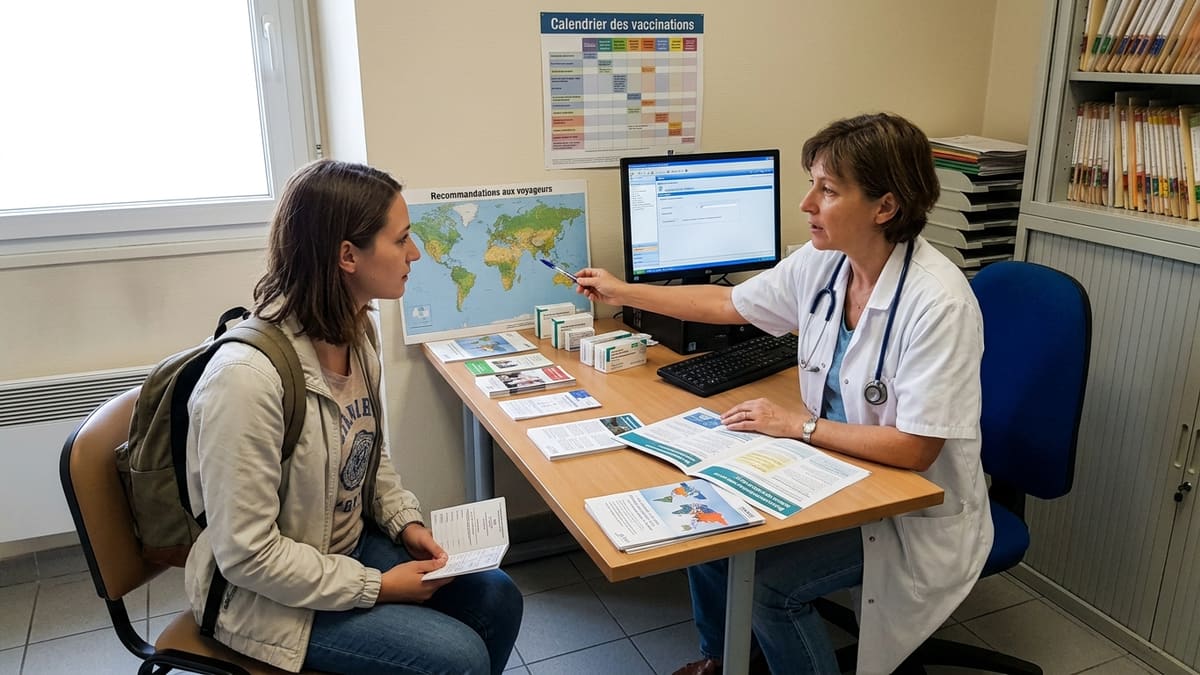
A pre-travel medical consultation is essential, ideally 4 to 6 weeks before departure, with your general practitioner or an international vaccination center, for personalized advice based on your profile and itinerary.
What are the absolutely mandatory vaccines for a French national traveling to Thailand?
For French nationals traveling to Thailand, there is no universally mandatory vaccination if the traveler comes directly from metropolitan France. However, a major and non-negotiable exception concerns the yellow fever vaccination. It is imperative for any traveler aged 9 months or older who has transited or stayed, even for a few hours, in a country where yellow fever is endemic.
The exhaustive list of these countries is established and regularly updated by the World Health Organization (WHO) and French health authorities such as the Institut Pasteur and France Diplomatie. Without the presentation of an International Certificate of Vaccination or Prophylaxis (ICVP), commonly known as the “yellow card,” entry into Thai territory may be refused, or quarantine imposed at the traveler's expense.
It is therefore crucial to consult the France Diplomatie Travel Advice for Thailand or the Institut Pasteur website just before your departure to check the latest requirements, especially if your itinerary includes an extended stopover in a risk area.
Which vaccines are highly recommended for Thailand and why?
Beyond conditional mandatory requirements, several vaccines are highly recommended for a peaceful stay in Thailand. These recommendations are essential and depend on the duration of your stay, the areas visited (urban, rural), the season (dry or rainy), and the type of activities planned, as well as your health status.
| Vaccine | Targeted disease and specific risks in Thailand | Specific recommendations |
|---|---|---|
| DTPC (Diphtheria, Tetanus, Polio, Whooping Cough) | These diseases are universally preventable. Tetanus, in particular, linked to skin injuries, represents a constant risk in any environment. | Essential update for all travelers, in accordance with the French vaccination schedule (booster every 20 years for 25-64 year olds, every 10 years for those older). |
| Hepatitis A | Liver disease caused by a virus transmitted by ingesting contaminated water or food (seafood, unwashed raw vegetables). Very common in Southeast Asia. | Strongly recommended for all stays, even short ones, and for varying hygiene conditions (street food, markets). |
| Typhoid Fever | Serious bacterial infection (Salmonella Typhi) transmitted by contaminated water and food. Present throughout the country, with increased risk in rural and less touristy areas. | Recommended for prolonged stays (more than 3 weeks), outside classic tourist circuits, or in case of precarious hygiene conditions (homestay). |
| Japanese Encephalitis | Serious, potentially fatal viral disease, transmitted by Culex mosquitoes. Present in rural rice-growing areas, especially during the rainy season (May to October). | To be considered for long-term (more than 30 days) or repeated stays in rural areas, outdoor activities after sunset, or during the rainy season. |
| Rabies | Fatal virus transmitted by the saliva of infected animals (stray dogs, monkeys). Common in Thailand, even in urban areas. | Recommended for adventurous travelers, children (who may be bitten without reporting it), or those in close contact with animals. Pre-exposure vaccination does not eliminate the need for post-exposure treatment in case of a bite. |
It is crucial to consult a healthcare professional specializing in travel medicine. They can assess your itinerary, medical history, and suggest a suitable vaccination schedule.
How can I effectively protect myself from mosquito-borne diseases (Dengue, Zika, Chikungunya, Malaria) in Thailand?
Mosquitoes in Thailand are vectors of several serious diseases, including Dengue, Zika, Chikungunya, and Malaria. There are no systematic vaccines for all these diseases, with the exception of Japanese encephalitis (see previous section) and preventive treatment (chemoprophylaxis) for malaria. The best protection relies on rigorous and constant preventive measures:
- Skin repellents: Use repellents containing DEET (30% to 50% concentration), IR3535 (at least 20%), or Icaridin (20% to 25%). Apply them to all exposed skin areas, several times a day according to manufacturer's recommendations and activity. For children, use age-appropriate and less concentrated products.
- Protective clothing: Wear long, loose, light-colored clothing (long sleeves, pants, socks) from sunrise until sunset, when Aedes mosquitoes (vectors of Dengue and Zika) are most active. For malaria-risk areas, prioritize this protection 24/7.
- Mosquito nets: Always sleep under an insecticide-treated mosquito net (permethrin) if your accommodation is not air-conditioned, does not have screened windows, or if you are staying in a rural area.
- Insecticides and diffusers: Use indoor insecticides (pyrethroid-based) and electric diffusers in your room, especially in the evening.
- Avoid risk areas: Be particularly vigilant near stagnant water areas (swamps, rice paddies, puddles, flower pots) which are mosquito breeding grounds.
For malaria, Thailand is considered a low-risk or even no-risk area in major cities and tourist islands (Bangkok, Chiang Mai, Phuket, Koh Samui). The risk is very low to low but not zero in rural border areas with Myanmar (Burma), Cambodia, and Laos, particularly in the provinces of Tak, Kanchanaburi, Prachuap Khiri Khan, Ranong, Chumphon, Phetchaburi, and parts of Ubon Ratchathani. Chemoprophylaxis (preventive medication) should be discussed with your travel medicine specialist if your itinerary includes these risk areas, weighing the benefit/risk ratio.
What precautions should be taken regarding food and water to avoid food poisoning or gastrointestinal illnesses?
Food poisoning and gastrointestinal illnesses (traveler's diarrhea) are the most common health problems and can spoil a trip. They are mainly due to the consumption of water or food contaminated with bacteria (such as Escherichia coli, Salmonella, Shigella, Campylobacter) or viruses (Norovirus, Rotavirus). Here are strict precautions to adopt:
- Water and beverages: Drink only bottled water with a sealed cap (check the integrity seal) or purified water (filtered and treated). Absolutely avoid tap water. For ice cubes, ensure they are made with purified water (often translucent and perforated in the center). Use bottled water even for brushing your teeth.
- Food: Apply the golden rule “Boil it, cook it, peel it, or forget it!” Prefer hot, freshly cooked food served immediately after cooking. Dishes served in busy restaurants or by street vendors with high turnover are generally safer, as the food does not sit for long. Avoid dishes left at room temperature for extended periods, poorly refrigerated cold buffets.
- Fruits and vegetables: Consume only fruits you can peel yourself (bananas, mangoes, papayas, oranges). Avoid salads, raw or cut vegetables sold in markets, unless you are certain of their washing with purified water and their impeccable freshness.
- Hand hygiene: Wash your hands frequently with soap and water, or use an alcohol-based hand sanitizer containing at least 60% alcohol, especially before eating, handling food, and after using the toilet.
- Milk and dairy products: Avoid unpasteurized milk and artisan dairy products, which can be a source of bacteria (e.g., Brucellosis).
- Seafood and fish: Consume them only if they are perfectly cooked and come from reliable sources. Raw shellfish and crustaceans carry a high risk.
A first-aid kit with anti-diarrheal medications (such as loperamide for occasional and limited use) and oral rehydration solutions (ORS) is recommended. In case of persistent diarrhea, fever, or blood in the stools, consult a doctor promptly.
Are there specific considerations for children or at-risk individuals (immunocompromised, pregnant)?
Yes, young children, pregnant women, the elderly, and immunocompromised individuals constitute at-risk populations requiring particular attention regarding mandatory vaccines Thailand and health precautions. Their immune system is often more fragile, their physiological state is specific, or their protection needs are unique.
- Children: Ensure their usual vaccination schedule (measles, mumps, rubella - MMR, DTPC) is up-to-date and complete before departure. Vaccines against Hepatitis A and Typhoid Fever are often recommended from 1 year of age. Mosquito protection is even more crucial for them, with age-appropriate repellents and covering clothing. Avoid contact with animals.
- Pregnant women: Travel to Thailand involves risks (Zika, Dengue, malaria, traveler's diarrhea) that can be serious for the mother and fetus. Most live attenuated vaccines (such as yellow fever, measles) are contraindicated during pregnancy. The decision to travel must be carefully considered with an obstetrician and a travel doctor, who will assess the risks for the mother and fetus. Anti-mosquito precautions are essential to prevent Zika and Dengue.
- Immunocompromised individuals: Their immune defenses being weakened (by a chronic illness, immunosuppressive treatment, etc.), they are more susceptible to contracting serious infections. Certain vaccines (live attenuated) may be contraindicated. A consultation with an infectiologist or a travel medicine specialist is imperative several months before departure for a personalized and very strict prevention plan.
- Elderly individuals: Their risk of complications related to infections is higher, and their recovery may be slower. A thorough pre-travel health check-up is strongly advised, as well as a check of all up-to-date vaccinations.
In all these cases, a consultation with a travel medicine specialist is imperative. This professional will establish a personalized and detailed prevention plan, taking into account medical history, current treatments, and the precise itinerary. It is crucial to anticipate this consultation so that vaccination schedules can be completed on time.
Where and when should I get these vaccines and consult a healthcare professional for personalized advice?
The planning of mandatory vaccines Thailand and health precautions must be anticipated rigorously. It is strongly recommended to consult a healthcare professional at least 4 to 6 weeks before your departure. Some vaccinations require several injections spaced out in time to be fully effective, and others should be done shortly before the trip.
When to consult?
Ideally, 4 to 6 weeks before departure. For some vaccines (e.g., Japanese encephalitis) a 3-dose schedule may be necessary, requiring several weeks. For others, one or two doses are sufficient but require time to become immunizing. A late consultation can limit protection options.
Who to consult?
Your general practitioner is an essential first point of contact for updating universal vaccines (DTPC, MMR). For specific travel vaccinations and comprehensive advice, an accredited international vaccination center or a specialized tropical disease service will be most relevant. These structures have the expertise and specific vaccines.
Where to get vaccinated?
Common vaccines (DTPC, Hepatitis A) can be administered by your general practitioner or at a pharmacy according to legislation. Specific vaccines like yellow fever or Japanese encephalitis, as well as rabies, are only available at international vaccination centers accredited by the Ministry of Health, which are solely authorized to issue the International Certificate of Vaccination.
Remember to bring your health record and vaccination record to your consultation for accurate tracking. Detailed information is also available on the Institut Pasteur website and France Diplomatie (Travel Advice Thailand).
What are the administrative formalities related to vaccines (certificates)?
When it comes to mandatory vaccines Thailand and health precautions, administrative formalities are mainly focused on proof of yellow fever vaccination if necessary. Here are the key points to master:
- International Certificate of Vaccination (ICVP): For yellow fever, the “International Certificate of Vaccination or Prophylaxis” (ICVP), often called the “yellow card,” is the only officially recognized document worldwide. It is issued by the vaccination center after the injection and must be kept carefully with your passport, as it is required by Thai authorities in case of transit or stay in a risk area.
- Validity: Yellow fever vaccination is valid for life since July 11, 2016 (WHO decision), starting 10 days after the first injection. This lifelong validity applies even if your card indicates a limited duration.
- Absence of certificate and consequences: In the absence of this certificate when required (transit through a risk area), Thai authorities may refuse you entry into the territory, impose a quarantine of up to 6 days, or even demand on-site vaccination at your expense, under sometimes precarious conditions.
- Other vaccines: For highly recommended vaccines (Hepatitis A, Typhoid Fever, etc.), no certificate is required for entry into Thailand. However, it is always wise to keep a record of all your up-to-date vaccinations in your personal health record or a digital copy, which can be useful in case of medical consultation on site.
- Prescriptions: If you are traveling with specific medications, plan to bring a prescription from your doctor, translated into English if possible, to avoid any problems with customs, especially for controlled substances.
Make sure all your travel and health documents are in order well before your departure to avoid any inconvenience upon arrival. Failure to comply with these formalities can seriously jeopardize your stay.
🏆 Specialist's Verdict: Our Key Recommendations
Questions fréquentes
Is yellow fever vaccination still mandatory for Thailand?
Yellow fever vaccination is only mandatory for Thailand if you are arriving from a country where yellow fever is endemic or if you have transited for more than 12 hours in an airport located in a risk area, as specified by the WHO and France Diplomatie. For travelers coming directly from metropolitan France, it is not required, but verification before departure remains essential.
How long before departure should I get vaccinated for Thailand?
It is recommended to consult a healthcare professional at least 4 to 6 weeks before your departure. Some vaccines require several injections spaced out in time to be fully effective, and others should be done at the last moment. Early consultation allows for optimal protection.
What are the main disease risks in Thailand not covered by a vaccine?
The main diseases in Thailand not covered by a systematic vaccine are Dengue, Zika, and Chikungunya, all transmitted by mosquitoes. Malaria requires chemoprophylaxis in certain high-risk border areas. Prevention relies on the use of repellents (DEET, Icaridin), covering clothing, and mosquito nets.
Can I drink tap water in Thailand?
No, it is strongly advised not to drink tap water in Thailand. Consume only sealed bottled water or purified water. Also avoid ice cubes if you have any doubt about their origin or if you don't know if the water used was purified.
Do children need specific vaccines for Thailand?
In addition to an up-to-date vaccination schedule (DTPC, MMR), Hepatitis A and Typhoid Fever vaccines are generally recommended for children from 1 year of age, depending on the itinerary. Consultation with a travel medicine specialist is essential for a plan adapted to the child's age and activities, also including specific mosquito protection.