Booking Your Bus for Traveling in Thailand: The Expert Guide
 Article written and verified by a Southeast Asia travel expert and local transport specialist · Updated in 2026
To book your bus for traveling in Thailand from your home country, anticipation is key to a serene journey. Using reliable online platforms allows you to secure your inter-city travels, avoid sold-out seats (especially during high season), and choose the comfort level suited to your budget and expectations. This guarantees invaluable peace of mind before your departure.
- Prefer platforms like 12go.asia or Baolau for their reliability and user-friendly interface.
- Choose the type of bus that matches your journey: VIP for comfort, Express for good value.
- Book your tickets at least a few days in advance, especially for popular routes or peak periods.
- Thoroughly check essential information: precise departure/arrival locations, estimated duration, and baggage policy for each company.
By following these tips, you transform your travel planning into a simple and secure step, saving you from logistical surprises once you are in Thailand.
What are the best online platforms to book bus tickets in Thailand from your home country?
For a traveler looking to book bus tickets in Thailand in advance, a few platforms have emerged as essential references. They offer an interface in English, secure payment options, and a wide selection of routes, often combining buses, trains, and ferries.
12go.asia: The Undisputed Leader
This platform is the most well-known and widely used by Western travelers in Southeast Asia. It offers a very intuitive interface in multiple languages, detailed customer reviews, and a wide range of transportation including buses, trains, and ferries. The information is clear, including exact departure points (with maps).
Baolau: The Solid Alternative
Similar to 12go.asia, Baolau also covers a large part of Southeast Asia, including Thailand. Its advantage is sometimes offering slightly different companies or itineraries, allowing for a finer comparison of options and the discovery of competitive fares. The interface is clean, efficient, and available in English.
BusOnlineTicket.co.th: The Local Option
Less known to international travelers but widely used locally, this platform can sometimes offer slightly lower fares or more specific itineraries, especially for short trips or to less touristy destinations. The site is primarily in English but remains easy to navigate.
Comparative table of main bus booking platforms
| Platform | Advantages | Disadvantages | Types of Services |
|---|---|---|---|
| 12go.asia | Wide choice of companies, numerous customer reviews, intuitive and multilingual interface, combined transport (bus+ferry). | Service fees (approx. 5-10%), prices sometimes slightly higher than direct purchase on site. | Buses, trains, ferries, minivans, flights. |
| Baolau | Very good coverage in Southeast Asia, sometimes exclusive company options, clear and efficient interface. | Fewer customer reviews than 12go.asia, service fees apply. | Buses, trains, ferries, flights. |
| BusOnlineTicket.co.th | Sometimes prices closer to local fares, wide selection of Thai companies. | Interface less international-traveler-oriented, fewer combined services, website only in English. | Mainly buses, some ferries and minivans. |
What types of buses are there in Thailand and which one should I choose based on my needs?
Thailand offers a variety of bus services to suit all budgets and comfort levels. Knowing the differences will help you choose the best bus for traveling in Thailand according to your route and expectations.
- VIP Buses (or First Class): These are the most comfortable and modern buses. They are equipped with very spacious reclining seats, air conditioning (often very strong, so bring a sweater!), blankets, snacks, and free bottles of water. Some even offer light meals or a host on board. Ideal for long overnight journeys (e.g., Bangkok-Chiang Mai: 10-12h, 600-900 THB or 15-23 €).
- Express Buses (or Second Class): Offer an excellent compromise between comfort and price. Seats are less spacious than VIP but remain comfortable for most journeys. Air conditioning is standard, and sometimes a small snack is included. Perfect for medium distances (e.g., Bangkok-Ayutthaya: 1h30-2h, approx. 70-120 THB or 2-3 €).
- Local Buses (or Third Class): These are the cheapest and most authentic buses. They are often without air conditioning (open windows), stop frequently, and are primarily used by the local population. Comfort is basic, but the experience is immersive. Prefer these for very short distances or if your budget is very tight.
For a first trip or journeys longer than 4 hours, always opt for VIP or Express buses. The fares are very accessible for the level of service offered.
Do I absolutely need to book my bus in advance, or can I buy on-site without risk?
The decision to book your bus for Thailand in advance or buy on-site depends on several key factors, such as your travel period, the popularity of the route, and your risk tolerance. As an expert, I strongly advise you to plan ahead.
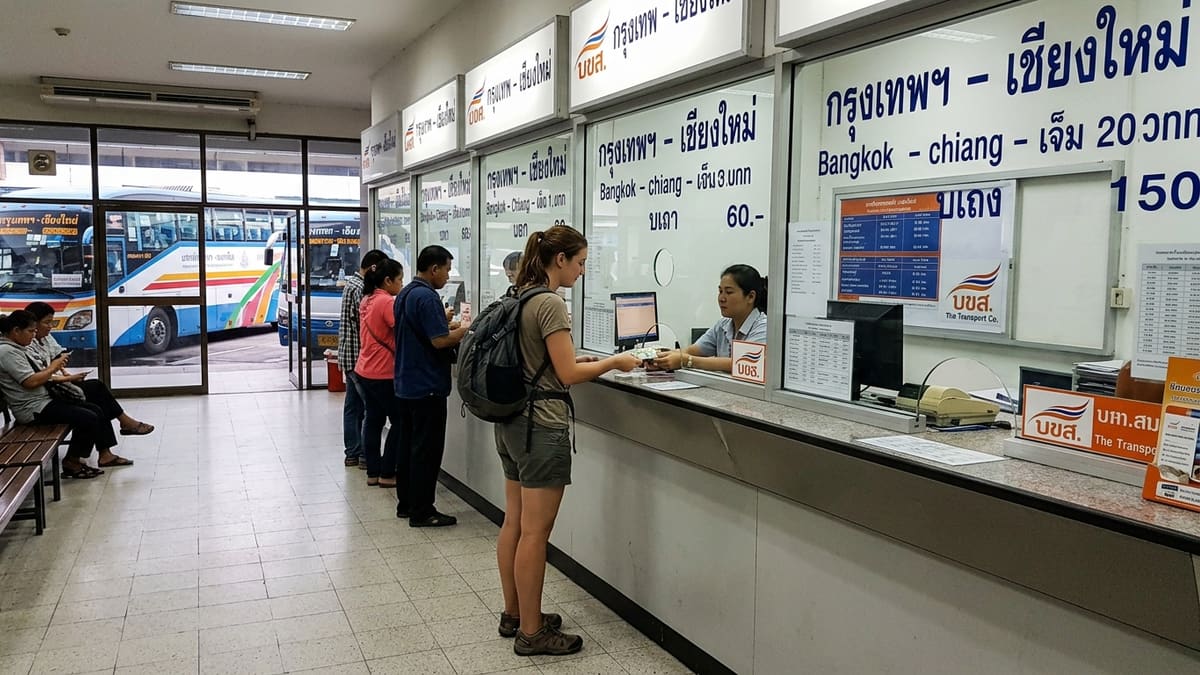
The risks of on-site purchase
- Lack of availability: During high tourist season (November to February, Easter) or during Thai national holidays (like Songkran in April or Loy Krathong in November), seats on popular routes (Bangkok-Chiang Mai, Bangkok-Phuket, island connections) can be fully booked several days, even weeks, in advance.
- Potentially higher prices: Buying directly at bus stations or from local agencies does not always guarantee a lower price. The latter may apply a commission, and online fares are often competitive and transparent.
- Risk of scams: In some less tourist-frequented bus stations or via small unscrupulous agencies, scams are possible (inflated prices, poor quality buses, poorly managed luggage, detours). The Ministry of Europe and Foreign Affairs recommends always favoring official and recognized companies.
- Waste of time: Looking for tickets on-site can take valuable time that could be spent exploring the country.
It is therefore strongly recommended to book in advance for all popular routes, if you have fixed dates, or if you are traveling during high season. For less demanded connections or local buses for very short distances, buying on-site remains a viable option, but with an element of spontaneity and potential unpredictability. For more details on the bus experience, consult our complete guide to bus travel in Thailand.
How can I ensure the reliability and safety of the proposed bus companies?
The reliability of bus companies in Thailand is a legitimate concern. For a serene and safe journey, here are the criteria to check and the companies to favor:
- Reputable booking platforms: Using sites like 12go.asia or Baolau (detailed above) generally guarantees a partnership with established companies that respect safety and service standards. These platforms act as an initial filter.
- Traveler reviews: Before booking, systematically consult feedback from other users on booking platforms or travel forums (e.g., TripAdvisor, Lonely Planet). Look for mentions about comfort, punctuality, general condition of the bus, driver's conduct, and staff professionalism.
- Official and recognized companies: Large companies like Sombat Tour, Nakhonchai Air, Busline, Lignite Tour, or Greenbus Thailand (especially for the North) are generally very reliable. They have modern fleets, experienced drivers, and comply with current safety standards. Avoid nameless or very cheap companies for which you have no feedback.
- Clear departure and arrival points: Reliable companies operate from well-identified and secure main bus terminals (e.g., Mo Chit North Terminal in Bangkok, Terminal 2 in Chiang Mai) and not makeshift stops or poorly lit streets. Precise information should be provided during booking.
What key information should I check before finalizing a bus reservation?
Before confirming your online reservation, take the time to check this information. A small check can save you a lot of inconvenience during your bus trip in Thailand.
Precise departure and arrival location
Make sure you know the exact address of the bus station or meeting point. Some large cities (like Bangkok or Phuket) have multiple terminals. Check if a shuttle is included for outlying points or if you will need to plan a taxi/Grab/tuk-tuk to get there. A Google Maps link is a plus.
Estimated journey duration and stops
The indicated durations are estimates. Delays are frequent in Thailand due to traffic, weather conditions, or longer-than-expected stops. Allow significant leeway, especially if you have a connection (train, plane, ferry) on the same day. Check the number of planned stops.
Baggage policy (weight and size)
Each company has its own rules regarding the weight and size of checked and carry-on luggage. Generally, one checked bag (standard size suitcase) is included, and a small backpack as carry-on. Check restrictions to avoid additional fees or having to leave a bag behind. Average permitted weight: 20-25 kg in checked luggage.
Seat number and booking confirmation
Check if a seat number is assigned and if you can choose it. Make sure you receive a clear confirmation email with all your booking details. Print this document or, at a minimum, take a screenshot of it on your phone, as internet connection can be unstable and some ticket counters may require physical proof.
What are the cultural specificities or tips to know for a bus trip in Thailand?
To make your bus trip in Thailand more enjoyable and surprise-free, a few expert tips and local specificities are good to know:
- Air conditioning is very strong: This is the golden rule! Always prefer a thick sweater, a jacket, or a large scarf, even in mid-summer. The temperature in VIP buses can drop well below 20°C, making long overnight journeys particularly chilly.
- Frequent stops with meal options: Buses often make stops for restrooms and meals, especially on long journeys. These rest areas generally offer affordable and delicious local food stalls. Take the opportunity to stretch your legs and taste authentic street food. Some routes even include a free meal ticket.
- Bring your own snacks and drinks: Although snacks are sometimes included, it's always wise to bring bottled water and some snacks (fruits, dry cakes) for your personal comfort, especially if you have specific dietary preferences.
- Baggage security: Always keep your valuables, important documents (passport, tickets), and money with you in the cabin, in a small backpack that you keep under your seat or at your feet. Checked bags are generally secure, but caution is advised for high-value items.
- Punctuality and anticipation: Be at the bus station at least 30 to 45 minutes before the scheduled departure time. Thai buses, especially VIP and Express, generally depart on time, and it is better to anticipate to avoid rushing and to find your platform.
- Minivans: For shorter trips or to less accessible destinations, minivans are a popular option. They are faster but often less comfortable as seats are cramped and luggage can be piled up. Book them via 12go.asia or Baolau for more reliability.
Understanding these particularities will help you better anticipate and enjoy your transport experience. For specific itinerary ideas, you can consult our page on the best bus itineraries in Thailand.
What payment options are available, and are there hidden fees or exchange rates to consider?
When booking your bus in Thailand, online payment options are diverse and secure. However, it is important to be vigilant about potential fees and exchange rates to avoid any unpleasant surprises.
- International credit/debit cards: Platforms like 12go.asia and Baolau accept major international cards (Visa, Mastercard, American Express). This is the most common and convenient method for payments from your home country.
- PayPal: Often available, PayPal offers an additional layer of security by avoiding direct communication of your bank details to the site. It is a recommended option for its buyer protection.
- Platform service fees: Online booking platforms almost always apply service fees (generally between 5% and 10% of the ticket price). These fees are clearly displayed before final payment; it is crucial to check them to understand the total cost.
- Exchange rates and bank fees: If the price is displayed in Thai Baht (THB) and you pay in euros (€), your bank or the platform will apply an exchange rate. Be aware: some banks charge high fees for foreign currency transactions. Prefer to pay in the local currency if your bank card offers an advantageous interbank exchange rate (like neobanks), or choose the euro conversion offered by the platform if you prefer immediate clarity of the cost, knowing that the platform's rate may be less favorable.
- Other options (less common for international bookings): Payments via QR Code systems (PromptPay) or local bank transfers are mainly reserved for on-site purchases.
🏆 Specialist's Verdict: Our Final Recommendations
Ready to organize your trip? Book your bus for Thailand now!
Questions fréquentes
Can I change or cancel my online bus booking in Thailand?
The modification or cancellation policy largely depends on the bus company and the booking platform used. Generally, fees apply, and last-minute cancellations (less than 24 to 48 hours before departure) are often non-refundable. Always check the specific conditions displayed at the time of purchase on 12go.asia or Baolau.
Is it necessary to print my bus ticket in Thailand?
In most cases, an electronic version of your ticket (on smartphone or tablet) is accepted. However, it is strongly recommended to have a printed copy or at least a screenshot of the QR code/reference number. This can be useful in case of phone battery issues, lack of internet connection, or if staff require physical proof, especially in more remote stations.
Are buses in Thailand air-conditioned? Should I bring warm clothes?
Yes, VIP and Express buses are systematically air-conditioned. However, the air conditioning is often set to very low temperatures (sometimes 18°C or less), which can be very uncomfortable on long journeys. It is therefore essential to bring a thick sweater, a jacket, and even a blanket for your comfort. Local buses (Third Class) are often without air conditioning, with open windows.
How to get to bus stations in Thailand, especially in Bangkok?
Bus stations, especially in large cities like Bangkok, are often located outside city centers for traffic reasons. In Bangkok, the Northern terminal (Mo Chit) is the largest. You can get there by taxi, Grab (the equivalent of Uber/Bolt in Southeast Asia), tuk-tuk, or public transport (Skytrain/metro in Bangkok with a connection by local bus or taxi). Always allow extra time (minimum 1 hour in Bangkok) for the journey to the bus station.
Are meals or snacks included in the bus ticket price in Thailand?
On long journeys (more than 4-5 hours) and especially with VIP or First Class buses, light snacks (small cakes), a bottle of water, and sometimes a small meal (fried rice or noodles) are included in the ticket price. Express buses may offer a drink. Local buses (Third Class) generally include nothing. Take advantage of stops to buy local food.