Traveling by Bus in Thailand for an Economical and Safe Journey
 Article written and verified by a Southeast Asia travel specialist, who has personally experienced bus transport in Thailand · Updated in 2026
For reliable, economical, and safe bus travel in Thailand, this mode of transport is an excellent option for young Francophone travelers, especially backpackers. It allows you to cover distances at a reduced cost, offering a unique cultural immersion. Before you embark, it's crucial to understand the different types of buses, reliable booking methods, and local practices for a serene experience.
- VIP buses (e.g., Sombat Tour, Nakhonchai Air) offer the best comfort with wide, reclining seats and air conditioning, ideal for long journeys.
- Tickets can be purchased online through platforms like 12Go.asia or directly at bus station counters.
- Safety is generally good with reputable companies, but vigilance is advised against theft and overly strong air conditioning.
Expect to pay around 500 to 900 THB for a Bangkok-Chiang Mai VIP bus trip. Always pack water, snacks, and warm clothing for the often very strong air conditioning. This complete guide to bus travel in Thailand will provide you with all the keys for a successful experience, helping you avoid pitfalls and optimize your budget.
Pros and Cons of Bus Travel in Thailand: An Informed Choice for Your Journey
Opting for the bus for your trip to Thailand has its strengths and weaknesses compared to other modes of transport. It's essential to know them to make the choice that best suits your travel style and budget.
| Criterion | Bus | Train | Plane | Minivan/Taxi |
|---|---|---|---|---|
| Average Cost (Bangkok-Chiang Mai) | 350-900 THB (9-24 €) | 700-1500 THB (18-40 €) | 800-2500 THB (21-65 €) | 800-2000 THB (21-52 €) |
| Journey Time (Bangkok-Chiang Mai) | 9-12 hours | 11-15 hours | 1h15 (flight) + airport transfers | 8-10 hours (faster, but less safe) |
| Comfort | Variable (depending on class), strong AC | Seats or berths, less AC | Standard airline | Often cramped, frequent stops |
| Authenticity/Local Experience | High, contact with locals | Medium, passing landscapes | Low, purely functional | Medium, but more private |
| Availability | Very extensive, numerous connections | Limited network to main lines | Frequent flights between major cities | Everywhere, but beware of scams |
The Strengths of Bus Travel
Bus travel is the most economical solution for traversing Thailand, with tickets often 20 to 50% cheaper than trains and up to 70% cheaper than flights for similar routes. The bus network is also the most dense and extensive in the country, serving even remote areas. It's an excellent way to get an authentic glimpse of local life and meet other travelers. Furthermore, departures are frequent, offering great flexibility.
Disadvantages to Consider
Journeys can be long, especially over long distances (more than 8 hours), and the air conditioning is often very strong, making warm clothing necessary. Comfort varies considerably depending on the chosen bus class. Moreover, road safety can be a concern with some companies or minivans, although buses from major companies (like Sombat Tour or Nakhonchai Air) are generally reliable and well-maintained. Stops can sometimes be chaotic and stations bustling.
Types of Buses in Thailand: Choose Your Level of Comfort and Price
For bus travel in Thailand, several categories of buses are available. The choice directly impacts your comfort, ticket price, and even journey duration.
VIP Bus (Supersavee or VIP 24)
These buses offer the best comfort with only 24 to 32 wide, highly reclining and spaced seats (2+1 config). They often have onboard restrooms, beverage and snack service (or even a meal), blankets, and sometimes individual screens. Ideal for long overnight journeys where sleep is paramount. Companies like Sombat Tour or Nakhonchai Air are benchmarks. Indicative price: 600-900 THB (16-24 €) for a Bangkok-Chiang Mai trip.
1st Class Bus (or VIP 32)
An excellent compromise between comfort and price. Fewer seats than 2nd class (around 32 to 40 seats in 2+2 config), but still reclining and comfortable. Air conditioning is standard, restrooms may be onboard, and frequent stops are scheduled for breaks. Indicative price: 450-700 THB (12-18 €) for a Bangkok-Chiang Mai trip.
2nd Class Bus (or Standard)
More basic, with about 50 to 60 seats (2+2 config) and often less powerful or poorly regulated air conditioning. Less legroom and less reclining seats. Suitable for short trips or very tight budgets. Do not expect onboard service. Indicative price: 350-500 THB (9-13 €) for a Bangkok-Chiang Mai trip.
Minibus / Minivan
Often used for shorter trips (less than 4-5 hours) or connections between small towns and islands. Very fast, but also less comfortable, more cramped (luggage is sometimes piled up), and with a sometimes controversial safety reputation due to reckless driving. Cheaper, but use with caution and avoid for long distances. Price: highly variable, often 150 to 400 THB depending on distance.
Buying Bus Tickets in Thailand: Options and Essential Checks
Several methods are available for buying your bus tickets, each with its advantages and disadvantages. It is imperative to check certain information to avoid unpleasant surprises.
Buying Online: Speed and Peace of Mind
Online platforms like 12Go.asia (very popular and reliable among travelers) or BusOnlineTicket.co.th are very convenient for booking in advance, especially during high season or for popular routes (e.g., Bangkok-Chiang Mai, Bangkok-Phuket). They allow you to easily compare companies, classes, and schedules, and often offer immediate email confirmation. Prices are slightly higher (5-10% service fee), but peace of mind is guaranteed. You will receive an e-ticket to print or present on your smartphone at the station.
Buying at the Bus Station: The Most Economical and Local Option
Direct purchase at bus station counters is generally the cheapest option as it does not include service fees from platforms or agencies. Show up a few hours before departure for short trips, or the day before for long and popular trips, especially if you are traveling during high season. Stations are often divided by company, so locate the correct counter. Remember to note your destination name in Thai (or use Google Translate) to facilitate communication. Another useful authoritative source for preparing your trip is the Tourism Authority of Thailand (TAT), which offers official information on transportation.
Buying via Travel Agencies / Hotels: Convenience at a Cost
Many travel agencies and hotels offer bus ticket booking. This is convenient because they often manage transportation to the station. However, expect a higher commission (sometimes 20-30% more). Always check the company, bus type, and departure time. Make sure you get an official ticket (not a simple handwritten receipt) with all clear information.
Imperative Checks Before Buying Your Ticket
- Company name: Opt for reputable companies like Sombat Tour, Nakhonchai Air, or Greenbus (for the North) for better service and safety.
- Bus type: Ensure the ticket clearly states “VIP” or “1st Class” if that's what you requested. Do not allow yourself to be sold a simple "bus" without clarification.
- Departure time and date: Double-check this information carefully, especially for night trips.
- Exact destination: Confirm the spelling of your destination to avoid errors.
- Departure station: Some cities (like Bangkok) have multiple stations. Check which one is indicated on your ticket.
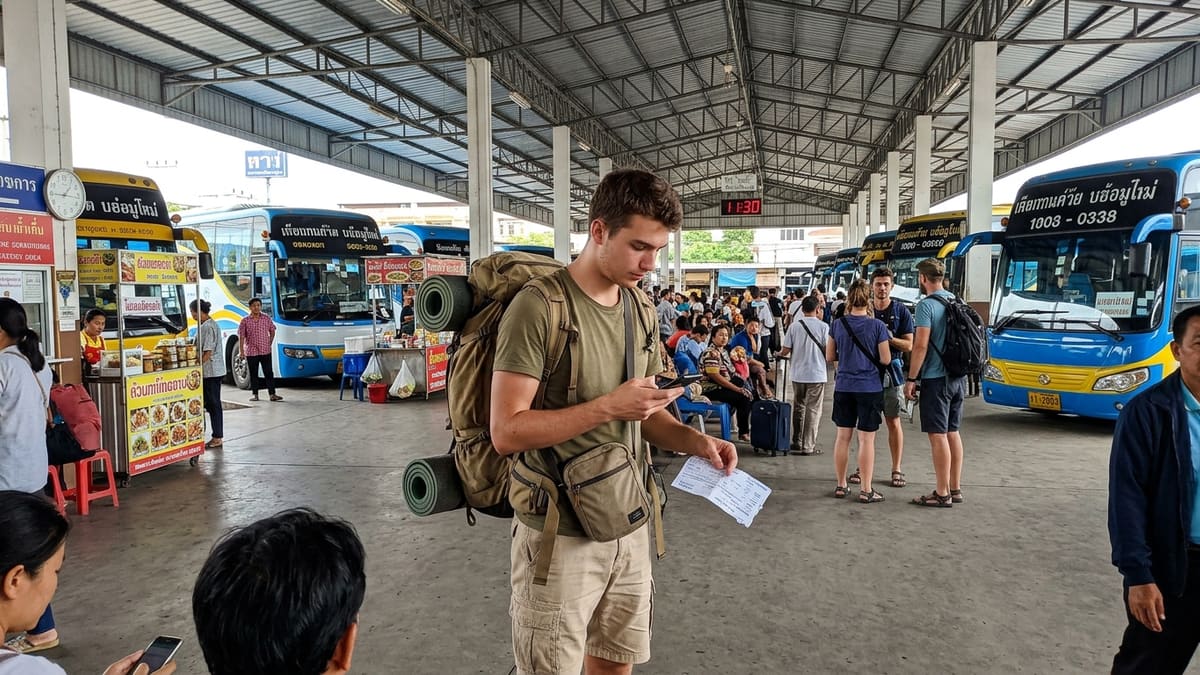
Main Bus Stations in Thailand and How to Get There
Major Thai cities have well-organized bus stations, often located on the outskirts to facilitate traffic. Understanding how they operate and how to get there is key for stress-free boarding.
Main Bus Stations in Bangkok
- Mo Chit 2 Bus Terminal (Northern Bus Terminal or Chatuchak): The largest and busiest, it serves the North and Northeast of the country (e.g., Chiang Mai, Chiang Rai, Sukhothai, Laos). Access: Take the BTS to Mo Chit or MRT to Chatuchak Park, then a taxi, Grab, or moto-taxi for the remaining 10-15 minutes. Local buses also go there.
- Southern Bus Terminal (Sai Tai Mai): Serves Southern Thailand (e.g., Phuket, Krabi, Koh Lanta, Hat Yai). Located west of the Chao Phraya River. Access: Primarily by taxi or Grab. There are BTS/MRT shuttles but direct access is less straightforward.
- Eastern Bus Terminal (Ekkamai): Serves Eastern Thailand (e.g., Pattaya, Koh Chang, Rayong). Directly accessible via Ekkamai BTS station, making it very convenient.
Bus Stations in Other Popular Cities
- Chiang Mai Arcade Bus Terminal 2 & 3: These are the main stations for arrivals and departures in Chiang Mai. Accessible by tuk-tuk, Songthaew (collective red taxi), or Grab.
- Phuket Bus Terminal 2: Phuket's main station for mainland connections. Located about 10 km north of Phuket Town, requiring a taxi, tuk-tuk, or Songthaew.
- Krabi Bus Terminal: Located outside the city center, accessible by Songthaew or taxi.
To get to the bus station, always allow a time margin of 45 to 90 minutes depending on the city and time of day. Traffic jams are common, especially in Bangkok. Use apps like Grab to estimate travel times and taxi fares, this will save you surprises and stress.
What to Expect Onboard and at Stations: Comfort, Safety, and Cleanliness
Knowing Thai standards for bus transport will prevent any surprises and allow you to best anticipate your trip. Prepare for an experience different from Europe!
Comfort and Cleanliness Onboard Buses and at Stations
In VIP and 1st class buses, seats are generally comfortable, reclining, and legroom is sufficient, especially in VIP (2+1 seat configuration). Onboard restrooms are often present but their cleanliness can vary from bus to bus; always have hand sanitizer. Buses are cleaned regularly between trips, but do not expect impeccable Western hygiene standards. For 2nd class, comfort is more rudimentary, with less recline and space. Air conditioning is almost universal and often very powerful, with interior temperatures that can drop to 18-20 °C, even when the outdoor temperature is 30 °C. It is imperative to bring a fleece, a light windbreaker, and long pants, especially for night trips. Bus stations are functional, sometimes a bit chaotic, but offer basic facilities: restaurants, small shops, and paid restrooms (often 5-10 THB).
Safety Onboard and at Bus Stations: Vigilance is Key
Major bus companies are subject to strict safety regulations, and drivers rotate on long journeys to avoid fatigue. However, cases of luggage theft in the holds (especially for valuables left unattended) or backpacks left unattended inside the bus are not uncommon. Always keep your important documents (passport, tickets), money, bank cards, camera, and phone with you in a small backpack that you keep at your feet or on your lap. At bus stations, be vigilant for pickpockets, especially in crowded areas and near counters. Stations are generally well-lit and lively, but avoid isolating yourself in less frequented areas at night. Taxi scams can also occur upon arrival: use apps like Grab or negotiate the price before getting in.
Rules and Customs to Know for a Successful Bus Trip in Thailand
Respecting local customs will facilitate your journey and enhance your cultural immersion. These few rules will help you better understand your bus trip.
- Luggage management: A main piece of luggage (trekking backpack) is usually placed in the hold free of charge. Ensure it is securely locked and tagged with your contact information. Smaller backpacks or shoulder bags can be kept with you in the cabin. Some bulky or excess items may be charged (very rare for backpackers).
- Stops and breaks: For long journeys, 20 to 30-minute stops are scheduled for meals (often a meal coupon is included in the VIP ticket price) and restrooms. Note the departure time and your bus number carefully so you don't miss it. In some VIP buses, there is a hostess who announces the stops.
- Food and drinks: It is common to eat snacks on board. VIP buses often offer a small bottle of water and a snack. For lower-class buses, bring your own provisions. Avoid overly odorous foods out of respect for other passengers.
- Punctuality: Thai buses are generally punctual for departures. However, delays may occur en route due to traffic, weather conditions, or unforeseen stops. Be flexible in your planning.
- Respect for customs: Thais are respectful and appreciate discretion. Keep your voice down, do not put your feet on seats or headrests. Dress decently (shoulders and knees covered) if visiting temples during layovers.
Recommended Popular Bus Routes and Planning Your Trip
The bus network easily connects major tourist destinations, offering great flexibility for planning your itinerary. Here are some examples of popular routes among travelers and tips for planning them best.
Iconic Routes for Travelers
- Bangkok - Chiang Mai: This is the most demanded route by tourists. Many daily and overnight departures are available (9-12 hours journey). Prefer a VIP night bus to save on a hotel night and optimize your time. Cost: 500-900 THB.
- Bangkok - Phuket / Krabi / Koh Lanta: Towards the South, to access the famous islands. These are long journeys (12-15 hours). Very practical night buses are also available. Cost: 700-1000 THB. Often, the ticket includes ferry transfer to the islands.
- Chiang Mai - Chiang Rai: Shorter journey (3-4 hours), ideal for a day trip or to reach the Laotian border. The company Greenbus is the reference for this route. Cost: 150-250 THB.
- Bangkok - Ayutthaya / Sukhothai: To explore the historical sites of the center. Shorter and frequent journeys for Ayutthaya (1h30-2h, 60-100 THB) and direct buses for Sukhothai (6-7h, 250-350 THB).
Practical Tips for Efficiently Planning Your Bus Itinerary
- Book in advance: especially during Thai local holidays (Songkran in April, Loy Krathong in November) or high tourist season (November to February), tickets can be snatched up quickly. Booking 2-3 days in advance is a good practice, or even 1 week for VIPs.
- Check connections: if you need to take multiple buses or connect with a ferry, ensure connection times are realistic and allow yourself a safety margin.
- Anticipate delays: always add 1 to 2 hours of buffer to the displayed journey estimates, especially if you have an important connection with a ferry or a plane. Traffic is unpredictable.
Pitfalls to Avoid and Expert Tips for a Smooth Bus Journey
Even with a complete guide to bus travel in Thailand, some details might escape you. Here are common mistakes to prevent and tips to optimize your experience, drawn from a specialist's field experience.
5 Pitfalls to Avoid During Your Bus Journeys
Dubious “All-Inclusive” Offers from Agencies
Some agencies, especially around Khao San Road (Bangkok), offer “very” cheap bus + ferry packages. Often, this involves endless waits, multiple transport changes, and uncomfortable travel conditions, or even ferry scams. Prefer separate bookings via reliable platforms like 12Go.asia or book your bus and ferry directly.
Overcrowded or Recklessly Driven Minivans
While fast, minivans are sometimes driven recklessly, especially by independent operators. Avoid them for long journeys. If you have no choice, prioritize official companies (e.g., those booked via 12Go.asia) and never get into a vehicle that seems overcrowded or whose driver appears tired.
Leaving Valuables in the Hold or Unattended
As mentioned, bag thefts from holds can occur, especially on very touristy routes. Always keep your passport, money, bank card, camera, phone, and any other valuables in a small backpack that you keep with you at your seat. Never leave it above your head or in the aisle during stops.
Not Packing Warm Clothes for Air Conditioning
Bus air conditioning can be freezing. Even at 35 °C outside, the interior temperature often drops below 20 °C, or even lower. A thick sweater, long pants, socks, and a scarf or light blanket will be your best allies, especially for night journeys. Better too much than not enough!
Missing Your Bus Due to Urban Traffic
Traffic, especially in Bangkok, is unpredictable and can be extremely dense. Never underestimate the travel time to the bus station. Allow a generous safety margin (at least 1 hour in major cities, 1h30 in Bangkok during rush hour) to avoid unnecessary stress or missing your connection. Arriving early also allows you to find your counter and load your luggage calmly.
The Expert's Checklist Before Bus Departure: Be Prepared!
- ✅ Bus ticket: printed or on smartphone, easily accessible.
- ✅ Essential documents: Passport and copies (physical and digital), boarding pass if needed.
- ✅ Warm clothes: Sweater, long pants, scarf or small blanket for air conditioning.
- ✅ Provisions: Snacks (fruits, biscuits) and large bottle of water (2L).
- ✅ Small day bag: Small bag with all valuables and important documents, to keep with you.
- ✅ Entertainment: Portable charger, headphones, book, music or movies for long journeys.
- ✅ First-aid kit: Basic medicines (pain, diarrhea, bandages).
- ✅ Hygiene: Hand sanitizer, tissues, small travel pillow.
🏆 Specialist Verdict: Our Key Recommendations for Bus Travel in Thailand
Questions fréquentes
Is it safe to travel by bus in Thailand?
Yes, traveling by bus with reputable companies like Sombat Tour, Nakhonchai Air, or Greenbus is generally safe. They adhere to driver break regulations, and buses are regularly inspected. Nevertheless, it's essential to remain vigilant against pickpockets in stations and always keep your valuables (passport, money, phone) with you in the cabin. Minivans can be less safe due to excessive speeds or overloading.
How do I book a bus ticket in Thailand?
You can book your bus tickets in Thailand in several ways: online via reliable platforms like 12Go.asia or BusOnlineTicket.co.th (recommended for ease and comparison), directly at bus station counters (often the most economical option), or through travel agencies or hotels (beware of higher commissions and always check for an official ticket).
What is the average price of a bus trip from Bangkok to Chiang Mai?
The average price of a bus trip from Bangkok to Chiang Mai varies depending on the bus class and company. For a 2nd class bus, expect 350-500 THB (approximately 9-13 €). For a 1st class bus, the price is 450-700 THB (12-18 €), and for a VIP bus (the most comfortable), expect to pay between 600 and 900 THB (16-24 €).
What are the main types of buses in Thailand and how do I choose?
The main types of buses are: VIP buses (24-32 wide reclining seats, restrooms, service, ideal for long journeys), 1st class buses (32-40 reclining seats, AC, good compromise), 2nd class buses (50-60 seats, more basic, for small budgets or short trips), and minibuses/minivans (faster, more cramped, for short distances, to be used with caution). The choice depends on your budget, journey duration, and comfort needs.
Should I pack warm clothes for the bus in Thailand?
Yes, it is highly recommended to pack warm clothes (sweater, fleece, long pants, scarf) for your bus trips in Thailand. The air conditioning is often set to very low temperatures (sometimes 18-20 °C, or even lower), even during the hot season, for the comfort of local passengers who are accustomed to it. This will prevent you from getting cold, especially during night journeys.