Thailand Travel Preparation Before Departure: The Stress-Free Checklist for Your First Adventure
 Article written and verified by an expert in international travel and logistical preparation, having himself lived several long stays in Southeast Asia · Updated in 2026
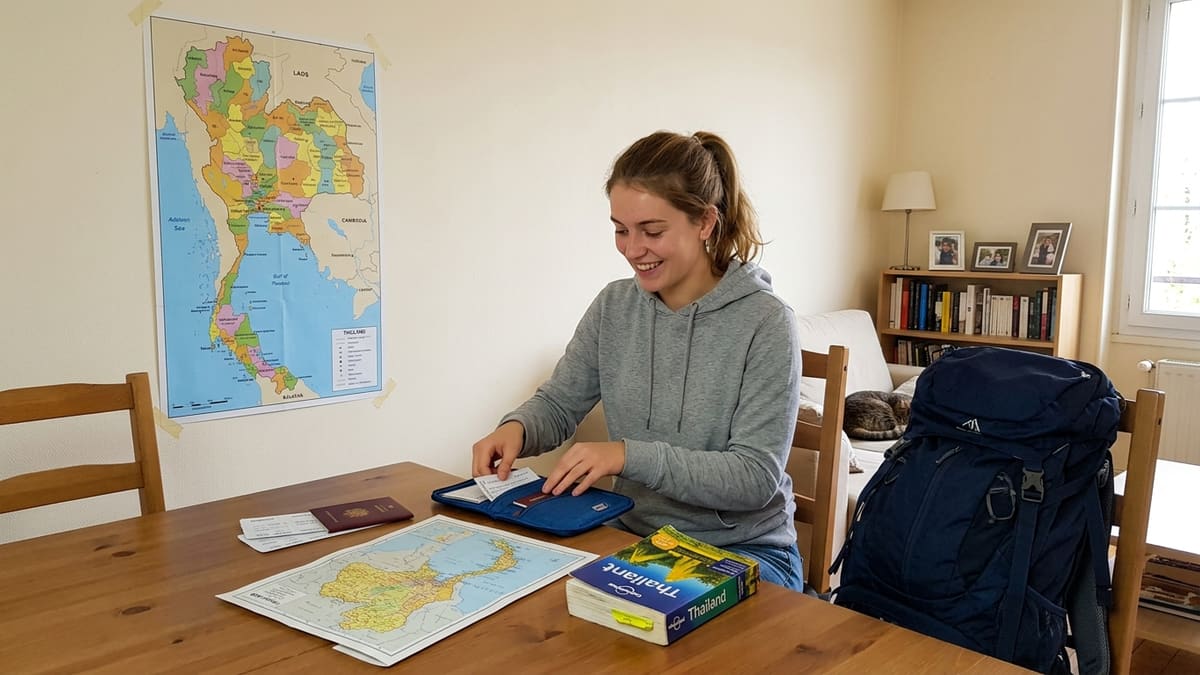
To successfully complete your Thailand travel preparation before departure, it is crucial to anticipate essential aspects well beyond plane tickets. Your first big distant and independent trip requires method to avoid stress and unforeseen events. The key points to validate are:
- administrative formalities (passport, visa),
- health precautions (vaccines, first-aid kit),
- specific travel insurance,
- managing your money on site and the budget,
- safety and respect for customs.
A passport valid for at least 6 months after the planned return date is imperative for French citizens. Plan a daily budget of approximately 40-60 € per person, excluding accommodation and major activities, for a comfortable experience. Subscribing to travel insurance covering at least €100,000 in medical expenses and repatriation is non-negotiable.
Going to Thailand for the first time is an exciting adventure, but the magnitude of Thailand travel preparation before departure can quickly become anxiety-inducing. You have your tickets, and now what? This guide is designed for you, novice traveler, to accompany you step-by-step and ensure you don't forget anything essential. No more fear of the unknown, make way for serenity and discovery!
Administrative Formalities: Passport and Visa for Thailand (French Citizens)
The first indispensable step of your Thailand travel preparation before departure concerns official documents. For a French citizen, the rules are clear, but pay attention to details that can spoil a departure.
Passport: the key to your trip
- Imperative validity: Your passport must be valid for at least 6 months after your planned return date from Thailand. For example, if you return on July 15, 2026, your passport must be valid until at least January 15 of the following year. This is a non-negotiable rule. If its validity is shorter, renew it without delay (delays of 3 to 8 weeks, or even more during peak demand periods).
- Blank pages: Make sure you have at least two consecutive blank pages in your passport for entry and exit stamps from Thai authorities.
Visa: exemption or necessity?
For a tourist stay of less than 30 days (maximum 29 nights), French citizens are generally exempt from a visa. Upon arrival by air, a 30-day stay permit (stamped in your passport) is issued free of charge. By land, the exemption is limited to 30 days per entry (2 per calendar year).
However, be vigilant:
- Extension on site: If you wish to stay longer, a 30-day extension is possible at Thai immigration offices, for a fee of approximately 1,900 bahts (about 50-55 €). This procedure must be carried out before the expiration of your initial exemption.
- Stay of more than 30 days: For any stay exceeding 30 days, a tourist visa must be obtained before your departure from the Royal Thai Embassy in France. Several types of visas exist (60 days, multiple entries), choose the one suited to your project. The single entry tourist visa (TR) allows a 60-day stay, extendable once for 30 days on site (total cost: approximately 80 € for the visa + 50-55 € for the extension).
- Return/onward ticket: Authorities may require a return or onward ticket proving your intention to leave the territory within the permitted time. Keep it handy.
For official and up-to-date information, consult the website of the French Ministry for Europe and Foreign Affairs - France Diplomatie.
Health and Vaccines: Preventing for Better Travel
Health is a cornerstone of your Thailand travel preparation before departure. A visit to your doctor or an international vaccination center, ideally 4 to 6 weeks before departure, is essential to review your vaccination status and the precautions to take.
Recommended and mandatory vaccines
No vaccines are mandatory for travelers coming from France (unless you transit through a yellow fever risk country), but several are strongly recommended by the Pasteur Institute and the Ministry of Health:
- Hepatitis A: Essential, transmitted through contaminated water and food.
- Typhoid: Also transmitted through water and food, often recommended for prolonged stays or outside major cities.
- Diphtheria, Tetanus, Poliomyelitis (DTP): Make sure your boosters are up to date (every 10 years).
- Measles, Mumps, Rubella (MMR): Especially for young adults who have not had these diseases or two doses of vaccine in childhood.
- Japanese Encephalitis: Recommended for prolonged rural stays (more than one month), especially during monsoon season (May to October), or for people exposed to rice fields or pig farms. Consists of 2 doses spaced 28 days apart, to be anticipated.
- Rabies: Recommended for long stays, adventure travel (hiking, caving), and potential contact with animals (dogs, monkeys). Consists of 3 doses (Day 0, Day 7, Day 21 or Day 28).
Consult the specific recommendations of the Pasteur Institute for Thailand or the Ameli.fr website for detailed and personalized information.
General health precautions and first-aid kit
- Mosquitoes: Thailand is a risk area for dengue and Chikungunya (and in some areas for malaria, especially near borders). Bring effective topical repellents (containing DEET 30-50%, Icaridin, or Citriodiol), long and light clothing for the evening, and an impregnated mosquito net if you sleep in non-air-conditioned rural areas.
- Water and food: Drink only sealed bottled water. Avoid ice cubes and fruit juices diluted with water if you have any doubt about their origin. Wash your hands frequently or use an alcohol-based hand sanitizer. Prefer well-cooked and hot-served food.
- Essential first-aid kit: Prepare a basic kit including: analgesics (paracetamol), bandages (including for blisters), skin disinfectant (chlorhexidine), anti-diarrheal (Smecta, Imodium), antihistamine (for allergies/insect bites), soothing cream for bites, Biafine for sunburn, thermometer, sterile compresses. Don't forget your usual personal medications with a prescription written in International Nonproprietary Name (INN) if needed.
Travel Insurance: Essential Protection
Never underestimate the importance of good travel insurance during your Thailand travel preparation before departure. As a novice, it is your most important safety net.
Why is specific insurance crucial?
Your bank card (Visa Premier, Mastercard Gold) may include guarantees, but they are often insufficient or subject to strict conditions (purchase of the flight ticket with the card, low ceilings, exclusions for certain activities). Dedicated travel insurance offers much more comprehensive coverage adapted to the risks of a trip to Thailand, where the cost of care can be exorbitant.
What must your insurance absolutely cover?
- Medical repatriation: This is the most crucial guarantee. In case of a serious accident, illness requiring evacuation or repatriation to France, costs can reach several tens of thousands of euros. Check that this guarantee is unlimited or has a very high ceiling.
- Medical and hospitalization expenses abroad: Healthcare in Thailand, especially in private clinics (often the only ones offering Western standards), is extremely expensive. Good insurance must cover at least €100,000 to €200,000 in medical expenses. Request an insurance certificate mentioning these amounts.
- Civil liability abroad: Covers material or bodily damage you might unintentionally cause to others.
- Travel cancellation or interruption: If an unforeseen event covered by your contract (serious illness, death of a relative, etc.) forces you to cancel or shorten your stay.
- Loss, theft, or destruction of luggage: A unfortunately common classic, with a realistic reimbursement ceiling for your belongings.
- Legal assistance: In case of a legal problem on site, even minor.
Read the exclusion clauses, deductibles, and reimbursement ceilings carefully before subscribing. This is a budget not to be overlooked (count 50 to 150 € for one month of coverage depending on the guarantees) to travel with peace of mind and not turn a minor issue into a financial catastrophe. For your Thailand travel preparation before departure, comparing different insurance offers (Mondial Assistance, Chapka, AXA, etc.) is a crucial aspect.
Managing Your Money: Budget, Exchange, and Scams to Avoid
The question of money is central to Thailand travel preparation before departure, especially with a potentially tight budget. Good organization will save you hassle and unnecessary expenses.
Indicative budget and local currency
- Currency: Thai Baht (THB). In the first quarter of 2026, 1 € is approximately equivalent to 38-39 THB. This rate can fluctuate, check it before and during your trip.
- Daily budget: For a young traveler or a couple on a moderate budget (simple guesthouse accommodation, local meals, public transport, a few activities), count about 40 to 60 € per day per person. This amount includes food (approx. 10-15 €), occasional transport (5-10 €), a few activities (5-10 €), and simple accommodation (20-25 €). If you stay in more comfortable hotels (30-50 €/night) and do more activities (diving, excursions), plan for 70-100 €/day instead.
Exchange and bank cards
- ATM withdrawals: ATMs are everywhere, but most Thai banks charge a fixed fee of about 220 THB (approximately 5.7 €) per transaction, in addition to any fees from your French bank (often 2-3% + fixed fees). Opt for cards with no foreign transaction fees (Revolut, N26, Fortuneo, Boursorama Banque) to minimize these costs. The maximum withdrawal amount is often 20,000 THB (approximately 520 €). Make one large withdrawal rather than several small ones.
- Exchange offices: Avoid exchanging large sums at the airport where rates are generally unfavorable. Exchange offices in the city (SuperRich, Vasu Exchange, etc.) offer better rates. Compare before exchanging and exchange small amounts as needed.
- Cash: Always have cash on you, essential for small shops, street markets, local transport (tuk-tuks, songthaews) and some accommodations. Small denominations (20, 50, 100 THB) are very useful.
- Credit/debit cards: Accepted in large hotels, restaurants, and shopping centers, but less so at small traders or in more remote areas. Inform your bank of your travel dates to avoid your card being blocked due to fraud.
Common scams to avoid
- Overpriced tuk-tuks and "scam tours": Always negotiate the price before getting in and categorically refuse drivers who want to take you to unsolicited jewelry stores, tailors, or travel agencies. This is a tactic to earn a commission.
- Fake monks: Some individuals posing as monks try to extort money or sell amulets. Do not give anything. Real monks do not solicit money on the street.
- Fake tourist guides: At the entrance to temples or attractions, people may introduce themselves as official guides and demand exorbitant sums for summary tours. Find out official prices in advance or use reputable guides.
- Jet ski: Be very careful when renting jet skis. Some renters try to charge you for "scratches" or "damages" already present. Take detailed photos of the vehicle from all angles before and after rental, ideally in the presence of the renter. Never leave your passport as collateral.
- Scooter/motorcycle rental: Carefully check the condition of the vehicle and take photos before renting. Make sure you have a valid international motorcycle license. Insurance is often not included or very limited.
🏆 The hidden cost of Thailand travel preparation before departure: what others don't tell you
Safety and Respect for Customs: Traveling Serenity
Thailand is generally a safe country for tourists, but good Thailand travel preparation before departure includes knowing basic safety rules and respecting local customs to avoid inconveniences and travel in harmony.
Safety tips for a smooth trip
- Valuables: Leave expensive jewelry, luxury watches, and important documents (except your passport and copies) in a safe at your accommodation. Do not display large amounts of cash. Use a discreet pouch under your clothes for money and a spare passport.
- Copies of documents: Have several photocopies of your passport (identity page and visa/entry stamp page) stored in different places (suitcase, backpack, cloud, phone). A photo on your smartphone is also useful. In case of loss or theft, this will facilitate procedures.
- Transportation: Be vigilant in taxis and tuk-tuks, especially at night. Prefer ride-hailing apps like Grab (the Uber equivalent in Southeast Asia) for more safety, fixed prices, and traceability of your journey. Make sure the driver activates the meter or negotiate a fair price before getting in.
- Drugs: Thai legislation on narcotics is extremely strict. Penalties are very severe (up to life imprisonment, or even the death penalty), including for simple possession of small quantities. Do not touch any drugs and never transport packages for others.
- Credit card fraud: Be careful when using your card in small shops. Prefer QR code payments (very common in Thailand if you have a compatible banking app) or cash.
Respect for Thai customs and culture
Thais are very respectful and appreciate visitors who do the same. As a visitor, adopting good manners is a sign of openness and integration:
- Head and feet: The head is considered the most sacred part of the body, never touch someone's head, even a child's. Feet are considered impure, never point your foot at someone, do not step on offerings, and do not put your feet on the table.
- Dress code: In temples and places of worship, you must cover your shoulders and knees. Remove your shoes before entering a temple, a private house, or some shops. Always have a scarf or sarong handy.
- Monarchy and Buddha: Respect for the royal family and Buddha is absolute. Any insult or disrespectful act towards the King, Queen, heir, or Buddha is a serious crime punishable by prison sentences.
- Smile: Thailand is called the “land of smiles”. A smile disarms many situations, facilitates interactions, and is a sign of respect.
- The “Wai”: This traditional greeting (joining hands as if in prayer and slightly bowing the head) is a sign of respect. You are not obliged to do it systematically, but returning it is appreciated.
What to Pack? Essentials and Superfluous Items
Packing your suitcase is a concrete step in your Thailand travel preparation before departure. Traveling light is an undeniable asset, as you will be freer to move around and avoid excessive baggage fees, but some items are crucial.
Light and breathable clothing
Prioritize cotton, linen, or quick-drying technical fabrics (ideal for quick laundry). Shorts, t-shirts, tank tops are perfect for everyday wear. Pack one or two long skirts/light pants and a short-sleeved shirt/t-shirt for temples and slightly dressier evenings. A scarf or sarong is multi-purpose: cover shoulders and knees for temples, makeshift beach towel, sun protection, or even a small blanket in air-conditioned transport.
Comfortable and practical footwear
Sandals (Teva or Birkenstock type), flip-flops, or light, airy walking shoes (canvas sneakers). You will often remove your shoes before entering a temple or a house, so easy-to-remove styles are a plus. Avoid new or uncomfortable shoes.
Sun protection and mosquito repellent
High SPF sunscreen (SPF 50+), good quality sunglasses, wide-brimmed hat or cap. Essential for the strong heat and sun. Effective mosquito repellent with a high concentration of DEET (30-50%) or Icaridin. Pack enough as they can be more expensive on site.
Universal adapter and power bank
Thailand mainly uses type A (2 flat pins), B (3 flat pins), and C (2 round pins, European standard) sockets. A universal adapter is therefore a good idea to charge all your electronic devices. The voltage is 230V. A fully charged power bank will be your best friend for charging your phone on the go.
Small personal first-aid kit
See the previous section for details on essentials, but always bring your personal medications with a prescription (in INN), as well as what you need to manage everyday ailments: bandages, disinfectant, anti-diarrheal. Pharmacies are common but having the essentials handy is more reassuring.
What to leave at home or not to bring
There's no need to bring overly warm clothes, city shoes that will take up space and won't be suitable, expensive jewelry, or non-essential valuables. The fewer things you have, the freer you are to move, the less likely you are to lose items, and the easier it is to find space for souvenirs! Also, avoid drugs in all forms, even if offered.
Internet Connection: Stay Connected Without Breaking the Bank
Staying connected is often a priority in Thailand travel preparation before departure, whether it's to share your experiences, manage your bus bookings in Thailand, or simply reassure your loved ones. Fortunately, several options are available for easy and economical access.
eSIM: The modern and practical solution
An eSIM (digital SIM card) is the most convenient and fastest option for compatible phones (check your model's compatibility before you leave). You purchase your plan online before departure and activate it once you arrive, by scanning a QR code.
- Advantages: Almost instant activation, various plans (unlimited or limited data with calls included, for 7, 15, or 30 days), keeps your physical French SIM card active to receive important SMS (bank, login verification) without having to remove it. Ideal for avoiding costly roaming.
- Providers: Companies like Airalo, Holafly, or Nomad offer eSIMs for Thailand with plans from 7 days to 30 days, starting from around 8-10 € for 1 GB of data, up to 30-40 € for unlimited data over 15 or 30 days. Compare offers according to your needs.
Local SIM card: The economical alternative
Upon arrival at the airport (with dedicated stands in the halls) or in local operator stores (AIS, Dtac, TrueMove H) in the city, you can buy a prepaid SIM card. Tourist offers are numerous and very competitive.
- Advantages: Often very economical, with unlimited data or very large volumes (up to 50-100 GB) for durations of 7 to 30 days (starting from approximately 15-20 € for a month with very generous data). Allows you to have a local number for reservations.
- Disadvantages: Requires physical manipulation (removing your French SIM and keeping it safe), may temporarily deactivate your French line for incoming calls/SMS.
Important tip: Remember to unlock your phone (remove SIM lock) with your French operator if you opt for a local SIM card, otherwise it will not work. Also, don't forget the usefulness of Thailand travel forums for updated feedback on the best internet connection offers and traps to avoid.