Packing for a Bus Trip in Thailand: The Expert Checklist
 Article written and verified by a travel and luggage organization expert, who has personally traveled extensively by bus in Southeast Asia · Updated in 2026
To know what to pack and how to prepare your luggage for a bus trip in Thailand, the most effective approach is to adopt the mantra « light and versatile ». It is essential to distinguish a large main bag (hiking backpack preferred) from a small daypack for valuables and daily essentials. Security and space optimization are key.
- Limit the weight of your main luggage to 15-20 kg maximum.
- Opt for light and breathable clothing, suitable for the Thai climate and culture.
- Always keep your documents and valuables with you in a secure small bag.
- Plan for comfort accessories for bus journeys (neck pillow, long clothes).
Good preparation also includes managing toiletries and dirty laundry, often overlooked. Using compression sacks and packing cubes greatly facilitates the organization and security of your belongings during your frequent travels.
Luggage on Thai Buses: Weight, Size, and Accepted Types
When traveling in Thailand with intercity bus transfers, luggage rules are generally flexible, but it's wise to know the standards. For most bus companies (private or government-owned like Transport Co. Ltd.), the maximum size and weight of checked luggage are similar to those for low-cost domestic flights.
A main piece of luggage should ideally not exceed 15 to 20 kg. Dimensions are less strict than on planes, but a reasonable size like 70x50x30 cm (for a 60-70 liter backpack) is a good benchmark. Hand luggage (small daypack) is accepted in the cabin, provided it can be placed under the seat or in the overhead compartment (approximately 5-7 kg).
It's crucial to know that checked bags are not always handled gently and can be exposed to dust or moisture. Use a waterproof protective cover for your main backpack, such as a robust rain cover from Osprey or Deuter. Also, remember to systematically padlock your bag with TSA locks to deter opportunistic theft. Hiking backpacks are preferred for their durability and ease of transport in this context, rather than a wheeled suitcase which is more fragile on uneven terrain.
Clothing: Essentials and Prohibited Items for Thai Climate and Culture
Thailand's tropical climate demands light, breathable clothing (average temperatures between 25°C and 35°C, high humidity). Local culture, especially when visiting temples or religious sites, requires respectful attire (shoulders and knees covered). Here is a concrete list for a 2 to 3-week trip:
Essential Clothing (Suggested Quantities)
- 5-7 light T-shirts in cotton, linen, or technical fabric (quick-drying).
- 2-3 comfortable shorts or bermudas.
- 2 light trousers (linen or fluid cotton) or long skirts for temples, sun protection, and mosquito repellent. A versatile sarong is also an excellent option.
- 1-2 light long-sleeved shirts (sun/mosquito protection and respect for sacred places).
- 1-2 swimsuits.
- 7 pairs of underwear and light socks.
- 1 light cardigan or thin scarf for air-conditioned buses (often very cold, with temperatures dropping to 18°C).
- 1 light and compact raincoat or umbrella for the rainy season (May to October).
Footwear and Headwear
- 1 pair of sandals or flip-flops (easy to remove for temples and homes, such as Birkenstock or Reef).
- 1 pair of comfortable and airy walking shoes (light sneakers like Converse or breathable low hiking shoes).
- 1 hat or cap for sun protection (very high UV index).
Clothes to Absolutely Avoid
- Too tight or synthetic clothing (poor heat management, discomfort).
- Thick jeans (too hot, heavy, slow to dry, and unsuitable for humidity).
- Deep necklines, bare shoulders (outside beaches), and very short shorts for religious visits (lack of cultural respect).
- High heels or shoes not suitable for walking on uneven terrain.
For more details on appropriate travel attire, the Guide du Routard often offers relevant cultural advice.
Optimizing Access and Security: Main Backpack and Daypack
Organizing your luggage is essential for an itinerant bus trip. The principle is simple: everything valuable or needed quickly should be on you or in your daypack.
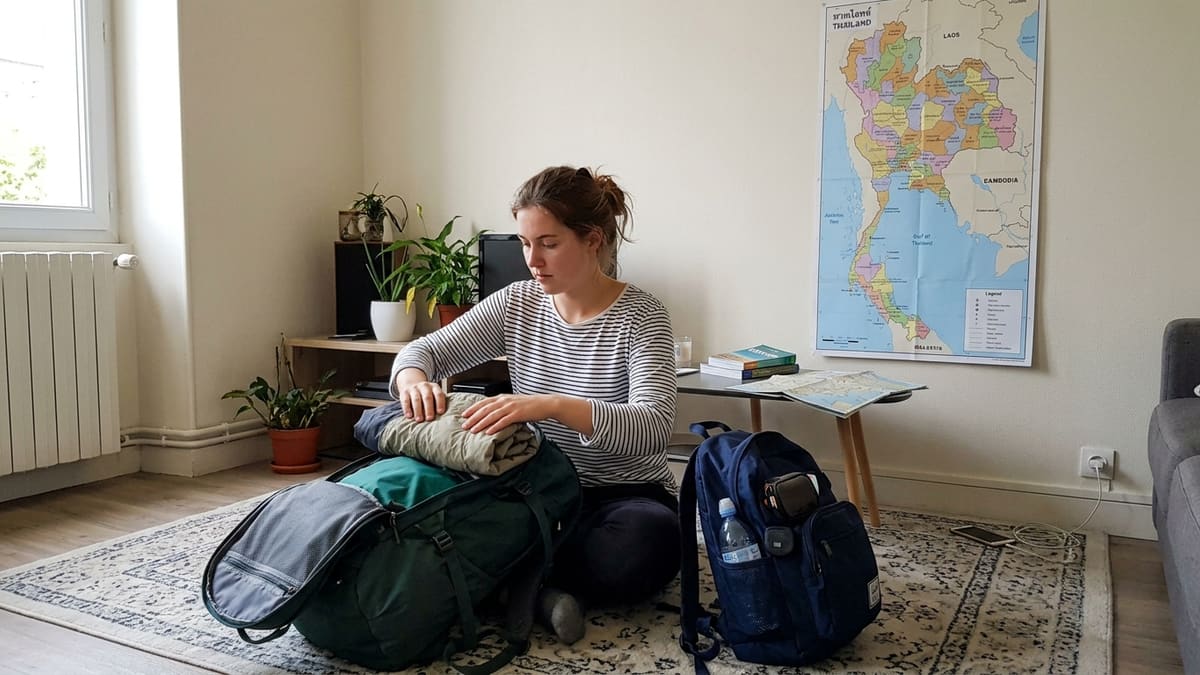
The Main Backpack (Checked)
This is where you'll store most of your clothes and non-essential items for the day. Use compression sacks (like those from Eagle Creek or Osprey) to minimize volume and packing cubes to organize by category (e.g., one cube for tops, one for bottoms, one for underwear). A hiking backpack with a capacity of 40 to 60 liters is ideal for its maneuverability. Make sure it's robust, comfortable to wear, and has easily accessible compartments. Before entrusting it to the bus hold, padlock all zippers (with TSA locks) and use a rain or transport cover (such as a Raincover) to protect it from dust, moisture, and tears. You can learn more about the advantages and disadvantages of bus travel in Thailand to better anticipate.
The Small Daypack (Cabin)
This bag (approximately 15-25 liters) will go everywhere with you, including on the bus. It should contain your valuables, documents, medications, and essentials for the journey. Choose one that is light, comfortable, and has well-thought-out compartments. An anti-theft backpack (like those from Pacsafe) or a model with lockable zippers is a plus. Always keep this bag with you, ideally under your seat or at your feet, and never in the overhead compartment without active supervision. It should be able to hold: documents, money, phone, camera, chargers, medications, a miniature first-aid kit, water bottle, and entertainment for the trip.
Documents, Medications, and Valuables: How to Secure Them on the Bus?
The security of your most valuable possessions is paramount, especially during bus journeys. The golden rule is never to leave these items in your checked luggage, where they would be vulnerable to theft and loss.
In your small daypack (always with you and locked):
- Identity and travel documents: Passport (original essential), flight and bus tickets (printed and digital copies on a secure email address or cloud). Bring a physical and digital copy of your passport, and a passport photo.
- Money and bank cards: Do not travel with large amounts of cash. Distribute your money among different hidden spots (discreet money belt under clothes, wallet in daypack, secure internal pockets). Have at least two bank cards (Visa and Mastercard preferably), stored separately in case one is lost or stolen.
- Medications: Keep your prescriptions handy, especially if you have specific regulated medications. Prepare a basic first-aid kit with bandages, disinfectant, painkillers, anti-diarrhea medication, antihistamines.
- Valuables: Mobile phone, camera, laptop, e-reader. Do not display them unnecessarily and store them discreetly.
- Small TSA locks: Essential for securing your daypack and the zippers of your main checked bag.
A secret pouch or money belt worn under clothing is an excellent additional security measure for your passport, cards, and some cash. Stay vigilant at bus stops and stations, where pickpockets can operate. Never leave your daypack unattended.
Comfort and Safety Accessories Not to Forget
Some accessories, while not essential, greatly enhance the comfort and safety of your bus trip in Thailand:
| Accessory | Description and Utility | Quantity |
|---|---|---|
| TSA Locks | To secure the zippers of both main and day bags. Opt for code models to avoid losing keys. | 2-3 |
| Mosquito Repellent | Essential (DEET 30-50% or Icaridin, like Moustidose or Cinq sur Cinq brands) for evenings and rural areas, where there is a risk of dengue fever. | 1-2 bottles |
| Universal Adapter | Outlets in Thailand are types A/B/C/O (American and European standards). Bring a universal adapter and a compact power strip with USB ports to charge multiple devices simultaneously. | 1 |
| First-Aid Kit | Various sized bandages, antiseptic skin disinfectant (e.g., Biseptine), painkillers (paracetamol), anti-diarrhea medication (Smecta, Imodium), eye drops, soothing cream for insect bites, antihistamines. | 1 small kit |
| Neck Pillow and Sleep Mask | Essential for long bus journeys, often at night, to optimize rest. | 1 of each |
| Waterproof Bag or Dry Bag | To protect electronics (phone, camera) and documents from sudden rain or during water activities (diving, boat excursions). A 10-20 liter model is versatile. | 1 (10-20L) |
| Anti-Theft Pouch / Discreet Belt | To keep important documents (passport, cards) and money secure, under clothing, out of sight. | 1 |
| Filtered Water Bottle | Eco-friendly and economical. Allows you to drink tap water after filtration (e.g., Lifestraw or Sawyer) and reduce plastic bottle purchases. | 1 |
Managing Dirty Laundry and Toiletries for a Long Trip
Laundry and hygiene products can quickly take up space and weigh down your luggage. The trick is to travel light and rely on local laundry services, which are very affordable and available everywhere in Thailand. Expect around 40-60 THB/kg (approximately 1.10-1.60 €/kg) for quick service. Plan for about 5-7 days' worth of clothes and wash them along the way, ideally every 4-5 days.
- Dirty laundry bag: A large breathable fabric or mesh bag to separate your dirty clothes and prevent odors.
- Toiletries: Transfer your liquid products (shampoo, shower gel, liquid toothpaste) into reusable travel bottles of 100 ml maximum to save space and prevent leaks. Prioritize solid formats (Marseille soap, solid shampoo, toothpaste tablets) which are lighter and do not count towards liquid restrictions.
- Microfiber towel: Essential, it dries quickly and takes up very little space, much more practical than a classic cotton towel. Choose a large size (approx. 130x75 cm) for versatile use.
- Small makeup kit: Limit yourself to essentials; Thailand's hot and humid climate is not conducive to thick layers of makeup.
By optimizing these items, you'll gain valuable space in your bag and make your bus journeys more pleasant. For advice on organizing your travel, check our dedicated page on how to organize bus journeys in Thailand.
Hiking Backpack or Wheeled Suitcase for Bus Journeys?
The choice between a backpack and a suitcase is crucial for a trip to Thailand with many bus journeys. For a young woman in her thirties who enjoys authentic and budget travel, a hiking backpack is highly recommended.
Advantages of a backpack:
- Unmatched mobility: Easy to carry on your back in crowded bus stations, on unpaved roads, and for quickly getting on and off buses or songthaews. A 40-60 liter backpack like an Osprey Fairview/Farpoint or a Deuter Traveller is ideal.
- Adaptability: Ideal for frequent changes of location and modes of transport (ferries to islands, tuk-tuks, etc.).
- Less bulk: Takes up less space than a rigid suitcase in the often crowded and sometimes cramped bus luggage compartments.
- Increased security: Backpacks are often easier to padlock and secure with straps if necessary.
Disadvantages of a wheeled suitcase:
- Lack of practicality: Thai sidewalks are often uneven, and bus stations don't always have ramps. Pulling a suitcase quickly becomes a chore and can rapidly wear out the wheels.
- Vulnerability: Wheels and telescopic handles can be easily damaged by handling and rough terrain.
- Less accessible: Less practical for quickly grabbing items in a busy station without spreading all your contents on the ground.
For a first itinerant trip to Thailand, a 40 to 60 liter backpack is the perfect compromise between capacity and maneuverability. Practice carrying it full before you leave to ensure its comfort, and make sure to properly adjust the shoulder straps and hip belt.
🏆 Specialist's Verdict: Our Recommendations for a Perfect Suitcase
Summary Checklist for Your Bus Trip in Thailand
To help you remember everything, here's a structured checklist, designed to maximize lightness and security, like a true expert:
Items on You or in Discreet Belt
- Passport (original) + digital and physical copy (photo).
- Bank cards (2 distinct, Visa/Mastercard).
- Some Euros and Thai Baht (small denominations for immediate needs).
- Mobile phone.
- Printed flight/bus tickets (in addition to digital copies).
Small Day Bag (Cabin)
- Personal medications + prescription (English translation if possible).
- Light first-aid kit (bandages, disinfectant, painkillers, anti-diarrhea).
- Chargers (phone, power bank), power bank.
- TSA locks (for this bag and the main bag).
- Reusable and filtered water bottle.
- Sunglasses, hat/cap.
- Book/e-reader, headphones, entertainment for journeys.
- Scarf/light cardigan for bus air conditioning.
- Booking papers (hotels, activities).
Main Large Bag (Checked)
- Clothing (5-7 T-shirts, 2-3 shorts, 2 light trousers/long skirts, 1-2 long shirts, 1-2 swimsuits, underwear/socks for 7 days).
- Footwear (sandals/flip-flops, light sneakers).
- Microfiber towel.
- Toiletries kit with travel-sized products (100ml max) or solid formats.
- Mosquito repellent (DEET 30-50%).
- Universal adapter + small power strip.
- Waterproof bag (10-20L) and rain cover for the main backpack.
- Small dirty laundry bag (breathable).
- Small pouch for wet swimwear.
Questions fréquentes
What is the generally accepted maximum size and weight for checked luggage on Thai buses?
Generally, Thai bus companies accept checked luggage of about 15 to 20 kg. Although there are no strict dimensions like for airplanes, a 60-70 liter backpack (approximately 70x50x30 cm) is a good reference. For cabin hand luggage (small daypack), allow 5 to 7 kg. It is always recommended to padlock your main luggage and protect it with a waterproof cover.
What clothing items are essential and which should be absolutely avoided for the Thai climate and culture?
Prioritize light, loose, and breathable clothing (cotton, linen, quick-drying technical fabrics) for the hot and humid climate. Pack long clothing (light trousers, long skirts, long-sleeved shirts) for visiting temples and for sun or mosquito protection. Absolutely avoid thick jeans, overly tight or synthetic clothing that retains heat, and overly revealing outfits out of respect for local customs.
How should I organize a main (large) backpack and a small daypack to optimize access and security?
The main backpack (40-60 liters) holds most of your clothes and non-essential items, organized with compression sacks and packing cubes. It should be padlocked and stored in the luggage compartment. The small daypack (15-25 liters) is always with you in the cabin and contains all your valuables, documents, money, medications, and essentials for the journey. Choose one with lockable closures.
What documents, medications, and valuables should I absolutely keep on my person and how do I secure them on the bus?
Always keep your passport (original + copies), tickets (printed and digital), bank cards (two, stored separately), cash (distributed), personal medications with prescription, phone, and camera with you (in your small daypack or a discreet money belt). Systematically padlock your daypack and never take your eyes off it, especially during bus stops.
What comfort and safety accessories (locks, repellent, adapter, first-aid kit) should I not forget?
Essential accessories include: TSA locks (for all your bags), effective mosquito repellent (DEET 30-50%), a universal adapter and a compact power strip, a basic first-aid kit (bandages, disinfectant, painkillers), a neck pillow, and a sleep mask for long journeys. A waterproof bag (dry bag) and a filtered water bottle are also very useful.
How do I manage dirty laundry and toiletries for a long trip while optimizing space?
Pack clothes for 5 to 7 days and use local laundry services (around 40-60 THB/kg). Use a breathable bag for dirty laundry. For toiletries, prioritize solid formats (soap, solid shampoo) or transfer liquids into travel-sized bottles of 100 ml maximum. A microfiber towel is essential as it dries quickly and takes up little space.
Should I choose a hiking backpack or a wheeled suitcase for bus journeys?
For an itinerant trip in Thailand involving bus journeys, a hiking backpack (40 to 60 liters) is highly recommended. It offers better mobility in crowded bus stations and on uneven terrain, and is easier to handle and secure in the luggage compartment than a wheeled suitcase, whose wheels and handles are fragile and not well-suited to local infrastructure.