What to do in case of a problem during a bus trip in Thailand? Anticipate and React Like an Expert
 Article written and verified by a Southeast Asia travel expert and traveler security advisor, with extensive knowledge of Thai specificities · Updated in 2026
When faced with the unexpected, knowing what to do in case of a problem during a bus trip in Thailand is essential to minimize stress and impact on your journey. Common situations include significant delays, lost luggage, scams, or, more rarely, accidents. Adequate preparation and knowledge of the correct procedures allow for effective action and maintaining your serenity.
- In case of delay or cancellation, demand clear information at the counter and keep your ticket.
- For lost or stolen luggage, report it immediately to the company and the Tourist Police (1155).
- In a situation of medical emergency or accident, dial 1669 (emergency medical services) or 1155 (Tourist Police).
- Always have the contacts of your Embassy (+66 (0)2 657 5100, or +66 (0)81 994 4901 for night/weekend emergencies) and comprehensive travel insurance readily available.
Choosing reliable companies (Sombat Tour, Nakhonchai Air, GreenBus) and having a copy of your important documents (passport, visa, insurance contract) are crucial precautions for a peaceful trip.
Preparing a trip to Thailand involves anticipating potential challenges, particularly those related to bus transport. These journeys, although mostly safe, can sometimes hold unforeseen events. This article, written by an expert, offers concrete solutions, reliable emergency contacts, and practical advice on how to react effectively in case of a problem during a bus trip in Thailand, transforming anxiety into confidence and ability to act. Your goal: fully enjoy your stay without being overwhelmed by unforeseen circumstances.
What are common bus problems in Thailand and how to recognize them?
Common problems during a bus trip in Thailand are varied, but some occur more frequently. Travelers, often seeking tranquility, should be aware of them to better anticipate. Understanding these scenarios allows for better assessment of the situation and adopting the right approach.
Bus delays or cancellations
Delays are frequent, especially on long journeys (e.g., Bangkok-Chiang Mai) or during peak periods like Thai New Year (Songkran, mid-April) or Western New Year. A cancellation is rarer but can occur, often for technical reasons or lack of passengers. Warning signs include a lack of clear information at the counter, the absence of the bus at the scheduled time, or repeated delays announced without precise explanation.
Lost, stolen or damaged luggage
Although superior quality buses have secure luggage compartments, lost, stolen, or damaged luggage can happen, particularly on local buses, tourist minibuses, or at unsupervised stops. To prevent this, clearly label your luggage with your contact details and keep your valuables, important documents, and money with you in a easily accessible backpack.
Reckless driving or accidents
Some drivers may engage in reckless driving (excessive speed, fatigue), especially at night or on long journeys. Bus accidents are unfortunately a reality in Thailand, but reputable companies (e.g., Sombat Tour, Nakhonchai Air) maintain their vehicles and drivers to higher standards. Always choose reputable companies to minimize this risk.
Scams or service problems
Scams can occur, such as overpriced tickets sold by unofficial intermediaries, erroneous information on schedules, or attempts to direct you to partner hotels/agencies. Make sure to buy your tickets from official counters (bus station) or recognized online platforms like 12Go.asia. Always check the time and destination on your ticket before boarding. Be vigilant and do not hesitate to ask for clarification.
What are the first steps to take in case of a significant delay or cancellation?
If you are facing a significant bus delay or cancellation in Thailand, your first reaction should be pragmatic. A good reflex is to remain calm and seek clear information.
- Inquire with staff: Calmly approach the company counter or bus station agents. Ask for the reason for the delay and the estimated departure time. Do not hesitate to use a few key phrases in Thai: « Cháa mâak » (ช้ามาก - very late) or « Yùt » (หยุด - stop).
- Evaluate alternatives and your rights: If the delay is too long (more than 2-3 hours) or if the bus is canceled, ask if another bus from the same company or a partner company is available. Inquire about the company's refund or ticket change policy. If not satisfactory, explore other transport options such as a train (for long journeys), a minibus (for short/medium distances), or a taxi, taking into account your budget and schedule.
- Keep your proof: Carefully keep your bus ticket (the original), as well as any proof of communication or information received (SMS, photo of the delay display board, names of agents you spoke with). These elements will be crucial if you need to request a refund or assert your rights with your travel insurance.
- Contact your accommodation and insurance: Inform your hotel or guesthouse of your delay. They may be able to advise you locally or adjust your reservation. Also, consider contacting your travel insurance assistance to find out if additional costs related to the delay are covered.
What to do if my luggage is lost, stolen, or damaged during a bus trip?
Lost, stolen, or damaged luggage is a major concern for any traveler. In Thailand, a few key steps can maximize your chances of recovering your belongings or being compensated. Reactivity is paramount.
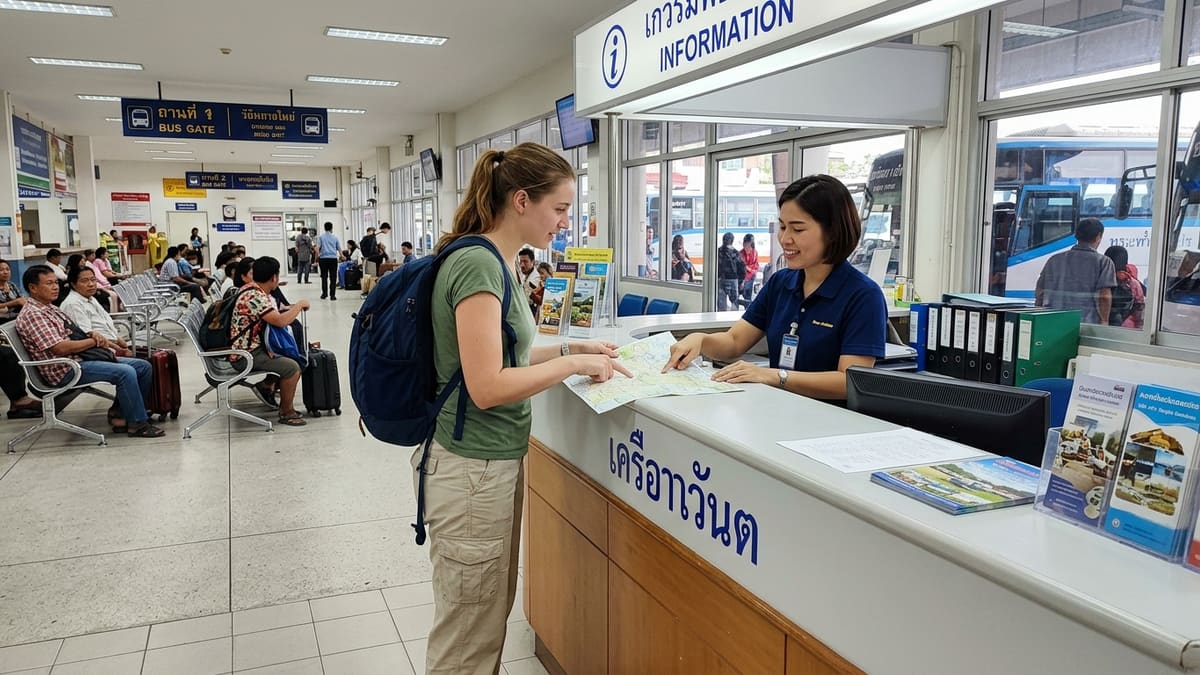
Immediate steps at the bus station:
- Report immediately and accurately: As soon as you notice the problem (missing, damaged, or stolen luggage), alert a bus company employee (driver, assistant, or counter staff). Describe your luggage precisely (color, size, distinctive marks, luggage tag if provided).
- File an official declaration: Ask to fill out a loss, theft, or damage declaration form (“Property Irregularity Report”). This document is essential for any subsequent action with the bus company and, most importantly, with your travel insurance. Note the name of the agent helping you and absolutely keep a signed copy of the form.
- Present your ticket: Your bus ticket proves that you were a passenger on this journey and that your luggage was transported (even if not tagged for some buses). It is crucial to present it as proof.
If your luggage is stolen:
In case of luggage theft, the procedure is different and involves the authorities. Go to the nearest police station to file a complaint. The “Tourist Police” (number 1155) is the most appropriate as they have English-speaking officers and are accustomed to dealing with tourists. A copy of the police report will be required by your insurance. Do not leave Thailand without this report if the theft occurred locally.
How to react to a bus accident or a dangerous situation (e.g., reckless driving)?
A bus accident in Thailand or dangerous driving are serious situations that require a quick and methodical reaction for your safety and that of others. Staying calm is paramount, even in chaos.
In case of an accident
Absolute priority to safety and the injured. If you are injured or witness injuries, immediately dial 1669 (emergency medical services, ambulance). Also call 1155 (Tourist Police) to report the accident and request help. Take photos of the scene, involved vehicles (including license plates), and any visible damage. Exchange contact information with other passengers and witnesses. Do not leave the scene before authorities arrive and without having provided your testimony, if your condition allows. Contact your travel insurance as soon as possible to activate your repatriation assistance.
Facing dangerous driving
If the driver engages in manifestly dangerous driving (excessive speed, risky overtakes, falling asleep), try to calmly alert the onboard staff (hostess if present). If no one reacts, or if the risk persists, note the bus registration number and company name. As soon as possible and safely, report the situation to the Tourist Police (1155). In extreme cases and if you feel in immediate danger, you can request to get off at a safe stop, even if it incurs additional costs for the rest of your journey. Your safety comes first.
Who can I contact (local emergency contacts) in case of a serious problem (illness, accident, theft)?
In case of a serious problem in Thailand, knowing the right contacts is vital for travelers. Keep these numbers and contacts handy (for example, written on paper and saved in your phone).
| Situation | Emergency Contact | Number / Website | Specific Notes |
|---|---|---|---|
| Medical emergency (illness, serious injury, accident) | Emergency Medical Services | 1669 (free) | Accessible 24/7. For ambulance and first aid throughout Thailand. |
| Road accident, theft, assault, tourist scam | Tourist Police | 1155 (free) | Direct line with English-speaking officers. Ideal for all problems encountered by tourists. |
| Serious problem requiring consular assistance (passport loss/theft, arrest, death) | Your Embassy in Thailand | +66 (0)2 657 5100 (office hours) +66 (0)81 994 4901 (emergency number outside office hours, nights and weekends) th.ambafrance.org |
For the most serious cases where government assistance is needed. |
| General information request / Travel advice | Foreign Affairs Ministry | Website: diplomatie.gouv.fr/fr/conseils-aux-voyageurs/pays-zones-depart/thailande/ | Consult the “Travel Advice” section for Thailand before and during your stay. |
| Dispute with a tourist service provider | Tourism Authority of Thailand (TAT) | 1672 (free, 8:00 AM to 10:00 PM) tourismthailand.org |
Can mediate or provide advice in case of a dispute with companies or tourist services. |
Are there specific insurance policies for bus trips in Thailand and how to use them?
Yes, travel insurance specific to bus trips in Thailand is not only available but highly recommended for travelers. They generally cover a range of risks from cancellation to emergency medical assistance, essential elements for traveling with peace of mind.
Types of coverage and use:
- Medical assistance and repatriation: This is the most important coverage. In case of illness or accident, your insurance covers medical expenses on site (which can be very high in Thailand, especially in private international hospitals) and, if necessary, your repatriation. Contact your insurer as soon as possible (before any significant expenses if possible) to obtain a case number and instructions to follow. Always keep your assistance card handy.
- Trip cancellation or interruption: If your trip is disrupted by a bus problem (excessive delay of more than X hours, cancellation not reimbursed by the company, missed connection), this guarantee may cover additional costs incurred (unforeseen hotel night, replacement ticket) or reimbursement of unused services. Conditions vary, check clauses related to 'transport delays' or 'service provider failures'.
- Lost, stolen, or damaged luggage: As mentioned previously, this guarantee is crucial. Keep all documents (declaration to the bus company, police report for theft with reference number) to support your claim. Deductibles generally range from 50€ to 150€ per claim, with compensation ceilings from 1,000€ to 3,000€ depending on the contract and declared value of goods.
- Civil Liability abroad: It covers you if you unintentionally cause bodily injury or material damage to third parties during your stay.
Companies like Chapka Assurances (e.g., Cap Assistance) or Europ Assistance offer contracts specifically adapted to travel in Thailand. Read the general conditions carefully (especially exclusions, guarantee limits, and claim declaration deadlines) before subscribing. Always keep your insurer's assistance contact details and your contract number with you.
What recourse is available in case of a dispute with the bus company?
In case of a dispute with a bus company in Thailand, several recourses are possible, although their effectiveness may vary depending on the severity of the problem and the company concerned. The key is precise documentation and perseverance.
- Direct and written complaint to the company: Start with a detailed written complaint to the bus company's customer service, ideally by email with acknowledgment of receipt or via their online contact form. Precisely describe the problem, dates, times, bus and ticket numbers. Attach all evidence: ticket, photos (if applicable), testimonies. Be polite but firm.
- Tourist Police (1155) intervention: For more serious disputes (proven scam, unjustified refusal of reimbursement despite solid evidence, inappropriate staff behavior), the Tourist Police can intervene as a mediator. Their knowledge of local practices and their role in protecting tourists can be very useful in putting pressure on the company.
- Support from the Tourism Authority of Thailand (TAT): The TAT has tourist assistance services in case of problems or disputes (assistance number: 1672). Although they do not have legal enforcement power, their intervention can sometimes help advance matters with service providers who depend on their tourism license.
- Recourse via your travel insurance: If the dispute resulted in financial losses covered by your contract (e.g., accommodation or replacement transport costs due to cancellation), your insurance can compensate you directly after declaration and presentation of evidence. This is often the most effective recourse for obtaining financial compensation without local administrative hassle.
- Legal action (last resort): For significant amounts and in case of serious damage, legal action via a Thai lawyer is possible. However, it is generally long, costly, and rarely justified for a simple bus problem, due to differences in legal systems and language barriers.
Remember that consumer protection laws may differ from those in your home country. Having good travel insurance is often the simplest and quickest recourse to obtain financial compensation or concrete assistance.
What precautions to take BEFORE departure to minimize risks?
Anticipating is the best way to manage unexpected events. To minimize risks during a bus trip in Thailand, certain precautions before departure are essential. Adopting these habits of an informed traveler will bring you invaluable peace of mind.
Choosing a bus company
Prefer reputable bus companies like Sombat Tour, Nakhonchai Air (for long-distance journeys with high standards of comfort and safety), or GreenBus (for northern Thailand, especially Chiang Mai). These companies generally offer better service, newer buses, and better safety. Avoid unofficial operators or those offering abnormally low prices, often synonymous with lower reliability and increased risks. To learn more about bus types and their reliability, consult our guide on different types of buses in Thailand.
Essential documents readily available
Always keep with you (in a small backpack or discreet pouch, not in the luggage compartment or your main suitcase): a photocopy of your passport, your visa (if applicable), and the contact details of your Embassy (+66 (0)2 657 5100, or +66 (0)81 994 4901 for night/weekend emergencies). Have a digital and physical copy of your travel insurance contract with the emergency assistance number. Also remember to note down 1155 (Tourist Police) and 1669 (medical emergency). A basic small first aid kit and water are also advisable, especially for long journeys.
Trip preparation and personal safety
Fully charge your mobile phone and bring a power bank. Inform a loved one of your itinerary, bus number, company, and estimated arrival time. Avoid traveling with large sums of cash or valuable items, or at least distribute them. Never leave your bag unattended, even for a short time. For additional advice on planning a smooth journey and tips for a pleasant bus experience, read our article on how a bus trip in Thailand unfolds.
🏆 The hidden cost of the unexpected: what comparators don't tell you
For serene planning and safe travel, explore our comprehensive resources on Thailandbybus.com.
Questions fréquentes
What should I do first in case of a significant bus delay in Thailand?
In case of a significant bus delay, the first step is to speak to the company staff at the counter to get clear information on the reason for the delay and the estimated departure time. Keep your ticket as proof for any future proceedings.
What number should I call in case of a medical emergency or accident in Thailand?
In case of a medical emergency or accident, dial 1669 for emergency medical services (ambulance) or 1155 for the Tourist Police, who have English-speaking officers and specialize in assisting travelers.
My luggage was lost or stolen during a bus trip, what should I do?
If your luggage is lost or stolen, report it immediately to the bus company staff and ask to fill out a declaration form. In case of theft, file a complaint with the Tourist Police (1155). Keep a copy of these documents and your bus ticket for your travel insurance.
Is it recommended to have travel insurance for bus trips in Thailand?
Yes, travel insurance is highly recommended. It can cover medical expenses, repatriation, lost/stolen luggage, trip cancellations or interruptions, offering essential protection and peace of mind against unforeseen events.
How do I choose a reliable bus company in Thailand to minimize risks?
Opt for reputable bus companies like Sombat Tour, Nakhonchai Air, or GreenBus, known for their reliability, vehicle quality, and professional staff. Avoid unofficial operators or those with excessively low fares.
Who should I contact at my Embassy in case of a serious problem in Thailand?
For serious problems requiring consular assistance (passport loss, arrest, death), contact your Embassy in Thailand at +66 (0)2 657 5100 (office hours) or +66 (0)81 994 4901 for night and weekend emergencies.