What are the Different Types of Buses in Thailand? Expert Guide to Choose Wisely
 Article written and verified by a travel expert in Thailand with in-depth knowledge of local transportation · Updated in 2026
To know what are the different types of buses in Thailand and select the most suitable option for your trip, it is crucial to understand the specificities of each category. Travelers planning their trip mainly distinguish between local buses, express buses, VIP buses, and night buses. Each offers a unique balance between budget, comfort, and travel time.
- VIP buses (24 or 32 seats) are the epitome of comfort for long journeys and overnight travel, with highly reclining seats and generous on-board services.
- Express buses represent an excellent compromise between price and efficiency for medium distances between major cities.
- Local buses are the most economical and perfect for short trips, offering an authentic immersion into Thai life.
- Night buses, often VIP versions, allow you to optimize your time by traveling while you sleep, thus saving a night's accommodation.
Your choice will be dictated by your budget, the distance to cover (e.g., Bangkok-Chiang Mai), and your level of comfort requirements. Booking is made easy online via platforms such as 12Go Asia or directly at major bus terminals such as Mo Chit (Bangkok) and Arcade (Chiang Mai).
What are the main types of buses available in Thailand?
For a tourist planning a trip to Thailand, it is essential to know the bus transport options. The country offers a varied range of services to meet all needs, from budget travelers to those seeking optimal comfort. Understanding what are the different types of buses in Thailand is the first step towards a serene journey.
The main types of buses available in Thailand are categorized by their level of service, comfort, and the destinations they serve. We primarily distinguish:
- Local Buses: These are the most basic and economical buses. They mainly serve short and medium distances within a province or to nearby cities. They can be without air conditioning (often recognizable by their orange color) or with air conditioning (often blue or white). Ideal for immersion and short excursions.
- Express Buses: An intermediate option, faster than local buses with fewer stops. They connect major cities and always offer air conditioning. They represent a good compromise for distances of 3 to 6 hours.
- VIP Buses: These buses are designed for maximum comfort on long distances and overnight journeys. They are distinguished by their wide and highly reclining seats (up to 120-130°), generous legroom, and often extras such as snacks, blankets, and on-board toilets. There are VIP 24 (24 seats, the most spacious) and VIP 32 (32 seats) variants; the fewer the seats, the greater the individual space.
- Night Buses: Although not a distinct bus category, night services typically use VIP or enhanced Express buses. The goal is to allow passengers to sleep during the journey, thus optimizing travel time and saving a night's accommodation. They are very popular for routes like Bangkok-Chiang Mai.
Characteristics of each bus type: comfort, air conditioning, and on-board services
Each bus type offers a distinct travel experience, with specific interior amenities. Here's a detailed overview of the characteristics to help you see more clearly:
| Bus Type | Comfort / Seats | Air Conditioning | Stops / Speed | On-board Services |
|---|---|---|---|---|
| Local (Orange/Blue) | Basic plastic or fabric seats, little legroom. Sometimes wooden benches. | Often without AC (orange), sometimes with (blue). | Numerous stops, often to load/unload packages or unexpected passengers. Very slow. | Rarely toilets. No snacks. Variable cleanliness. |
| Express | Decent fabric seats, reclinable 45-60°, limited legroom. | Always air-conditioned, sometimes set a bit strong. | A few stops at predefined stations. Medium speed. | Toilets on board. Generally a small bottle of water offered. Correct cleanliness. |
| VIP (24/32 seats) | Wide and soft seats, highly reclinable (120-130°), footrests and ample legroom. 2+1 seat configuration for VIP 24. | Strong and constant air conditioning (definitely bring a sweater or scarf). | Very few stops, often only one or two meal breaks on long journeys. Fast and direct. | Clean toilets, snacks (water, juice, biscuits, sometimes a light meal), blanket, pillow, hostesses. Excellent cleanliness. |
| Night | Generally VIP or enhanced Express buses with highly reclining seats for sleeping. | Constant and often powerful air conditioning. | Direct and long journeys to arrive at destination in the morning. Few night stops. | Identical to VIP/Express, sometimes with extra pillows and blankets. Dimmed lights at night. |
What situations are each bus type best suited for?
The choice of bus will depend entirely on your itinerary, budget, and travel preferences. To choose wisely among the different types of buses in Thailand:
- Local buses: Ideal for short trips (less than 3 hours), travel within a province (e.g., from Chiang Mai to a nearby village like Mae Rim), or to experience the local atmosphere at a lower cost. Very economical (often less than €5 for a few hours).
- Express buses: Perfect for medium distances (3 to 6 hours) between large and medium-sized cities (e.g., Ayutthaya - Sukhothai or Bangkok - Hua Hin). This is an excellent budget-comfort compromise. Tickets generally cost between €8 and €15 for journeys of 4 to 6 hours.
- VIP buses: The best option for long journeys (more than 6 hours) and night travel between major cities (e.g., Bangkok - Chiang Mai, Bangkok - Phuket, or Bangkok - Krabi). If you prioritize comfort, generous space, and want to arrive rested, this is the choice to make. Prices start around €15 and can go up to €40 for the most luxurious services (First Class with 24 seats).
- Night buses: A very practical solution for very long distances (more than 8 hours) to save time and money on accommodation. Often VIP buses that depart in the evening to arrive early in the morning. This is an excellent way to optimize your itinerary in Thailand and make the most of your days.
How to book bus tickets in Thailand and where to buy them?
Booking bus tickets in Thailand is relatively simple. Tourists have several options to secure a seat, especially if they opt for the most popular different types of buses in Thailand like VIP ones.
Purchase at bus terminals (Bus Stations)
This is the traditional and often most direct method. Go to the main bus terminal of your departure city. In Bangkok, the most important terminal is Mo Chit 2 (Northern Bus Terminal) for journeys to the North and Northeast. The Southern Bus Terminal (Sai Tai Mai) serves the South, and the Eastern Bus Terminal (Ekamai) serves East coast destinations. In Chiang Mai, Arcade Terminal is the main departure point. There are numerous bus company counters there. It is advisable to buy your ticket a few hours before, or the day before for popular routes and VIP/night buses, especially during high season.
Online booking
For peace of mind, especially for VIP and night buses with limited seats, online booking is highly recommended. Reputable platforms like 12Go Asia or BusOnlineTicket.co.th allow you to compare prices, schedules, and book your tickets in advance securely. You receive an e-ticket to print or show on your smartphone at the company's counter before departure.
Local travel agencies
Many travel agencies, especially in highly touristy areas, offer packages that include bus tickets. This is convenient if you combine transportation with other services (hotel transfer, ferry, etc.). However, prices can be slightly higher than direct or online, and it's always good to check the agency's reputation before purchasing.
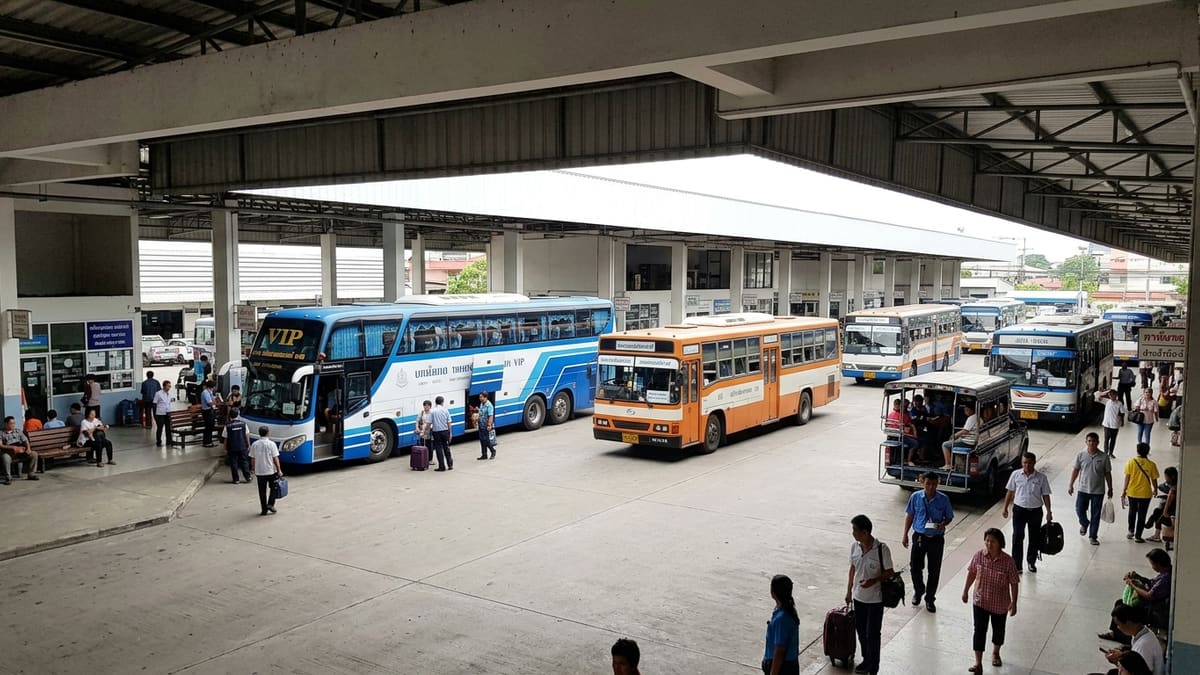
Mo Chit terminal in Bangkok is one of the most important in the country.
Price ranges for each bus type and common routes
Bus ticket prices in Thailand are generally very affordable, especially compared to European fares. Here are some indicative ranges for popular routes, based on 2026 rates (prices are subject to slight variations depending on the season, company, and exact type of service).
- Local buses: A one-hour journey (e.g., in the suburbs of Chiang Mai) can cost between 20 and 50 THB (approximately €0.50 to €1.30). For a 3-4 hour journey (e.g., Phitsanulok - Sukhothai on a local bus), expect 80 to 150 THB (€2 to €4).
- Express buses: For a medium journey like Bangkok - Ayutthaya (about 2h by express), expect 80 to 150 THB (€2 to €4). A longer journey like Bangkok - Sukhothai (6h) will be between 250 and 400 THB (€7 to €11).
- VIP buses:
- Bangkok - Chiang Mai (approximately 10-12h): prices vary from 500 THB (approximately €13) for a standard VIP bus to 800-1200 THB (€20 to €32) for the most comfortable VIP services (First Class or Gold Class with 24 seats).
- Bangkok - Phuket (approximately 12-14h): expect between 600 THB (€16) and 1000 THB (€27) for a VIP bus.
- Bangkok - Krabi (approximately 12-13h): prices are similar to Phuket, i.e., 600 to 950 THB (€16 to €25).
- Night buses: Prices are generally the same as VIP buses for equivalent routes, as they often belong to the same bus category with a nocturnal schedule. They may sometimes include a light meal or refreshments at departure or during a break.
Tips for bus travel in Thailand: safety, luggage, and meals
Traveling by bus in Thailand is a rewarding experience. Here are some practical tips to ensure your journey goes smoothly and to anticipate the specificities of the different types of buses in Thailand:
- Luggage: For express and VIP buses, your bulky luggage will be placed in the hold. It is strongly recommended to attach a clear label with your first name, last name, and a Thai phone number if you have one. Always keep your valuables (passport, money, electronics, jewelry) and important documents with you in the cabin, in a small backpack. Luggage weight is generally limited to 20-30 kg per person, but rarely strictly checked, except for very large volumes.
- Safety: VIP and express buses from reputable companies are generally safe. However, it is always wise to keep an eye on your belongings, especially during stops. Isolated cases of theft from luggage in the hold have been reported in the past, although they remain rare today. For general information on safety in Thailand, do not hesitate to consult the travel advice of the French Ministry of Europe and Foreign Affairs.
- Punctuality: Thai buses are generally quite punctual. However, delays can occur, especially on long journeys or in case of heavy traffic around major cities like Bangkok. Always allow a safety margin of at least 1 to 2 hours if you have a connection (train, plane, or ferry).
- Meals and snacks: On VIP buses, snacks (usually water, juice, biscuits) are often offered on board, sometimes even a small hot meal for the longest journeys. For other types of buses or if you have specific dietary preferences, remember to bring water and some snacks. For journeys over 4-5 hours, there will usually be a stop of about 20-30 minutes at a gas station or roadside restaurant where you can buy a full meal.
- Air conditioning: Air conditioning is often set very high, especially on VIP buses. Even if the outside temperature is around 30°C, the inside of the bus can be freezing. Definitely bring a sweater, a light jacket, or a scarf to protect yourself from the cold. A small blanket can be a real plus for night buses.
- Wi-Fi and power outlets: Some VIP and newer buses offer free Wi-Fi and/or individual power outlets. However, this is not systematic and the Wi-Fi connection can be unstable. Do not rely on it for urgent work or communication needs. It's better to bring a power bank for your devices.
Public or private? Distinguishing bus companies in Thailand
Thailand's bus transport system is a mix of state-run services and private companies. Understanding the difference is essential for travelers to make an informed choice about the different types of buses in Thailand.
- Public buses (The Transport Co., Ltd. - Bor Khor Sor): The main operator is "The Transport Co., Ltd." (also known as BKS in Thai or 999). It is a state-owned enterprise, easily identifiable by its blue and white or orange buses. Their buses are generally well-maintained, follow fixed routes, and have regulated fares. They primarily operate from major national bus terminals like Mo Chit in Bangkok. The Express and VIP services of The Transport Co. are often considered reliable, safe, and offer good value for money. You can find general information on public transport via the Tourism Authority of Thailand (TAT).
- Private companies: Numerous private companies also operate in Thailand, offering a wide variety of services. Some are of excellent quality (sometimes even superior to public services in terms of comfort, modernity of vehicles, and additional services), while others may be less reliable. Names like Nakhonchai Air, Sombat Tour, or Green Bus are examples of highly reputable private companies for their comfort and punctuality on long journeys, particularly with their 'Gold Class' or 'First Class' services. These companies often depart from large terminals or their own dedicated bus stations.
The main distinction is that private companies can offer more flexibility in schedules and routes, with competition that can drive prices down or offer more "luxury" services. It is advisable to read recent online reviews (on platforms like 12Go Asia or travel blogs) for private companies, especially if you choose a less known company, to ensure the quality and safety of your trip.
🏆 Specialist's Verdict: Choosing Your Bus in Thailand
Questions fréquentes
Which is the most comfortable bus in Thailand for tourists?
The most comfortable bus in Thailand is generally a VIP (Very Important Person) bus, especially those offering 24 seats (2+1 configuration per row). These buses feature wide, highly reclining seats with footrests, generous legroom, powerful air conditioning, and additional services such as snacks, blankets, and on-board toilets. It's the ideal option for long journeys and overnight travel.
What is the average price of a bus trip between Bangkok and Chiang Mai?
For a journey between Bangkok and Chiang Mai (approximately 10-12 hours), the average bus ticket price varies depending on the bus type. For a VIP bus, expect between 500 THB (approximately €13) and 1200 THB (approximately €32) in 2026. An express bus will be cheaper, around 350-500 THB (€9 to €13), but with reduced comfort and more stops.
Where to buy bus tickets in Thailand and when should you book?
You can buy bus tickets in Thailand in several ways: directly at the counters of major bus terminals (e.g., Mo Chit in Bangkok, Arcade in Chiang Mai), via online booking platforms like 12Go Asia, or from local travel agencies. It is advisable to book in advance (a few days to a week) for VIP and night buses, especially during high season.
Are night buses in Thailand safe for a solo traveler?
Yes, night buses in Thailand are generally considered safe, especially those from reputable companies like The Transport Co., Nakhonchai Air, or Sombat Tour. They use modern vehicles and experienced drivers. However, as with any travel, it is recommended to keep your valuables and important documents with you in the cabin, in a small backpack, and not to leave them in the hold. For general advice, consult the website of the French Ministry of Foreign Affairs.
Are there buses without air conditioning in Thailand and for which routes?
Yes, there are local buses without air conditioning in Thailand, often recognizable by their orange color. They are the most economical and are primarily used for short regional trips (less than 3 hours) or for intra-city travel in some towns. Express and VIP buses are always air-conditioned, sometimes excessively, so it is advisable to bring warm clothing for the latter.