Long Bus Journey in Thailand: Manage Meals, Breaks, & Restrooms Like a Pro
 Article written and verified by an experienced traveler and Southeast Asia specialist, who has undertaken numerous long bus journeys in Thailand herself · Updated in 2026
To manage meals and breaks during a long bus journey in Thailand, anticipate local specifics. Buses typically schedule one to two stops lasting 15 to 30 minutes at gas stations or dedicated rest areas. Always having a sealed water bottle (minimum 1.5L) and personal snacks is crucial, even if meals might be included for VIP buses.
- Frequent stops: Expect 1 to 2 breaks of 15-30 min for journeys longer than 4 hours.
- Hydration: Buy sealed bottled water (10-20 THB/1.5L) at 7-Eleven.
- Restrooms: Expect basic squat or Western-style toilets without toilet paper.
VIP buses often offer a 'meal ticket' to exchange at a designated stop restaurant. Prioritize simple, non-spicy foods before and during the trip to avoid digestive discomfort. Always carry toilet paper and hand sanitizer.
Will there be scheduled stops for eating and how long do they last?
Yes, for any long bus journey in Thailand, stops are systematically planned. The frequency and duration depend on the total length of the trip and the bus type:
Break Frequency
For journeys of 4 to 6 hours, expect a single stop. For trips longer than 6 hours (especially overnight journeys), two stops are standard: one main stop for a meal and a shorter one for a quick break. Buses usually depart on time, so be punctual. If you have doubts about returning to the bus, don't hesitate to ask the driver with the help of a translator.
Average Duration
Main stops, dedicated to meals, last from 20 to 30 minutes. Shorter stops, often for restrooms or a quick refreshment, are around 10 to 15 minutes. The driver always indicates the duration before you get off, sometimes in Thai or with their fingers. Note the departure time and spot your bus!
Types of Stops
These breaks take place in modern gas stations equipped with convenience stores (7-Eleven, FamilyMart), or in highway restaurants specifically designated for bus lines. These are usual and safe places, but don't forget your bus after the break. For more information, the Tourism Authority of Thailand offers general information on transportation.
How to recognize a reliable stop for eating and what types of food are available?
The reliability of a bus stop in Thailand is generally not a concern. Break locations are established infrastructures, often frequented by locals and other tourists. Here's what you'll find:
| Type of Stop | Food Available | Expert Tips |
|---|---|---|
| Gas Stations (7-Eleven, FamilyMart) | Pre-packaged sandwiches, instant noodles (with hot water available), sweet/savory snacks, cold drinks, cut fruits (mango, pineapple), ready-to-drink coffees and teas. | Quick, economical, and very safe option. Vacuum-sealed or packaged products minimize risks. Excellent for water and small cravings. |
| Highway Restaurants / Rest Areas | Classic Thai dishes: Pad Thai (stir-fried noodles), Khao Pad (fried rice), noodle soups (Kuay Teow), mild curries (Massaman, Gaeng Keow Wan). Often in 'canteen' or 'food court' style with multiple stalls. | Prioritize stalls with many locals and good dish rotation. Ask for « mai phet » (not spicy) to avoid surprises. Avoid dishes left out without being kept warm. |
A 'typical' stop in Thailand is very well organized. The bus parks, the driver announces the break duration. You get off, spot your bus (a photo is useful), and you have access to several stalls or a large restaurant. It's common to see locals eat quickly and get back on the bus at the indicated time. Remember to always have change (Thai Baht) on you for your purchases, as card payments are rare in these places.
Should I bring my own provisions or can I rely on the stops?
For a bus journey in Thailand, it is highly recommended to bring your own provisions, even if you can rely on the stops. This approach offers better meal management and increased comfort. Here's why and what to plan:
- Flexibility: Stops don't always align with your hunger times or preferences, and the duration can be short.
- Limited choice: While options are varied, they may not suit all dietary needs or immediate cravings (e.g., vegetarian, gluten-free).
- Hygiene: Even if stops are generally safe, having your own sealed snacks reduces any minimal risk of digestive discomfort.
Checklist of essentials to bring for personal comfort:
- ✓Sealed bottled water: Essential. Plan at least 1.5 to 2 liters per person for a long journey.
- ✓Dry snacks: Biscuits, cereal bars, dried fruits, crackers. Light and non-perishable options.
- ✓Fresh fruits: Bananas, oranges, mandarins (easy to peel and transport).
- ✓Disinfectant wipes / Hand sanitizer: For hands before eating and after using the restroom.
- ✓Toilet paper / Tissues: Essential as rarely provided.
- ✓Small trash bag: For your waste, as bus bins are often small or nonexistent.
This preparation will save you from any frustration or discomfort related to schedules or meal choices. For more practical tips on the overall process, feel free to consult our article on what to expect during a bus journey in Thailand.
How to manage hydration (drinking water) during the journey?
Hydration is crucial during a long bus journey in Thailand, especially with the sometimes intense air conditioning and outside heat. Follow these principles for optimal hydration:
- Sealed bottled water: This is the golden rule. Only buy clearly sealed water bottles. Small convenience stores at stops (7-Eleven, FamilyMart) sell them at very low prices (around 10-20 THB for 1.5 liters). Absolutely avoid tap water and be wary of ice cubes whose origin you don't know (ask « mai sai namแข็ง » – no ice).
- Sufficient quantity: Plan for at least 1.5 to 2 liters of water per person for a journey of 6 hours or more. Dehydration can lead to fatigue, headaches, and general malaise, which would spoil your trip.
- Alternative refreshing drinks: Supermarkets and convenience stores also offer pasteurized fruit juices (in cartons), iced teas, or coconut water in cartons. These are good alternatives to vary your choices, provided they are well-packaged.
- Caffeine and alcohol: Limit coffee and strong tea consumption and avoid alcohol. These drinks are diuretics and increase the need to use the restroom, which is not ideal on a bus.
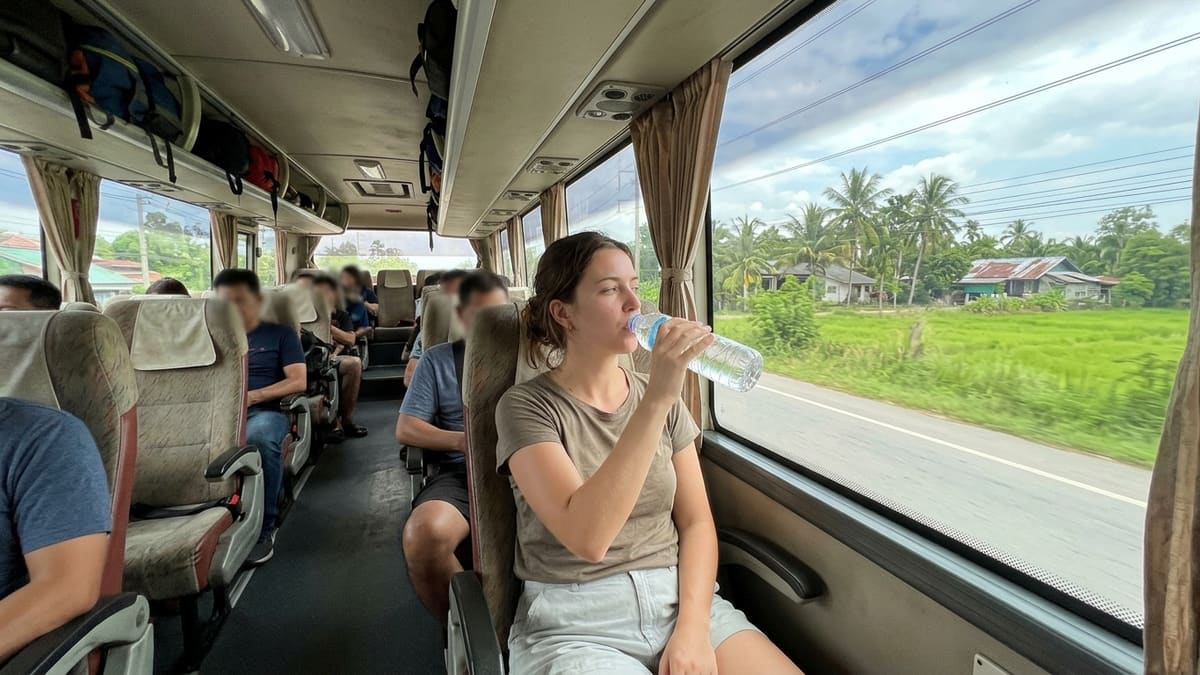
Are there toilets on the bus or only at stops, and what condition are they in?
The presence and condition of toilets are essential points for managing breaks during a long bus journey in Thailand. Here's what you need to know to avoid unpleasant surprises:
- Toilets on the bus: Most long-distance buses, especially 'VIP' or 'first-class' buses, are equipped with toilets. They are generally located at the back of the vehicle. However, their use is often discouraged except in absolute emergencies. The smell can be strong, hygiene basic, and they are small and difficult to use while moving, especially for tall people or those with mobility issues.
- Toilets at stops: This is the preferred option. All stops (gas stations, rest areas) have toilets, often in sufficient numbers to handle the influx of passengers.
| Type of Toilets | Description | Practical Traveler Tip |
|---|---|---|
| Squat toilet | A hole in the floor with two footrests. A bucket of water and a small scoop are used for flushing and personal hygiene (local practice). Their presence is common in Thailand. | They can be surprising at first. Practice if needed and always have wipes or hand sanitizer. |
| Western-style (with flush) | More frequent in tourist areas and modern gas stations. However, toilet paper is rarely provided, although a bidet spray (water hose) is often present. | Always bring your own toilet paper or tissues. A small bottle of hand sanitizer is also highly recommended for impeccable hygiene. |
Hygiene varies from place to place, but toilets at large gas stations are generally well-maintained. A small tip (5-10 THB) is sometimes requested at the entrance for maintenance fees, especially in private rest areas. Prepare for all situations by carrying essentials in an easily accessible small bag.
What 'snacks' or 'meals' are potentially included in the ticket price, and how to use them?
The question of meals included in a bus ticket in Thailand depends heavily on the type of bus and the company. This information is crucial for successfully managing meals and breaks and avoiding any inconvenience:
- VIP buses (first class, 24 or 32 seats): These buses often offer a more comprehensive service, justifying their slightly higher price. The ticket price may include a small snack (usually biscuits or dry cakes, a carton of fruit juice, a small bottle of water) distributed on board by an attendant or the driver. For very long journeys (e.g., Bangkok-Chiang Mai), a « meal ticket » or « meal coupon » may be given at the start of the trip. This coupon is to be exchanged for a single dish at a designated restaurant during the main stop. The coupon's value is fixed (e.g., 50-80 THB), and you will have to pay the supplement if your choice exceeds this amount.
- Standard buses (40+ seats, Express): These more economical buses offer fewer included services. Often, only a small bottle of water is offered at the start. Meals and snacks are entirely at your expense and must be purchased at stops in convenience stores or restaurants.
How to use a meal ticket:
The ticket will be given to you by the attendant or driver at the beginning of the journey. At the meal stop, present it at the cash desk of the restaurant designated by the company. You can choose a dish from a pre-established selection (often fried rice or noodles), or use it as a voucher. It is imperative to respect the establishment indicated on the ticket, as it is not valid elsewhere. If not used, the ticket will not be refunded or exchanged. Savvy backpackers consult sites like Lonely Planet for tips on transportation in Thailand to better anticipate.
It is always wise to check your ticket information or ask at the time of purchase or when boarding the bus if meal services are included. When in doubt, always pack your own provisions to be self-sufficient.
What foods should I favor or avoid before and during the journey to prevent stomach upset?
To avoid stomach upset and digestive discomfort during a long bus journey in Thailand, mindful eating is essential. It's about prioritizing easily digestible foods and avoiding irritants, especially if you have a sensitive stomach.
Foods to favor
Before the journey: Opt for light dishes such as plain white rice, grilled chicken or steamed fish without strong sauce, steamed vegetables. Have your meal at least 2 hours before departure to aid digestion.
During the journey: Favor fresh fruits (bananas, apples, oranges), rusks, plain dry biscuits, cereal bars, or crackers. For meals at stops, ask for instant noodles or simple fried rice (« Khao Pad ») specifying « mai phet » (not spicy). Drink water and light herbal teas.
Foods to avoid
Strong spices: Thai dishes can be extremely spicy. Avoid very hot red or green curries, very strong Tom Yum or Tom Kha Gai soups, and any dish with a lot of fresh chilies.
Greasy or fried foods: Rich saucy dishes, abundant fried foods (e.g., crispy fried chicken), and fatty meats can be heavy to digest and cause nausea.
Unpasteurized dairy products: Be wary of artisanal ice creams or dairy drinks whose origin and storage conditions are uncertain.
Carbonated drinks and excessive caffeine: Can cause bloating, heartburn, or a frequent need to use the restroom.
Unidentified foods: If the origin, freshness, or storage conditions of a food are uncertain (e.g., unpackaged street food left out in the sun), refrain. The Lonely Planet website also offers relevant health tips for Thailand.
By following these tips, you will significantly reduce the risk of digestive problems and enjoy your trip more serenely. It is always better to be too cautious than to spoil part of your stay with discomfort.
🏆 Specialist's Verdict: Tips for a Smooth Journey
What websites don't always tell you about bus breaks in Thailand
Beyond basic practical information, the experience of a long bus journey in Thailand reveals subtleties that few guides address. A crucial point is the timing of stops: they are often scheduled according to the bus's overall itinerary and company conventions, not always your hunger. It is common for the main meal stop to occur after only 2-3 hours of travel, even if the total journey lasts 10 hours, or conversely, very late. Hence the crucial importance of your personal provisions.
Furthermore, signage or driver announcements may be only in Thai. Learning a few key words like « gin khao » (eat), « hong nam » (toilets), or « gip teun » (wake up, for overnight trips) can be very useful. The atmosphere on buses is generally calm, but the air conditioning can be very powerful, even during the day, which dries you out and increases thirst. Bring a small blanket or a sweater, even in the middle of the day. Finally, don't always rely on the estimated arrival time: delays are frequent in Thailand, so allow a comfortable margin for your connections. These often-omitted details make all the difference for an uninitiated traveler and truly allow you to enjoy the experience with peace of mind.
Questions fréquentes
How many stops are there during a long bus journey in Thailand?
For a long journey (over 4 hours), there are generally 1 to 2 stops. The main stop lasts 20 to 30 minutes for eating and using the restroom. Shorter stops of 10 to 15 minutes may also occur.
Should I bring my own food for a bus trip in Thailand?
Yes, it is highly recommended to bring your own provisions (sealed bottled water, dry snacks, easy-to-peel fruits). Stops offer food, but having your own provisions ensures flexibility, choice, and reduces digestive risks.
Are there toilets on Thai buses?
Long-distance buses, especially VIP ones, generally have toilets on board. However, their hygiene is often basic, and their use should be reserved for emergencies. It is preferable to use the toilets at stops, although you should bring your own toilet paper and hand sanitizer.
What types of meals are included in VIP bus tickets in Thailand?
VIP buses may include a small snack (biscuits, juice, water) and/or a 'meal ticket' to be used at a designated restaurant during a stop. The ticket has a fixed value for a specific dish or as a voucher, and it is essential to use it at the designated establishment.
What foods should I avoid before a long bus journey in Thailand?
Avoid very spicy dishes, fried foods, greasy or saucy foods, unpasteurized dairy products, and carbonated drinks. Favor light meals based on rice, grilled chicken, cooked vegetables, and water to minimize the risk of stomach upset and maximize your comfort.