Thailand by Bus: The Best Routes for a Successful Adventure (2026)
 Article written and verified by a Southeast Asia travel expert, who has personally experienced numerous bus trips in Thailand and mastered the intricacies of local transportation. · Updated in 2026
To design bus travel routes in Thailand that are practical, economical, and safe, it is crucial to rely on accurate information and feedback. The Thai bus network is a boon for independent travelers and backpackers who are budget-conscious and eager to explore the country in depth.
- The Bangkok-North routes (Chiang Mai, Chiang Rai) are iconic and often done overnight to maximize sightseeing time.
- Connections to the South and islands require a bus + ferry combination, for example, to reach Phuket, Koh Lanta, or Koh Samui.
- For comfort on long distances, VIP or first-class buses are highly recommended, with prices starting around 600 THB (approximately 15-18 €).
Careful planning via recognized platforms like 12Go.asia and knowledge of major bus terminals, such as Mo Chit 2 in Bangkok, are key to a successful experience. Remember to book your tickets in advance, especially during high season, to guarantee your spot and travel with peace of mind.
1. Essential Routes: From Bangkok to the North (Chiang Mai, Chiang Rai)
The bus routes connecting Bangkok to the Northern gems are the backbone of any Thai exploration. These journeys are often overnight trips, a clever solution to save on a night's accommodation and wake up directly at your destination, ready to discover.
| Main Route | Departure Terminal (Bangkok) | Arrival Terminal (North) | Estimated Duration | Main Company(ies) | Indicative Price (THB/€) |
|---|---|---|---|---|---|
| Bangkok - Chiang Mai | Mo Chit 2 (Northern Bus Terminal) | Arcade Bus Terminal 2 & 3 | 10-12 hours (night) | Sombat Tour, Nakhonchai Air, Greenbus | 600-900 THB (15-25 €) |
| Bangkok - Chiang Rai | Mo Chit 2 | Chiang Rai Bus Terminal 1 & 2 | 12-14 hours (night) | Greenbus | 700-1000 THB (20-28 €) |
For a bus trip in Thailand to these northern destinations, VIP buses are the best option. They generally offer more spacious seats, snacks, water, and sometimes blankets for increased comfort. Mo Chit 2 Bus Terminal in Bangkok is the main departure point for the North. For a stress-free departure, aim to arrive at least 30 to 45 minutes before the time indicated on your ticket.
2. The Best Routes to the Southern Islands: Combining Bus and Ferry
Reaching the idyllic beaches and paradisiacal islands of Southern Thailand by bus is an economical and very popular option. These routes often combine an overnight bus journey with a ferry transfer. Key destinations include Phuket, Krabi (gateway to Koh Lanta, Koh Phi Phi) and Surat Thani (for Gulf islands like Koh Samui, Koh Phangan, Koh Tao).
| Combined Route | Departure (Bangkok or North) | Transfer Point | Final Destination | Estimated Total Duration | Indicative Price (THB/€) |
|---|---|---|---|---|---|
| Bangkok - Phuket | Sai Tai Mai (Southern Bus Terminal) | Direct to Phuket | Phuket Bus Terminal 2 | 12-14 hours (night) | 700-1100 THB (20-30 €) |
| Bangkok - Koh Lanta | Sai Tai Mai | Krabi (then minivan + ferry) | Koh Lanta | 14-16 hours (night) | 800-1200 THB (22-34 €) |
| Bangkok - Koh Samui | Sai Tai Mai or Khao San Road agencies | Surat Thani (then Lomprayah or Songserm ferry) | Koh Samui (Nathon Pier) | 12-15 hours (night) | 900-1400 THB (25-40 €) |
Combined bus+ferry tickets, easily bookable through platforms like 12Go.asia, greatly simplify logistics. They save you multiple purchases and transits, and are ideal for travelers looking to optimize their budget and time.
3. Regional Loops and Circuits: Exploring Thailand in Depth
Beyond the major North-South routes, Thailand is full of bus itineraries that allow for immersive regional loops. These circuits are perfect for travelers with more time who wish to explore less frequented regions. The legendary Northern Loop is an emblematic example.
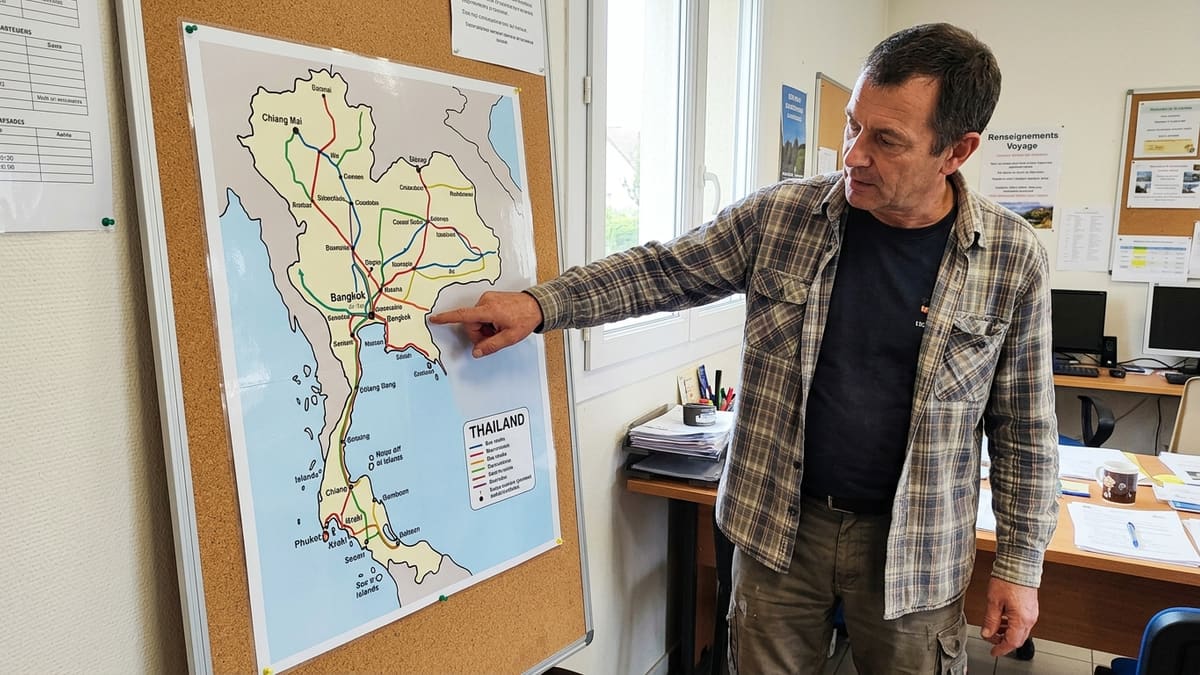
Example of a Grand Northern Loop (7-10 days)
Chiang Mai to Chiang Rai
Take a Greenbus from Chiang Mai's Arcade Bus Terminal 3. Quick 3-4 hour journey, cost around 200-300 THB (5-8 €). Explore the famous White Temple (Wat Rong Khun) and the fascinating Golden Triangle.
Chiang Rai to Mae Hong Son
A longer journey (6-8 hours) through mountainous landscapes. Local buses depart from Chiang Rai Bus Terminal. Expect winding roads. Cost: 250-400 THB (7-11 €). Mae Hong Son is renowned for its peaceful lake and Burmese-style temples.
Mae Hong Son to Pai
Take a bus or minivan on the famous 762-bend road. Duration: 3-4 hours, cost: 150-200 THB (4-6 €). Pai is a small bohemian town, highly appreciated for its relaxed atmosphere and waterfalls.
Pai to Chiang Mai
Direct return to Chiang Mai by bus or minivan. Duration: 3 hours, cost: 150-200 THB (4-6 €). The loop is complete, bringing you back to your initial starting point.
These regional loops offer a deep cultural immersion and varied landscapes, all while benefiting from the advantages of bus travel in Thailand, especially its cost. For more practical advice on organizing these trips, consult our dedicated page on how a bus trip in Thailand unfolds: tips and tricks.
4. Estimating Duration and Cost of Main Bus Routes
Accurate estimation of durations and costs is fundamental for proper planning of your bus itinerary in Thailand. The price and time ranges mentioned in the previous tables are based on observed averages, but certain factors can influence the final cost.
| Estimation Factor | Description and Impact |
|---|---|
| Bus Type | VIP and First Class buses are 20-50% more expensive than Second Class or local buses, but offer superior comfort, including air conditioning, reclining seats, and sometimes snacks. They are also generally faster. |
| Journey Distance | Cost is directly proportional to distance. Journeys over 600 km, like Bangkok-Chiang Mai, are usually overnight trips. The price may include a simple meal or snacks. |
| Seasonality & Public Holidays | During peak tourist season (November to February) and Thai public holidays (Songkran, Loy Krathong), prices can increase by 5-15% and advance booking is imperative. |
| Bus Company | Reputable companies like Sombat Tour, Nakhonchai Air, or Greenbus are generally more expensive but offer better service quality, safety, and punctuality. Smaller local companies can be 15-20% cheaper, but with variable comfort. |
On average, a budget of 15 € to 40 € per long bus journey is a realistic estimate for major tourist routes in comfortable class. For detailed planning and to compare transport options (bus, train, plane), tools like Rome2rio are very useful.
5. Comparison of Transport Modes: Bus vs. Train, Plane, Minivan
The bus is an excellent option for discovering Thailand, but it's relevant to compare it to other modes of transport to choose the one that best suits your bus itinerary in Thailand and your expectations.
| Mode of Transport | Advantages | Disadvantages | Ideal for |
|---|---|---|---|
| Bus | Very economical, extensive network, allows intermediate stops, ideal for backpackers. | Long journeys can be tiring, comfort varies by class, potential delays due to traffic. | Budget-conscious travelers, regional explorations, overnight trips. |
| Train | More spacious and comfortable for long overnight journeys (sleeper berths), good local immersion, panoramic views. | Network less extensive than bus, often slower, tickets more expensive for sleeper berths and first class. | Bangkok-Chiang Mai/South routes for a more comfortable experience, avoiding winding roads. |
| Plane | Fastest for long distances, ideal for saving time on a short trip. | Most expensive (especially without advance booking), less ecological, lacks local immersion. | Travelers with a higher budget, short stays, fast North-South connections or to remote islands. |
| Minivan / Shared Taxi | Faster than bus for some short/medium distances, possible door-to-door pickup. | Less legroom, can be uncomfortable on long journeys, reputation for fast driving, more expensive than public bus. | Short/medium segments (e.g., Chiang Mai-Pai), airport transfers, small islands not served by direct ferry. |
The bus remains the best compromise for a balanced trip between budget, immersion, and flexibility, especially if you prioritize routes well served by reliable companies and quality buses (VIP or First Class).
6. Bus Types and Comfort for Long Journeys
The choice of bus type is crucial for the comfort of your trip in Thailand, especially on long distances. Here are the main categories you will encounter:
VIP Bus
Often in a 2+1 seat configuration per row (32 seats), offering generous legroom and comfortable reclining seats, sometimes with footrests and individual screens. Air conditioning, snacks, water, blankets, and onboard toilets are generally included. Ideal for overnight trips. Cost: 800-1200 THB.
First Class
2+2 seat configuration (40-44 seats), offering comfortable and reclining seats. Services are similar to VIP (air conditioning, water, snacks) but with slightly less personal space. This is an excellent option for good value for money. Cost: 600-900 THB.
Second Class and Local Buses
2+2 seat configuration, often older, less reclining, and more basic. Air conditioning is often present but can be less efficient or too cold. Onboard toilets are not systematic. To be preferred for short distances or if the budget is very limited. Cost: 400-600 THB.
For bus routes in Thailand longer than 4 hours, it is highly recommended to opt for VIP or First Class to ensure maximum comfort and a better travel experience. The Official Tourism Authority of Thailand (TAT) itself emphasizes the importance of choosing recognized companies for their reliability.
7. Practical Considerations: Safety, Comfort, and Schedules
Traveling by bus in Thailand is generally safe and enjoyable, but a few precautions and tips will help you optimize your experience:
- Luggage Safety: Always keep your valuables (passport, money, phone, cameras) with you, in a small backpack that you place under your seat or on your lap. Large bags are placed in the hold. Cases of theft are rare, but caution is advised.
- Air Conditioning: Air conditioning in VIP and First Class buses is often very powerful, especially at night. Bring a fleece, scarf, or small blanket, even in hot season, to avoid getting cold.
- Punctuality: Departures are generally on time, but delays can occur due to heavy traffic (especially entering and exiting Bangkok) or weather conditions. Allow sufficient buffer time if you have a tight connection (flight or ferry).
- Breaks: On long journeys, stops are scheduled every 3-4 hours at service stations or rest areas equipped with toilets and small restaurants. Take advantage of these to eat, stretch your legs, and hydrate.
- Comfort on Overnight Buses: If you travel overnight, a sleep mask and earplugs can significantly improve your rest. VIP bus seats recline enough to allow for decent sleep.
These considerations are essential to anticipate and fully enjoy the best bus routes in Thailand. For in-depth advice on budget, comfort, and safety, feel free to consult our complete guide to traveling by bus in Thailand.
8. How to Book Your Bus Tickets in Thailand
Booking your bus tickets is a simple process that greatly facilitates the organization of your bus itineraries in Thailand. Several options are available, each with its advantages:
Online Platforms
Websites like 12Go.asia are references for booking bus, train, ferry, and flight tickets in Southeast Asia. They offer a multilingual interface (including English), reliable user reviews, detailed information on companies and bus types, and secure payment options. You can book months in advance, which is ideal during high season.
Local Travel Agencies
In tourist areas (like Khao San Road in Bangkok, Chiang Mai or Phuket city centers), many agencies offer tickets. This is convenient for last-minute bookings or for combined bus+ferry packages to the islands. Remember to compare prices and check the agency's reputation.
Directly at Bus Terminals
Often the most economical option, it allows you to buy your tickets on the same day or a few days in advance. Ideal if you have flexibility and are not in a hurry. Be patient, as staff may not always speak fluent English.
For smooth management of your budget and time, anticipation is your best ally, especially for long journeys and periods of high tourist traffic.
🏆 Expert Verdict: Our Ready-made Route Recommendations
Questions fréquentes
What is the best type of bus for a long journey in Thailand?
For long journeys (over 6 hours), VIP or First Class buses are the best choices. They offer more legroom, reclining seats, air conditioning, snacks, and sometimes blankets, ensuring superior comfort and a better travel experience. VIP 2+1 buses (32 seats) are the most comfortable.
How do I get from Bangkok to the Southern islands by bus and ferry?
For the Southern islands like Koh Samui, Koh Phangan, Koh Tao (via Surat Thani) or Koh Lanta, Koh Phi Phi (via Krabi), you generally need to take an overnight bus from Bangkok's Southern Bus Terminal (Sai Tai Mai) to a coastal city, then a ferry. Combined bus+ferry tickets can be easily booked via platforms like 12Go.asia, which manage the entire transfer.
Is it safe to travel by overnight bus in Thailand?
Yes, traveling by overnight bus in Thailand is generally safe, especially with reputable companies like Sombat Tour, Nakhonchai Air, or Greenbus which adhere to safety standards. It is always recommended to keep your valuables (passport, money, electronics) with you in the cabin and not leave them in checked luggage. Bring warm clothes due to often strong air conditioning.
Where can I book bus tickets for itineraries in Thailand?
You can book your bus tickets online through reliable platforms like 12Go.asia, which offers a wide selection of routes and companies with multilingual interfaces. Local travel agencies in tourist areas and bus terminal ticket counters are also valid options, especially for last-minute bookings or comparing prices directly.
What is the average cost of a bus trip from Bangkok to Chiang Mai?
A bus trip from Bangkok to Chiang Mai generally costs between 600 and 900 THB (approximately 15-25 €) for a first-class or VIP bus. The price varies depending on the company (e.g., Sombat Tour, Nakhonchai Air), the comfort level of the bus, and the time of year. This is an overnight journey of about 10 to 12 hours.
Is the bus the best way to travel in Thailand?
The bus is an excellent mode of transport in Thailand, especially for budget-conscious travelers keen to explore the country. It offers an extensive network, is generally economical, and allows for local immersion. However, for long distances or tight schedules, flying can be faster, and the train offers superior comfort for overnight journeys with sleeper berths.